1960s Maps of Wayne County, Ohio
Explore 18 historic maps of Wayne County from the 1960s. These maps offer a rare glimpse into what life looked like during the 1960s — showing old roads, neighborhoods, homes, and landmarks that have changed or disappeared over time.
Whether you're researching your family's past, planning a metal detecting trip, or studying how Wayne County's landscape evolved across the 1960s, these high-resolution maps are a powerful tool for exploring the history of this region.
- Focus on a specific era: All maps on this page are from the 1960s, giving you a focused view of this time period.
- See what’s changed: Compare century-old streets, trails, and buildings to today's modern landscape using overlays and satellite layers.
- Research with precision: Use these maps for genealogy, historical research, land use analysis, or educational projects.
- View, download, or print: Maps are fully viewable online in high resolution, and can be downloaded or printed for your own records.
Start exploring Wayne County's history through authentic maps from the 1960s. This is your window into the past.
Wayne County, OH maps
(18)- 1961 Map of New Pittsburg, 1962 Print
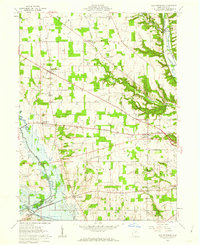 1961 New Pittsburg1962 Print · USGSWayne County farmland and the Killbuck Creek valley are captured here in the early sixties. Researchers can trace rural lineages through the Reedsburg Cem, locate early Oil Wells, and follow the Baltimore and Ohio railroad line.2 unique versions available
 - 1961 Map of Wooster, 1962 Print
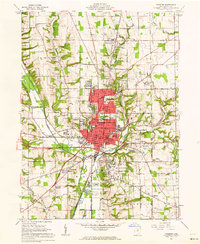 1961 Wooster1962 Print · USGSThe city of Wooster thrives in the early sixties as a regional hub of education and agriculture. Genealogists and historians can trace family-named sites like Burnetts Corners, old cemeteries such as Salem Cem, and the expansive College of Wooster campus.4 unique versions available
 - 1961 Map of West Salem, 1962 Print
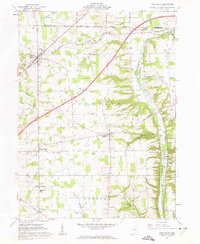 1961 West Salem1962 Print · USGSWayne County farmland at the start of the sixties reveals a landscape shaped by historic land grants and early rail lines. Genealogists can trace family roots through numerous sites like Warners-Congress Cem, Fairhaven Ch, and the Burbank Station.2 unique versions available
 - 1961 Map of Creston, 1962 Print
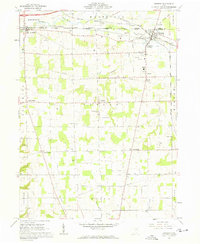 1961 Creston1962 Print · USGSWayne and Medina counties are seen here in the early sixties, showing a landscape defined by busy rail junctions and small farming townships. Genealogists can locate Maple Mound Cem, the County Home for the Aged, and Canaan Center Cem.3 unique versions available
 - 1961 Map of Dalton, 1962 Print
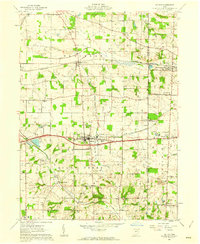 1961 Dalton1962 Print · USGSWayne and Stark counties are captured in the early sixties as a busy landscape of family farms, rail lines, and emerging energy sites. Genealogists and historians can trace family-named landmarks like Sonnenberg Cemetery, Martins Church, and the village of Kidron.3 unique versions available
 - 1961 Map of Rittman, 1962 Print
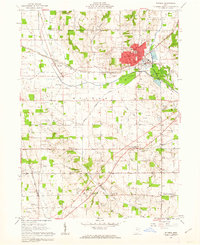 1961 Rittman1962 Print · USGSWayne County saw significant industrial salt extraction and rail development in the early sixties. Researchers can trace historic township boundaries and burial sites like Flickinger Cem or church locations such as Crown Hill Ch.3 unique versions available
 - 1961 Map of Loudonville, 1963 Print
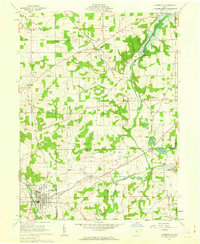 1961 Loudonville1963 Print · USGSIn the early sixties, the Mohican River valley around Loudonville remained a landscape of active rail transport and rural industry. Researchers can trace family sites at County Line Cem, the local impact of the Mohicanville Dam, and the early oil and gas fields near McZena.3 unique versions available
 - 1961 Map of Fredericksburg, 1963 Print
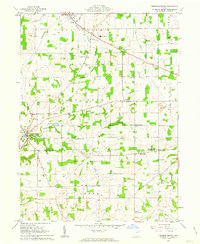 1961 Fredericksburg1963 Print · USGSThe rural landscapes of Wayne and Holmes counties are captured here in the early sixties, showing a dense network of country roads and farmsteads. Genealogists can locate family landmarks like Maysville Ch, Waynedale Sch, and the quiet hamlet of Calamoutier.2 unique versions available
 - 1961 Map of Jeromesville, 1963 Print
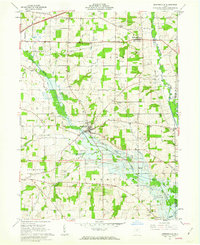 1961 Jeromesville1963 Print · USGSMid-century Ashland County comes into focus as the Erie Railroad winds through the river valleys of north-central Ohio. Genealogists and local historians can locate early burial sites like Old Rowsburg Cem, rural congregations at Trinity Ch, and the industrial footprint of numerous Oil Wells.2 unique versions available
 - 1961 Map of Wilmot, 1963 Print
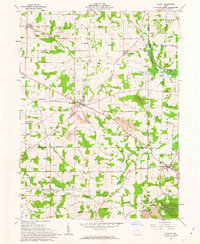 1961 Wilmot1963 Print · USGSThe intersection of Wayne, Stark, and Holmes counties comes into focus during the early 1960s, showing a landscape defined by family farming and rural industry. Genealogists can trace family names through several burial grounds like Hershberger Cem and Weaver Cem, or locate local landmarks like the Treaty Line.3 unique versions available
 - 1961 Map of Orrville, 1963 Print
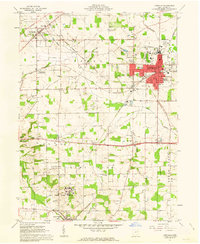 1961 Orrville1963 Print · USGSOrrville and its surrounding townships thrive as a bustling rail and agricultural center in the early sixties. Researchers can trace historic family locations at Stauffer Cem, the large Apple Creek State Hospital grounds, and rural junctions like Honeytown.2 unique versions available
 - 1961 Map of Polk, 1963 Print
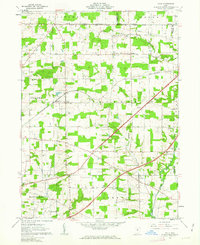 1961 Polk1963 Print · USGSAshland County farmland is documented here in the early sixties, showing the transition from traditional rail commerce to modern highway travel. Genealogists can locate Albion Cem, St Johns Ch, and the rural settlement of Redhaw near the Muddy Fork.3 unique versions available
 - 1961 Map of Holmesville, 1963 Print
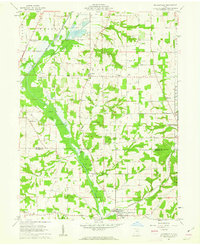 1961 Holmesville1963 Print · USGSThe agricultural and industrial character of the Wayne and Holmes County border is revealed in the early 1960s. Genealogists and historians can trace the Pennsylvania Railroad Grade through Holmesville or locate rural sites like Moorhead Ch and Franklin Sch.4 unique versions available
 - 1961 Map of Shreve, 1963 Print
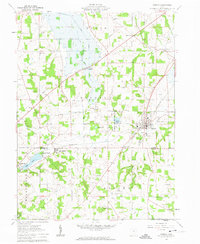 1961 Shreve1963 Print · USGSWayne and Holmes counties in the early sixties reveal a landscape of glacial lakes and established rail towns. Researchers can trace family roots through Shreve Cem and Bigelow Ch Cem or locate the lakeside communities of Lakeland Beach and Lakeville.3 unique versions available
 - 1962 Map of Marion
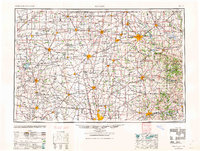 1962 Marion1962 Print · USGSCentral Ohio during the post-war era showcases a dense network of railroad towns and emerging interstate highways. Genealogists can trace family roots in smaller settlements like Houcktown and Marseilles or locate landmarks near Indian Lake.
 - 1962 Map of Canton
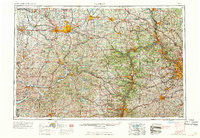 1962 Canton1962 Print · USGSThe industrial heartland of Eastern Ohio and Western Pennsylvania thrives in the early sixties as steel mills and rail lines dominate the river valleys. Genealogists and historians can trace local landmarks like McKinley National Memorial, Malone College, and industrial sites such as Republic Steel Corp.2 unique versions available
 - 1966 Map of Marion, 1968 Print
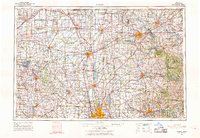 1966 Marion1968 Print · USGSCentral Ohio in the mid-sixties is captured during a period of rapid highway expansion and industrial connectivity. Genealogists and historians can trace rail-and-river networks through towns like Marion, Urbana, and Mount Vernon, or locate landmarks such as Malabar Farm and Black Hand Rock.3 unique versions available
 - 1969 Map of Doylestown, 1971 Print
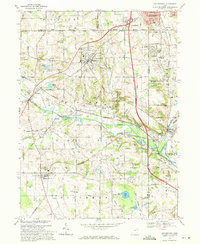 1969 Doylestown1971 Print · USGSNortheast Ohio's industrial and agricultural character is captured here during the late sixties as suburban growth reached toward Doylestown. Researchers can trace rural lineages through sites like Maple Grove Cem or locate the Harvey Sch and the Penn Central rail lines.2 unique versions available
End of results
Showing maps 1-18 of 18
Top cities of Wayne County
- Wooster historical maps
- Orrville historical maps
- East Union historical maps
- Rittman historical maps
- Doylestown historical maps
- Creston historical maps
See more
Frequently asked questions
- What are the different types of historical maps available for Wayne County?
- What is the oldest map of Wayne County?
- Where can I purchase historical maps of Wayne County for my home or office?
- Where can I download high-res historical maps of Wayne County?
- Are there historical topographic maps available for Wayne County?
- Is there historical aerial imagery available for Wayne County?
- Where are historical maps of Wayne County sourced from?