Old Maps of Jefferson County, Oklahoma for Metal Detecting
Plan your next treasure hunt with 161 historic maps of Jefferson County. Find old homesites, ghost towns, trails, and gathering spots that may be lost to time — perfect for identifying promising metal detecting locations.
- Locate forgotten sites: Uncover places like long-lost settlements, abandoned rail lines, or gathering spots.
- Plan better hunts: Use map overlays combined with LiDAR or satellite views to narrow in on historically rich areas.
- Made for detectorists: Thousands of hobbyists use these maps to discover relics, coins, and hidden history.
Use these historic maps to boost your research and find new opportunities beneath the surface of Jefferson County.
Jefferson County, OK maps
(161)- 1901 Map of Addington
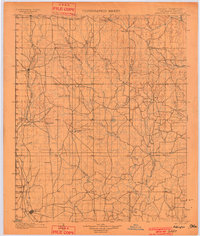 1901 Addington1901 Print · USGSThe Chickasaw Nation at the turn of the century shows a landscape transitioning from cattle trails to rail commerce. Local historians can trace the Chisholm Trail and the Chicago Rock Island and Pacific rail line through Duncan, Comanche, and Addington.6 unique versions available
 - 1905 Map of Montague
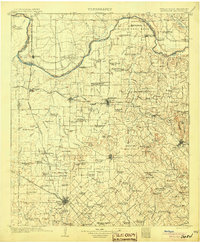 1905 Montague1905 Print · USGSMontague County and the bordering Chickasaw Nation are captured here in the early twentieth century as the frontier transitioned into a settled rail corridor. Genealogists and local researchers can locate numerous rural schools like Eagle Pt. School and trace river crossings such as Owings Ferry.3 unique versions available
 - 1954 Map of Sherman, 1964 Print
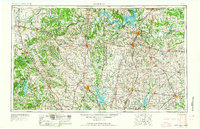 1954 Sherman1964 Print · USGSThe Red River valley and North Texas plains are captured here in the mid-fifties, showing the region as new reservoirs like Lake Texoma and Lavon Reservoir reshaped the land. Genealogists can trace family roots through specific local landmarks like Courtney P O, Pilot Grove Sch, and New Hope Ch.2 unique versions available
 - 1954 Map of Wichita Falls, 1966 Print
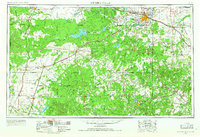 1954 Wichita Falls1966 Print · USGSNorth Texas in the mid-fifties is captured here as a landscape of expanding oil fields and vital rail corridors. Genealogists and historians can trace family roots through rural landmarks like Bacon Chapel and the rail-side growth of Seymour and Archer City.3 unique versions available
 - 1955 Map of Lawton, 1958 Print
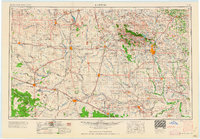 1955 Lawton1958 Print · USGSSouthwestern Oklahoma and North Texas are shown here in the mid-fifties, dominated by the Wichita Mountains and the vital Red River watershed. Genealogists and historians can trace the foundations of Lawton alongside rural landmarks like Rainy Mountain Church and Pleasant Hill School.5 unique versions available
 - 1956 Map of Henrietta, 1957 Print
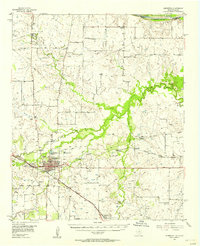 1956 Henrietta1957 Print · USGSClay County at the mid-century mark reveals a landscape defined by the intersection of cattle ranching, oil production, and major rail lines. Genealogists and historians can trace family locations near Hapgood Ranch, the community of Hurnville, or the grounds of Cambridge Cemetery.
 - 1957 Map of Hastings
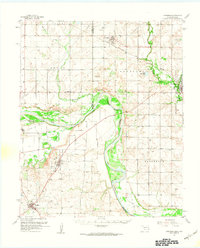 1957 Hastings1957 Print · USGSThe Red River frontier in the mid-fifties shows a landscape defined by the Chicago Rock Island and Pacific railroad and the booming oil industry. Genealogists and historians can trace family locations near Hastings, Byers, and the Petrolia Oil Field.2 unique versions available
 - 1957 Map of Ardmore, 1968 Print
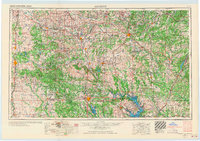 1957 Ardmore1968 Print · USGSSouth-central Oklahoma in the late fifties was a landscape of rising reservoir waters and expanding rail lines. Genealogists and historians can trace the foundations of Ardmore and Duncan or locate early recreation sites at Platt National Park and Lake Murray State Park.3 unique versions available
 - 1958 Map of Wichita Falls
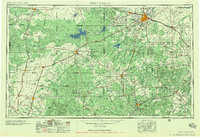 1958 Wichita Falls1958 Print · USGSNorth Texas during the late fifties reveals a landscape defined by the booming petroleum industry and established rail hubs. Researchers can trace the development of Wichita Falls and discover rural landmarks like Barton's Chapel or the Hull-Silk Oil Field.
 - 1958 Map of Sherman, 1959 Print
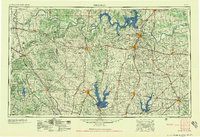 1958 Sherman1959 Print · USGSNorth Texas and Southern Oklahoma were undergoing significant development in the late fifties as the Red River Valley transit networks matured. Researchers can trace historic family-named locations such as Saddler Bend, the grounds of Perrin AFB, and early shoreline developments at Lake Texoma.
 - 1962 Map of Ryan, 1964 Print
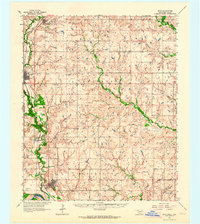 1962 Ryan1964 Print · USGSJefferson County in the early 1960s was a landscape shaped by the rail-and-creek economy of southern Oklahoma. Researchers can trace family history at the Addington Cem or locate industrial sites like the Tank Farm and several Gravel Pits along the Chicago Rock Island and Pacific line.2 unique versions available
 - 1962 Map of Temple, 1964 Print
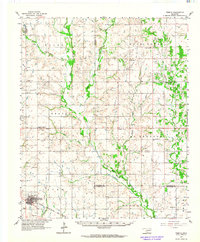 1962 Temple1964 Print · USGSThe cotton and oil country of southwestern Oklahoma comes to life here in the early sixties. Genealogists and historians can trace the foundations of Temple and Corum, locating family landmarks like Shakelford Cem and the Lone Star Ch.2 unique versions available
 - 1963 Map of Ardmore
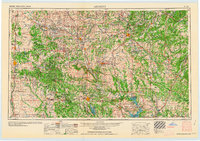 1963 Ardmore1963 Print · USGSSouthern Oklahoma during the early sixties shows a landscape defined by the Arbuckle Mountains and a booming energy economy. Genealogists and historians can trace family-named sites across the Ardmore Oil Field, find old schools like Southeastern State College, or locate historic markers such as Boggy Depot State Park.2 unique versions available
 - 1964 Map of Comanche SE, 1965 Print
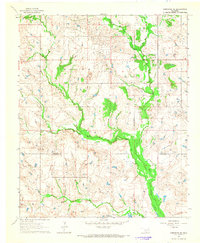 1964 Comanche SE1965 Print · USGSSouthern Oklahoma in the early sixties was a landscape of remote rural communities and active energy extraction. Genealogists and historians can trace family locations near Woolsey Cem and the small settlements of Brown and Loco.2 unique versions available
 - 1964 Map of Comanche, 1965 Print
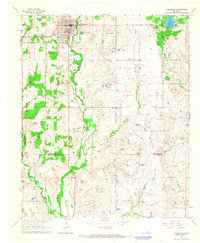 1964 Comanche1965 Print · USGSThe city of Comanche and the surrounding Stephens County countryside are captured here in the mid-sixties as the oil industry and rail lines shaped the landscape. Genealogists and historians can trace the Old Oklahoma Territory Indian Territory Boundary Line or locate rural landmarks like Countryside Ch and the High Sch.2 unique versions available
 - 1968 Map of Spanish Fort, 1971 Print
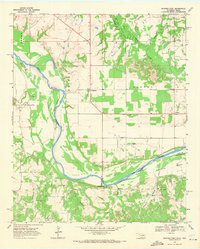 1968 Spanish Fort1971 Print · USGSThe Oklahoma-Texas borderlands along the Red River appear here in the late sixties as a landscape of rural settlements and emerging energy fields. Researchers can locate early burial sites and communities like Petersburg Cem, Spanish Fort, and the Illinois Bend Oil Field.2 unique versions available
 - 1968 Map of Terral, 1971 Print
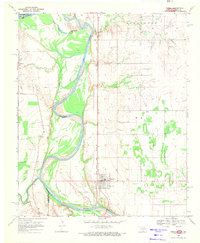 1968 Terral1971 Print · USGSThe Red River valley at the Oklahoma-Texas border in the late 1960s is defined by the winding Red River and the Chicago Rock Island and Pacific rail corridor. Genealogists and local historians can map out the town of Terral, locating the Terral Cem and the small nearby settlement of Fleet.2 unique versions available
 - 1968 Map of Fleetwood, 1971 Print
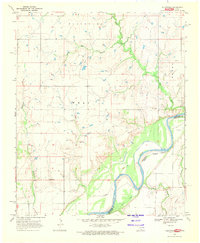 1968 Fleetwood1971 Print · USGSThe Oklahoma-Texas borderlands are captured here in the late sixties along the winding Red River. Researchers can trace the layout of Fleetwood, locate the church at Union, and map local industry through scattered Oil Wells and pipelines.
 - 1968 Map of Prairie Valley School, 1971 Print
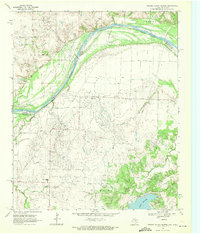 1968 Prairie Valley School1971 Print · USGSThe borderlands of Montague County and Jefferson County come into focus during the late sixties as the Red River winds through the Spanish Fort Field. Researchers can locate Prairie Valley Sch, the Spanish Fort Cemeteries, and the early footprint of Hynds City alongside the waters of Lake Nocona.
 - 1968 Map of Ringgold, 1971 Print
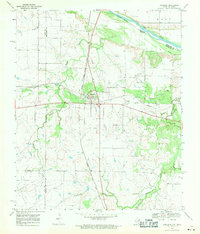 1968 Ringgold1971 Print · USGSNorthern Montague County is captured here in the late sixties, anchored by the rail crossing at Ringgold. Genealogists and historians can locate Ringgold Cem, the Worsham Oil Field, and the banks of the Red River.
 - 1974 Map of Orr, 1977 Print
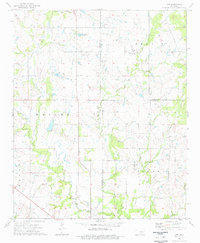 1974 Orr1977 Print · USGSThe Oklahoma borderlands near Orr are shown here in the mid-1970s, at the intersection of three counties. Genealogists and researchers can trace local landmarks like Center Point Ch, Orr Cem, and the active Oil Field that defined the regional economy.
 - 1974 Map of Ringling NW, 1977 Print
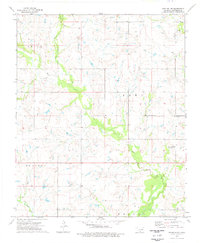 1974 Ringling NW1977 Print · USGSJefferson County's prairie and creek bottoms are documented here during the mid-1970s oil era. Genealogists and researchers can trace local drainage patterns along Mud Creek or locate scattered Oil Wells and the Ringling Municipal Airport.
 - 1974 Map of Loco, 1977 Print
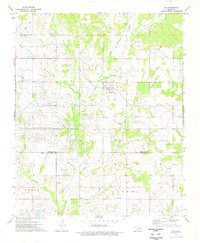 1974 Loco1977 Print · USGSThe rural community of Loco and its surrounding oil-rich landscape are captured here during the mid-seventies. Researchers can trace family history at Mountain Grove Cem or study the industrial layout of the LOCO FIELD and Asphaltum.
 - 1974 Map of Cottonwood Creek, 1977 Print
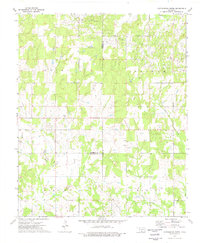 1974 Cottonwood Creek1977 Print · USGSIn the mid-1970s, this pocket of southern Oklahoma was a hub of energy production where the Loco Field met cattle-country creeks. Researchers can trace historical oil infrastructure alongside local landmarks like the Asphaltum Ch and Dixie Cemetery.
 - 1974 Map of Ringling, 1977 Print
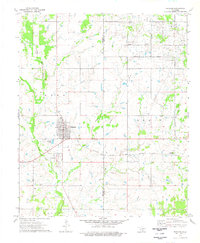 1974 Ringling1977 Print · USGSSouthern Oklahoma oil country comes into focus in the 1970s, showcasing the industrial footprint of the Hewitt Oil Field and the surrounding rail towns. Genealogists can trace family sites at the Cornish Cem and IOOF Cem or locate former rail stops like Cobalt Junction.
Showing maps 1-25 of 161
Top cities of Jefferson County
- Waurika historical maps
- Ringling historical maps
- Ryan historical maps
- Terral historical maps
- Cornish historical maps
- Hastings historical maps
See more
Frequently asked questions
- What are the different types of historical maps available for Jefferson County?
- What is the oldest map of Jefferson County?
- Where can I purchase historical maps of Jefferson County for my home or office?
- Where can I download high-res historical maps of Jefferson County?
- Are there historical topographic maps available for Jefferson County?
- Is there historical aerial imagery available for Jefferson County?
- Where are historical maps of Jefferson County sourced from?