Old Maps of Eagle Point, Oklahoma for Metal Detecting
Plan your next treasure hunt with 26 historic maps of Eagle Point. Find old homesites, ghost towns, trails, and gathering spots that may be lost to time — perfect for identifying promising metal detecting locations.
- Locate forgotten sites: Uncover places like long-lost settlements, abandoned rail lines, or gathering spots.
- Plan better hunts: Use map overlays combined with LiDAR or satellite views to narrow in on historically rich areas.
- Made for detectorists: Thousands of hobbyists use these maps to discover relics, coins, and hidden history.
Use these historic maps to boost your research and find new opportunities beneath the surface of Eagle Point.
Eagle Point, OK maps
(26)- 1896 Map of Okmulgee, 1954 Print
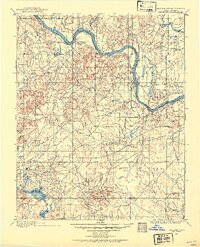 1896 Okmulgee1954 Print · USGSThe Creek Nation of the Indian Territory is captured here in the late nineteenth century, just before the turn of the century. Genealogists and researchers can trace early mission sites like Wealaka Mission and established frontier settlements including Council Hill and Wellington.
 - 1900 Map of Okmulgee
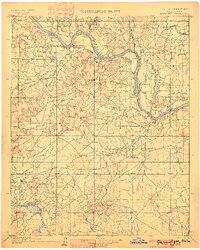 1900 Okmulgee1900 Print · USGSThe Indian Territory of the Creek Nation is captured here during the late 1890s, just before statehood changed the region forever. Researchers can trace the early foundations of Okmulgee or locate vanished sites like Wealaka Mission and Wellington (Lee P.O.).6 unique versions available
 - 1901 Map of Claremore
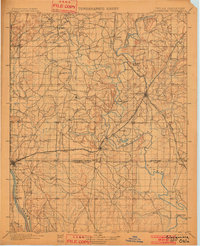 1901 Claremore1901 Print · USGSThe Cherokee, Osage, and Creek Nations converge in the Indian Territory during this era of rapid railroad expansion. Researchers can trace early settlements and tribal boundaries, locating the Island Ferry, the junction at Claremore, and early Tulsa.4 unique versions available
 - 1914 Map of Claremore, 1959 Print
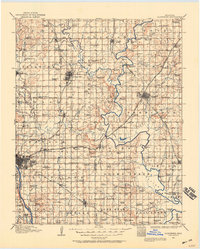 1914 Claremore1959 Print · USGSNortheastern Oklahoma was a landscape of river crossings and rail towns in the years just before the Great War. Genealogists and researchers can trace the locations of dozens of vanished rural schools like Elm Ridge School, river landmarks such as Thomas Ferry, and the early footprints of Broken Arrow and Tulsa.
 - 1916 Map of Claremore
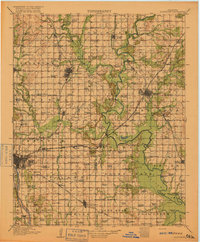 1916 Claremore1916 Print · USGSThe Verdigris River valley and the burgeoning rail hubs of Rogers and Tulsa counties are captured here just after Oklahoma statehood. Genealogists can locate family homesteads near dozens of early schools like Fair Valley School or early churches such as Greenwood Chapel.4 unique versions available
 - 1946 Map of Fort Smith
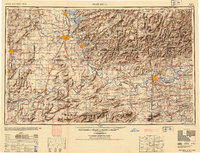 1946 Fort Smith1946 Print · USGSThe Arkansas-Oklahoma borderlands appear here in the mid-forties, as new reservoirs began to transform the river valleys. Genealogists and historians can trace rail-served towns from Muskogee to Fort Smith and locate landmarks like Camp Chaffee.
 - 1954 Map of Tulsa
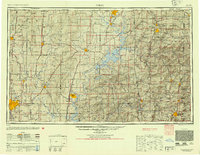 1954 Tulsa1954 Print · USGSNortheast Oklahoma and the Ozark border are shown here during a period of massive industrial and infrastructure growth. Researchers can trace the legacy of the Tri-State Mining District and the development of major reservoirs like Grand Lake O' The Cherokees.2 unique versions available
 - 1958 Map of Tulsa, 1968 Print
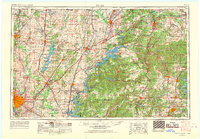 1958 Tulsa1968 Print · USGSNortheast Oklahoma and the Ozark borderlands are captured here during a massive era of reservoir construction and highway expansion. Researchers can trace the mid-century footprints of Tulsa, the sprawling Lake O' the Cherokees, and historical sites like Pea Ridge National Military Park.3 unique versions available
 - 1963 Map of Tulsa
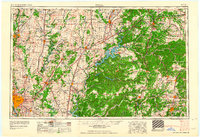 1963 Tulsa1963 Print · USGSThe Oklahoma and Arkansas borderlands are shown here in the early sixties, a time of massive reservoir construction and heavy mining. Genealogists can trace family roots through settlements like Nowata, Pryor, and Jay, or locate historical zinc and lead mines and coal mines.
 - 1963 Map of Coweta, 1964 Print
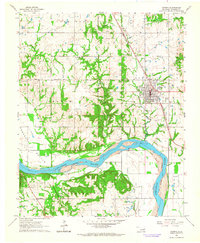 1963 Coweta1964 Print · USGSWagoner County as the oil and gas industry matured in the early sixties, centered on the Arkansas River. Trace family histories at Tiger Cem and Odd Fellow Cem or the rails of the Missouri-Kansas-Texas line.3 unique versions available
 - 1963 Map of Oneta, 1964 Print
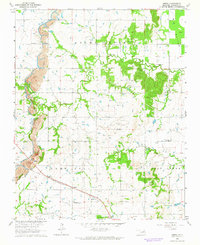 1963 Oneta1964 Print · USGSWagoner County during the early sixties shows a landscape of rail-fed settlements and active extraction. Researchers can locate family landmarks like Springtown Church and Bailey Cemetery alongside the Strip Mines and the Missouri-Kansas-Texas railroad.3 unique versions available
 - 1965 Map of Fort Smith
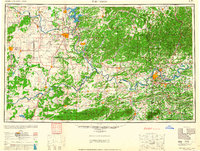 1965 Fort Smith1965 Print · USGSEastern Oklahoma and Western Arkansas are captured here during a period of massive post-war change as new reservoirs reshaped the river valleys. Genealogists and historians can trace the rail networks of the Midland Valley RR and find established communities like Stilwell, Sallisaw, and Stigler.
 - 1967 Map of Fort Smith
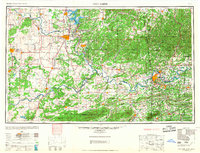 1967 Fort Smith1967 Print · USGSThe Arkansas River valley and the foothills of the Ozarks are captured here during a period of significant military and industrial activity. Researchers can trace the sprawling bounds of Camp Chaffee and Camp Gruber or locate vanished rail stops along the Midland Valley RR.
 - 1978 Map of Muskogee, 1979 Print
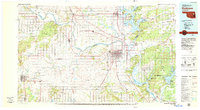 1978 Muskogee1979 Print · USGSThe confluence of the Arkansas, Verdigris, and Neosho Rivers defines the Muskogee region in the late seventies. Genealogists and historians can trace the footprints of Camp Gruber (Abandoned), the campus of Bacone College, and early aviation at Hatbox Field.
 - 1978 Map of Fort Smith, 1979 Print
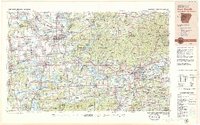 1978 Fort Smith1979 Print · USGSThe Arkansas-Oklahoma borderlands in the late seventies show a landscape shaped by massive river reservoirs and sprawling military reservations. Trace the historic rail lines of the Missouri Pacific RR and locate regional landmarks like Fort Gibson, Tenkiller Ferry Lake, and Barling.2 unique versions available
 - 1985 Map of Tulsa
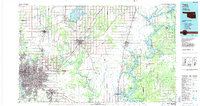 1985 Tulsa1985 Print · USGSNortheastern Oklahoma in the mid-eighties shows a landscape shaped by massive reservoirs and a bustling transportation network. Researchers can trace the path of the Will Rogers Turnpike or locate local landmarks like Mohawk Park and Oologah Lake.2 unique versions available
 - 2010 Map of Oneta, 2010 Print
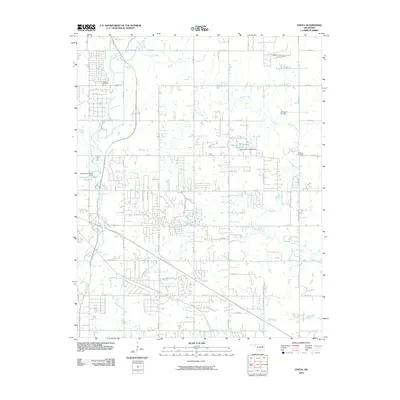 2010 Oneta2010 Print · USGSTulsa’s eastern suburban frontier comes into focus during this period of rapid expansion and highway growth. Genealogists and local historians can trace family roots at Smith Cemetery or Bailey Cemetery while following the paths of Adams Creek and the Creek Tpke.
 - 2010 Map of Coweta, 2010 Print
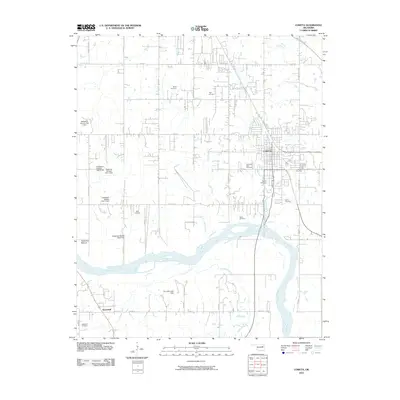 2010 Coweta2010 Print · USGSWagoner County at the start of the 2010s shows a landscape of river-bottom farming and growing townships. Genealogists can trace family footprints across numerous sites like Tiger Cemetery, Bird Cemetery, and Stonebluff along the Arkansas River.
 - 2012 Map of Oneta, 2012 Print
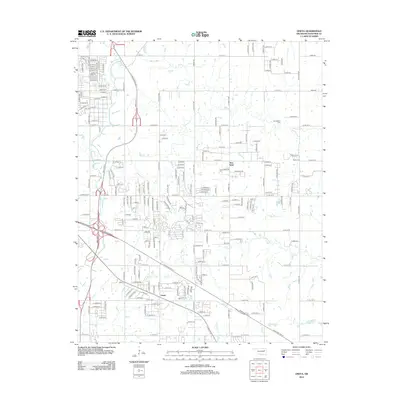 2012 Oneta2012 Print · USGSThe outskirts of Tulsa and the community of Oneta are shown here as they appeared during the early twenty-first century. Genealogists and local historians can trace rural family plots at Smith Cem and Bailey Cem along the banks of Adams Cr.
 - 2012 Map of Coweta, 2012 Print
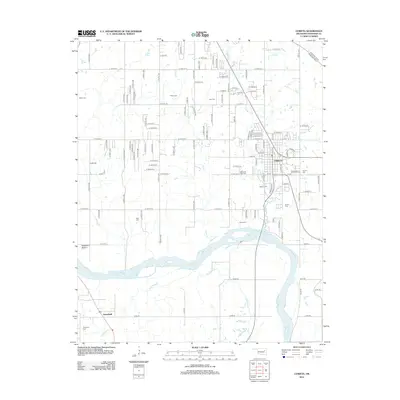 2012 Coweta2012 Print · USGSThe Arkansas River valley in Wagoner County is captured here during a period of steady suburban transition and rural preservation. Genealogists can trace numerous local burial sites such as Tiger Cem, Gipson Cem, and the riverside Atkins Cem.
 - 2016 Map of Oneta, 2016 Print
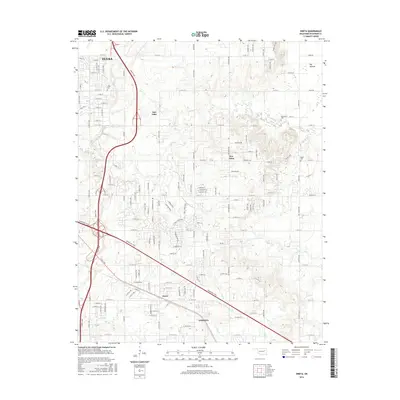 2016 Oneta2016 Print · USGSEastern Oklahoma's transition from rural townships to suburban hubs is captured here at the intersection of the Creek Tpke and Muskogee Tpke. Genealogists and local historians can trace family roots at Smith Cem, Springtown Cem, and the historic settlement of Oneta.
 - 2016 Map of Coweta, 2016 Print
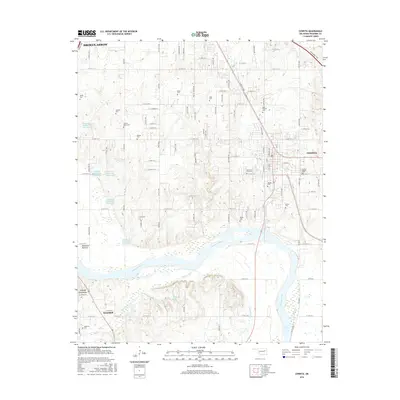 2016 Coweta2016 Print · USGSCoweta and the southern edge of Broken Arrow are shown here during a period of modern expansion along the Arkansas River valley. Genealogists and historians can locate numerous rural burial sites like Odd Fellows Cem and Bird Cem or trace the drainage of Concharty Cr.
 - 2018 Map of Coweta, 2018 Print
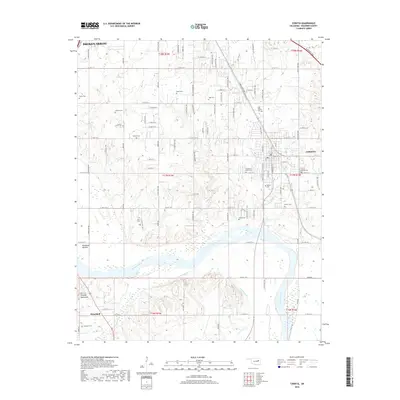 2018 Coweta2018 Print · USGSWagoner County in the late 2010s reveals a landscape defined by the Arkansas River and its surrounding agricultural and upland communities. Genealogists can locate numerous small burial grounds including Odd Fellows Cem, Gipson Cem, and Bird Cem.
 - 2019 Map of Oneta, 2019 Print
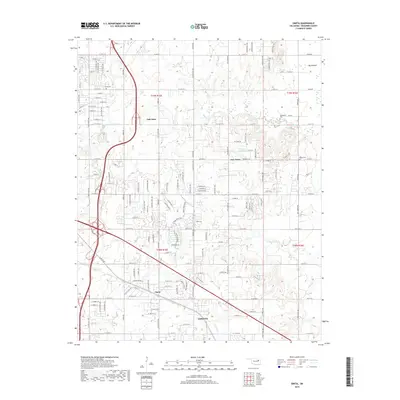 2019 Oneta2019 Print · USGSWagoner County is seen in a period of suburban expansion and modern development in the late 2010s. Genealogists and local historians can trace residential growth around Oneta and Fair Oaks, while locating established sites like Springtown Cem and Coal Creek.
 - 2022 Map of Coweta, 2022 Print
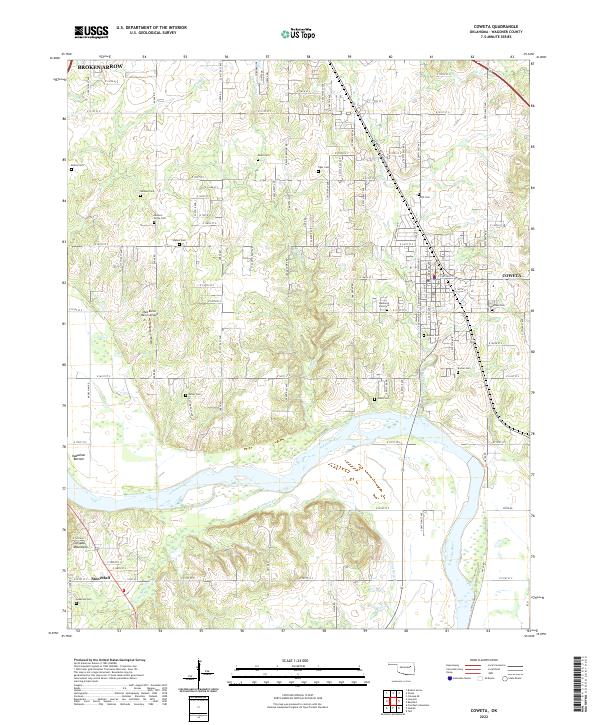 2022 Coweta2022 Print · USGSWagoner County at the turn of the decade shows the meeting of the Arkansas River valley and the rising Conjada Mountains. Genealogists can trace a remarkable number of rural burial sites, from the IOOF Cem and Miller Cem to the Gipson Cem near Coweta.
Showing maps 1-25 of 26
Frequently asked questions
- What are the different types of historical maps available for Eagle Point?
- What is the oldest map of Eagle Point?
- Where can I purchase historical maps of Eagle Point for my home or office?
- Where can I download high-res historical maps of Eagle Point?
- Are there historical topographic maps available for Eagle Point?
- Is there historical aerial imagery available for Eagle Point?
- Where are historical maps of Eagle Point sourced from?