Old Maps of Anderson, Oregon
Explore 19 old maps of Anderson, spanning from 1911 to today. These high-resolution historic maps reveal how streets, neighborhoods, landmarks, and natural features evolved over time — perfect for genealogy, metal detecting, research, and local history exploration.
What you can do with these maps:
- See how Anderson changed over time: Compare historical maps to modern-day views to trace roads, homesites, rail lines & more.
- View detailed metadata: Each map includes creators, publishers, year, scale, and archive source.
- Overlay maps with satellite & LiDAR: Visualize the past alongside modern tools to explore terrain & human change.
- Trusted historical sources: Maps sourced from the USGS, Library of Congress, and other archives.
- Access maps your way: View online, download high-res files, or order prints for personal or research use.
Start exploring old maps of Anderson to uncover forgotten places, hidden landmarks, and the deep history beneath your feet.
Anderson, OR maps
(19)- 1911 Map of Boring
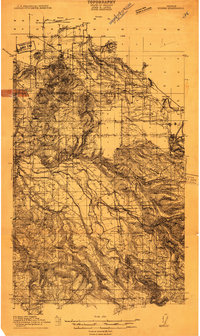 1911 Boring1911 Print · USGSClackamas County was a patchwork of small farming communities and emerging rail hubs in the decade before the First World War. Researchers can trace the early footprints of settlements like Boring and Gresham, alongside family landmarks such as Peterson Crossroads and Sycamore School.
 - 1914 Map of Boring
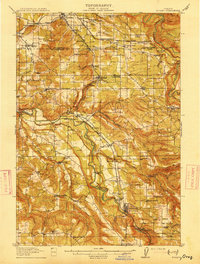 1914 Boring1914 Print · USGSThe Clackamas River valley was a hub of early twentieth-century logging and electric rail expansion between Gresham and Estacada. Genealogists and historians can trace defunct river crossings like McMurray Ferry and rural landmarks such as Fishers Mill and Stone School.3 unique versions available
 - 1916 Map of Estacada
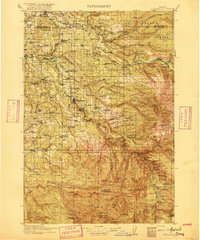 1916 Estacada1916 Print · USGSClackamas County is captured here during a period of rapid hydroelectric and rail development just before the First World War. Researchers can trace early family homesteads near Fishers Mill, the old Feldbimer Ferry crossing, and the rail line serving Boring and Estacada.5 unique versions available
 - 1940 Map of Boring
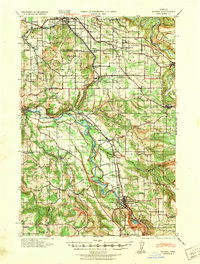 1940 Boring1940 Print · USGSClackamas and Multnomah Counties are captured in the late thirties, documenting a landscape shaped by the Clackamas River and electric rail lines. Trace the route of the Cazadero Line or locate family roots at Mt Zion Cem and Lusted School.
 - 1948 Map of Vancouver, 1957 Print
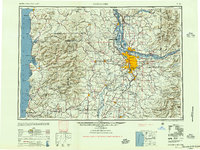 1948 Vancouver1957 Print · USGSPost-war growth transforms the river valleys of the Pacific Northwest as the timber and rail economy thrives. Trace family roots in Tillamook or Oregon City, and locate vanished landmarks like the spit at Bayocean or the Skamania Mine.
 - 1950 Map of Vancouver
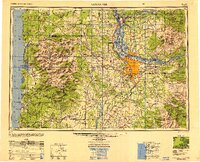 1950 Vancouver1950 Print · USGSCoastal Oregon and the lower Columbia River valley are captured in detail just after the war. Researchers can trace historic rail routes like the Southern Pacific or locate early settlements such as Vernonia, Gaston, and the Grand Ronde Indian Reservation.
 - 1950 Map of Vancouver, 1951 Print
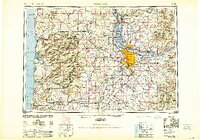 1950 Vancouver1951 Print · USGSThe Pacific Northwest urban corridor meets the rugged coast in the years following the war, showing the expansion of Portland and Vancouver. Genealogists and historians can trace the reach of the Southern Pacific RR and locate coastal communities like Tillamook, Seaside, and Tolovana Park.
 - 1954 Map of Damascus, 1956 Print
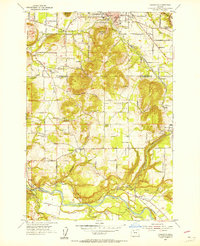 1954 Damascus1956 Print · USGSClackamas and Multnomah counties appear in the mid-1950s as a landscape of rural schools and river-valley settlements. Researchers can trace the Portland Traction Co line through Boring or locate family landmarks like the Baker Cabin and Union School.
 - 1958 Map of Vancouver, 1968 Print
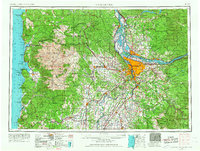 1958 Vancouver1968 Print · USGSThe Lower Columbia and Willamette valleys thrive in the late sixties as major rail and river hubs. Genealogists and historians can trace the development of Portland, identify the grounds of Camp Withycombe, and locate coastal landmarks from Tillamook Head to Garibaldi.3 unique versions available
 - 1961 Map of Damascus
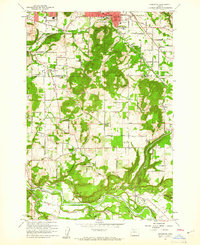 1961 Damascus1961 Print · USGSSoutheast of Portland in the early sixties, this area shows the suburban transition between Gresham and Boring. Genealogists and historians can locate the Sunnyside Church, trace the Portland Traction Co rail line, or find family-named landmarks like Walters Hill.4 unique versions available
 - 1961 Map of Sandy, 1962 Print
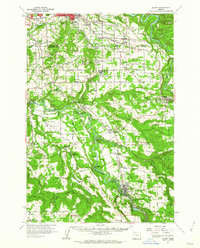 1961 Sandy1962 Print · USGSClackamas County was a landscape of river-driven industry and rural crossroads in the early sixties. Researchers can trace historic river crossings at the Feldheimer Ferry (Site), find the Fischers Mill site, and locate early schools like Damascus Union Sch.
 - 1964 Map of Vancouver
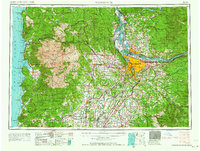 1964 Vancouver1964 Print · USGSThe Pacific Northwest interior and coast are shown here in the 1960s, from the Portland metropolitan hub to the rugged Pacific shoreline. Researchers can trace the legacy of the Grand Ronde Indian Reservation, the early layout of McMinnville, and the maritime approaches near Tillamook Head.
 - 1975 Map of Damascus, 1985 Print
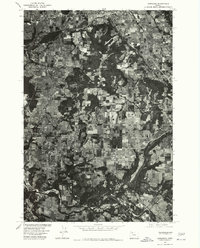 1975 Damascus1985 Print · USGSClackamas County is captured in the mid-1970s as a patchwork of timber and farmland during a period of steady rural growth. Researchers can trace the development of Damascus and Boring while examining the wooded slopes of Walters Hill.
 - 1982 Map of Oregon City, 1983 Print
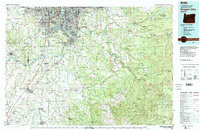 1982 Oregon City1983 Print · USGSGreater Portland and the Willamette Valley are shown in the early eighties as the region's urban and rural landscapes converged. Genealogists and historians can trace family-named sites across French Prairie, visit St Paul Ch, or locate the grounds of Dammasch State Hospital.
 - 2011 Map of Damascus, 2011 Print
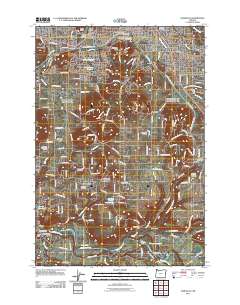 2011 Damascus2011 Print · USGSCovers Anderson, including Portland, Gresham, and other nearby areas
 - 2014 Map of Damascus, 2014 Print
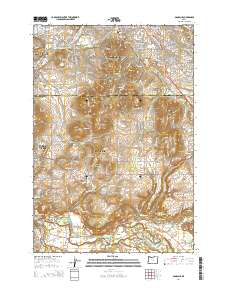 2014 Damascus2014 Print · USGSCovers Anderson, including Portland, Gresham, and other nearby areas
 - 2017 Map of Damascus, 2017 Print
 2017 Damascus2017 Print · USGSCovers Anderson, including Portland, Gresham, and other nearby areas
 - 2020 Map of Damascus, 2020 Print
 2020 Damascus2020 Print · USGSCovers Anderson, including Portland, Gresham, and other nearby areas
 - 2023 Map of Damascus, 2023 Print
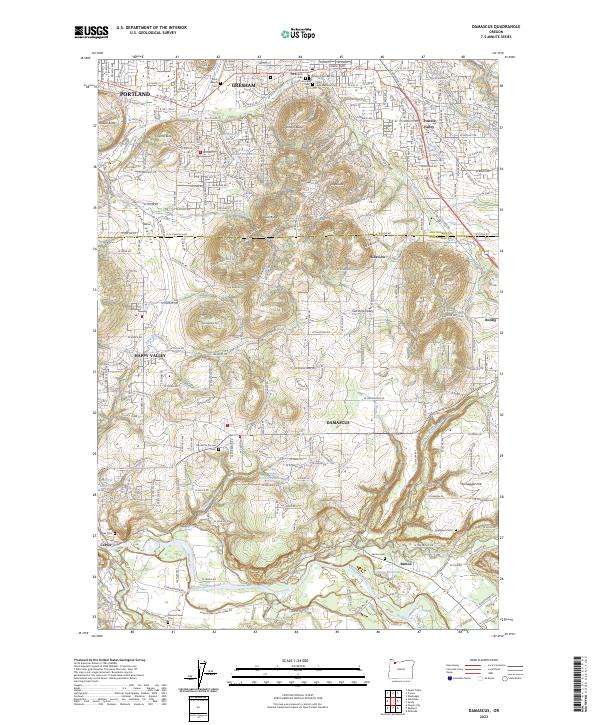 2023 Damascus2023 Print · USGSThe Clackamas and Multnomah county line area shows a maturing landscape of volcanic buttes and river valleys in the 2020s. Researchers can trace local history through numerous burial grounds like Gresham Pioneer Cem and Barton Cem or follow the waters of the Clackamas River.
End of results
Showing maps 1-19 of 19
Top cities near Anderson
- Portland historical maps
- Vancouver historical maps
- Gresham historical maps
- Oregon City historical maps
- West Linn historical maps
- Camas historical maps
See more
Frequently asked questions
- What are the different types of historical maps available for Anderson?
- What is the oldest map of Anderson?
- Where can I purchase historical maps of Anderson for my home or office?
- Where can I download high-res historical maps of Anderson?
- Are there historical topographic maps available for Anderson?
- Is there historical aerial imagery available for Anderson?
- Where are historical maps of Anderson sourced from?