1900s (20th Century) Maps of North Bend, Oregon
Explore 11 historic maps of North Bend from the 1900s (20th Century). These maps offer a rare glimpse into what life looked like during the 1900s — showing old roads, neighborhoods, homes, and landmarks that have changed or disappeared over time.
Whether you're researching your family's past, planning a metal detecting trip, or studying how North Bend's landscape evolved across the 1900s, these high-resolution maps are a powerful tool for exploring the history of this region.
- Focus on a specific era: All maps on this page are from the 1900s, giving you a focused view of this time period.
- See what’s changed: Compare century-old streets, trails, and buildings to today's modern landscape using overlays and satellite layers.
- Research with precision: Use these maps for genealogy, historical research, land use analysis, or educational projects.
- View, download, or print: Maps are fully viewable online in high resolution, and can be downloaded or printed for your own records.
Start exploring North Bend's history through authentic maps from the 1900s. This is your window into the past.
North Bend, OR maps
(11)- 1900 Map of Coos Bay
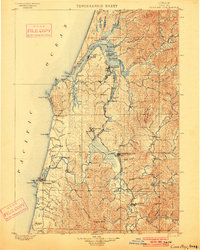 1900 Coos Bay1900 Print · USGSThe Oregon coast at the turn of the century was a landscape of tide-water towns and river commerce centered on the massive Coos Bay inlet. Genealogists and local historians can trace early settlements like Marshfield, follow the Randolph Trail, and locate forgotten landings along Isthmus Slough.7 unique versions available
 - 1942 Map of Empire, 1958 Print
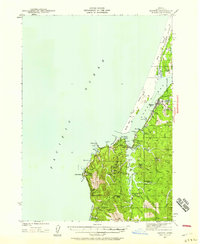 1942 Empire1958 Print · USGSThe Oregon coast at Coos Bay is documented here in the early 1940s, showing a transition from maritime industry to rural ranching. Researchers can locate early family homesteads like Oldland Ranch and trace industrial sites such as the Chickamin Mine and the Pulp Mill in Empire.2 unique versions available
 - 1942 Map of Coos Bay, 1961 Print
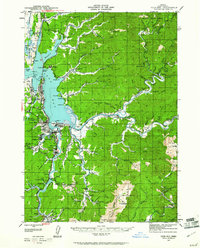 1942 Coos Bay1961 Print · USGSCoastal Oregon at the start of the war years reveals a landscape shaped by coal mining, timber, and a complex network of tidal sloughs. Researchers can locate vanished infrastructure like the Enegren Ferry or trace industrial roots at the Southport Coal Mine and Libby Coal Mine.2 unique versions available
 - 1944 Map of Empire
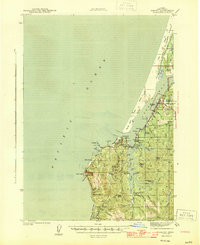 1944 Empire1944 Print · USGSCoastal Coos County during the mid-1940s reveals a maritime economy balanced between ranching and industry. Genealogists can locate family-named landmarks like Sengstacken Ranch or trace early school sites such as Beach View Sch and South Slough Sch.4 unique versions available
 - 1945 Map of Coos Bay
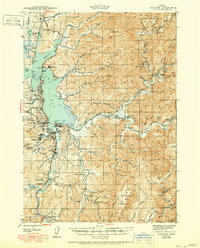 1945 Coos Bay1945 Print · USGSThe Coos Bay region in the mid-1940s shows a landscape where industrial coal mining and timber met the rising Oregon coast tourism era. Genealogists and historians can trace defunct operations like the Libby Coal Mine or find rural landmarks such as Masters Landing and Sunset Cem.3 unique versions available
 - 1954 Map of Coos Bay
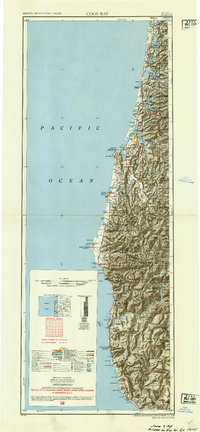 1954 Coos Bay1954 Print · USGSCoastal Oregon at mid-century shows a landscape of timber and tides, from the river ports to the edge of the Pacific. Researchers can trace family roots through coastal schools like Beachview School or follow the Southern Pacific RR through Reedsport and Coos Bay.
 - 1958 Map of Coos Bay, 1974 Print
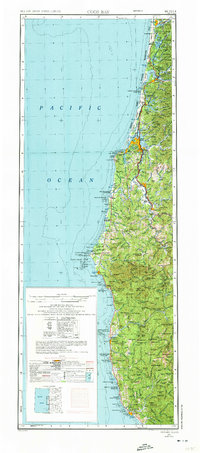 1958 Coos Bay1974 Print · USGSThe Southern Oregon coastline at mid-century reveals a bustling maritime and timber economy centered on Coos Bay and North Bend. Researchers can trace the legacy of coastal settlements from Bandon to Brookings, including rail lines of the Southern Pacific RR and the rugged reaches of the Siuslaw National Forest.
 - 1962 Map of Coos Bay
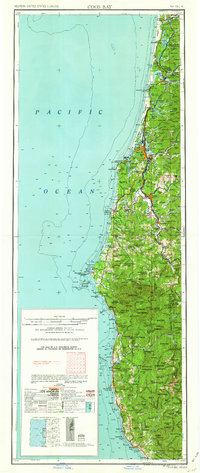 1962 Coos Bay1962 Print · USGSThe Oregon coast at the end of the fifties reveals a landscape of timber ports and fishing villages connected by U.S. Highway 101. Researchers can trace the rail infrastructure of the Southern Pacific RR and locate early settlements from Florence down to Brookings.2 unique versions available
 - 1970 Map of Empire, 1973 Print
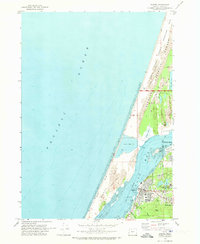 1970 Empire1973 Print · USGSThe Coos Bay shoreline at the start of the 1970s reveals a landscape defined by industrial expansion and coastal preservation. Researchers can trace the layout of the Empire settlement, the campus of Southwestern Oregon Community College, and the sprawling North Spit.2 unique versions available
 - 1971 Map of North Bend, 1974 Print
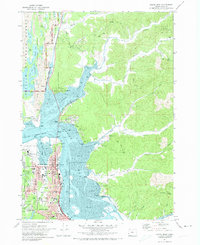 1971 North Bend1974 Print · USGSThe Coos Bay shoreline was a hub of industrial and timber activity in the early seventies, centered on the growing port cities. Genealogists and researchers can trace local neighborhoods and schools like Sunny Hill Sch, the historic McCullough Bridge, and rural corners such as Cooston.
 - 1993 Map of Coos Bay
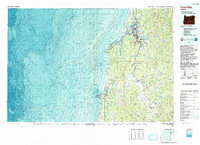 1993 Coos Bay1993 Print · USGSCoastal Oregon at the start of the nineties reveals a complex landscape of maritime trade, timber forests, and riverside hamlets. Researchers can trace the legacy of the Southern Pacific railroad and find localized landmarks like Parkersburg, Prosper, and Bunker Hill.
End of results
Showing maps 1-11 of 11
Top cities near North Bend
- Coos Bay historical maps
- Coquille historical maps
- Barview historical maps
- Lakeside historical maps
- Charleston historical maps
Frequently asked questions
- What are the different types of historical maps available for North Bend?
- What is the oldest map of North Bend?
- Where can I purchase historical maps of North Bend for my home or office?
- Where can I download high-res historical maps of North Bend?
- Are there historical topographic maps available for North Bend?
- Is there historical aerial imagery available for North Bend?
- Where are historical maps of North Bend sourced from?