Old Maps of Millican, Oregon for Hiking & Exploration
Hike through history with 11 historic maps of Millican. Explore old trails, ghost towns, and forgotten backroads — perfect for outdoor adventurers and local explorers.
- Rediscover forgotten places: Map out old mining camps, roads, and footpaths that no longer exist on modern maps.
- Layer with modern tools: Combine with LiDAR or satellite views to plan hikes through historical terrain.
- Made for exploration: Popular among hikers, overlanders, and local history lovers.
Use these maps to find adventure and explore the hidden past of Millican.
Millican, OR maps
(11)- 1955 Map of Crescent, 1963 Print
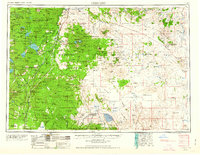 1955 Crescent1963 Print · USGSCentral Oregon in the mid-1950s was a landscape of dense national forests and high desert expanses. Researchers can trace timber-era settlements like Gilchrist and Crescent or locate remote outposts such as Stauffer and Millican near the Wagontire Mountains.3 unique versions available
 - 1957 Map of Crescent
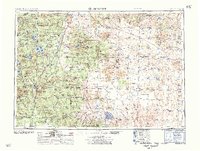 1957 Crescent1957 Print · USGSCentral Oregon’s high desert and volcanic rim are captured here in the late fifties, showing the region before the modernization of its wilderness corridors. Genealogists and local historians can trace rail-line outposts like Chemult and the early boundaries of the Klamath Indian Reservation.
 - 1958 Map of Crescent
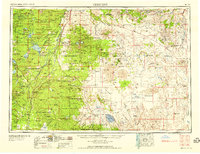 1958 Crescent1958 Print · USGSCentral Oregon’s volcanic high desert and timber country are captured here in the mid-fifties, from the peaks of the Cascades to the arid basins. Researchers can trace the lines of the Southern Pacific RR, the northern reaches of the Klamath Indian Reservation, and remote outposts like Fort Rock.
 - 1967 Map of Millican, 1969 Print
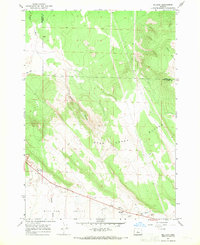 1967 Millican1969 Print · USGSThe high desert of Deschutes County comes into focus during the late 1960s, showing the intersection of ranching life and volcanic geology. Genealogists and historians can locate the Millican townsite, the Landing Strip, and family-named landmarks like Coyote Well.2 unique versions available
 - 1970 Map of Crescent, 1973 Print
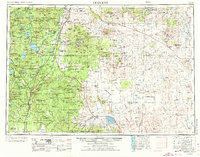 1970 Crescent1973 Print · USGSCentral Oregon in the early seventies reveals a landscape of volcanic peaks and timber outposts connected by the Southern Pacific rail line. Researchers can trace the layout of Christmas Valley, locate Cabin Lake Ranger Station, and explore the geological footprint of Newberry Crater.
 - 1983 Map of Brothers, 1994 Print
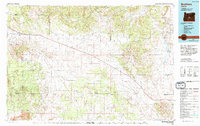 1983 Brothers1994 Print · USGSThe high desert of central Oregon appears here during the early eighties, showing the remote ranching outposts and volcanic formations of the region. Trace local landmarks like the Millican settlement, the extensive Lava flows, and the elevations of Glass Buttes.2 unique versions available
 - 2011 Map of Millican, 2011 Print
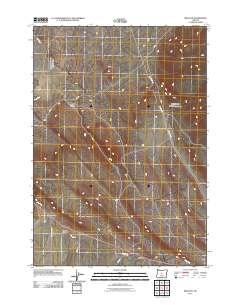 2011 Millican2011 Print · USGSThe high desert landscape of central Oregon comes into focus during the early twenty-first century as modern transportation routes meet traditional terrain. Researchers can trace the path of the Dry River or locate remote intersections at Millican and Tepee Draw.
 - 2014 Map of Millican, 2014 Print
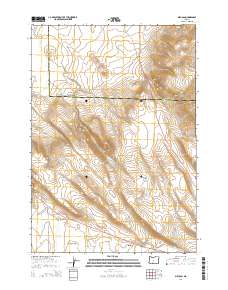 2014 Millican2014 Print · USGSThe high desert of Central Oregon is captured here in the early twenty-first century, centered on the small settlement of Millican. Researchers can trace the path of the Dry River through the Millican Valley and locate landmarks like the Bear Creek Buttes.
 - 2017 Map of Millican, 2017 Print
 2017 Millican2017 Print · USGSThe high-desert expanse of the Millican Valley and the Deschutes-Crook county line are captured here in the late 2010s. Trace the rural routes connecting Millican to landmarks like the Dry River, Bear Creek Buttes, and Tepee Draw.
 - 2020 Map of Millican, 2020 Print
 2020 Millican2020 Print · USGSCentral Oregon's high desert near the turn of the decade shows a landscape shaped by volcanic buttes and seasonal watercourses. Researchers can trace historic access routes like Spencer Wells Rd and identify topographical landmarks such as West Butte and Tepee Draw.
 - 2024 Map of Millican, 2024 Print
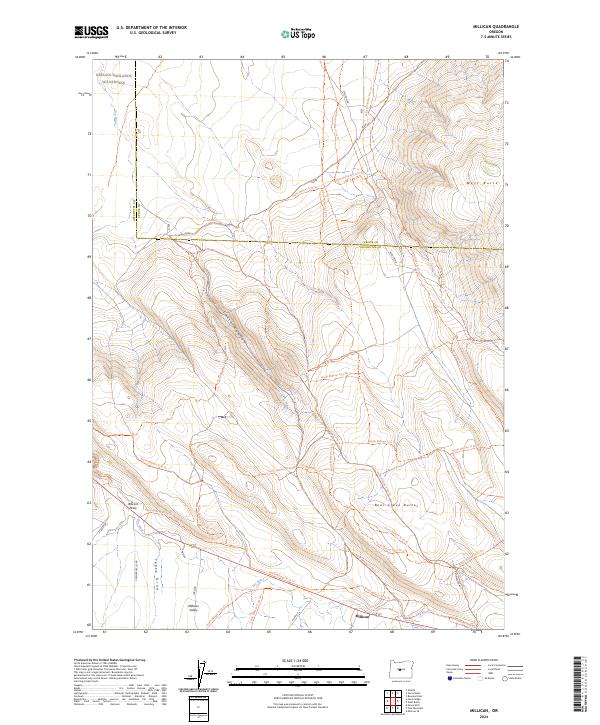 2024 Millican2024 Print · USGSThe High Desert crossroads of Millican are captured here in the 2020s, showing the settlement's relationship to the surrounding sagebrush plains. Genealogists and desert explorers can trace the historic paths of Dry River and the extensive trail network across Millican Valley.
End of results
Showing maps 1-11 of 11
Frequently asked questions
- What are the different types of historical maps available for Millican?
- What is the oldest map of Millican?
- Where can I purchase historical maps of Millican for my home or office?
- Where can I download high-res historical maps of Millican?
- Are there historical topographic maps available for Millican?
- Is there historical aerial imagery available for Millican?
- Where are historical maps of Millican sourced from?