1900s (20th Century) Maps of Orange Township, Pennsylvania
Explore 12 historic maps of Orange Township from the 1900s (20th Century). These maps offer a rare glimpse into what life looked like during the 1900s — showing old roads, neighborhoods, homes, and landmarks that have changed or disappeared over time.
Whether you're researching your family's past, planning a metal detecting trip, or studying how Orange Township's landscape evolved across the 1900s, these high-resolution maps are a powerful tool for exploring the history of this region.
- Focus on a specific era: All maps on this page are from the 1900s, giving you a focused view of this time period.
- See what’s changed: Compare century-old streets, trails, and buildings to today's modern landscape using overlays and satellite layers.
- Research with precision: Use these maps for genealogy, historical research, land use analysis, or educational projects.
- View, download, or print: Maps are fully viewable online in high resolution, and can be downloaded or printed for your own records.
Start exploring Orange Township's history through authentic maps from the 1900s. This is your window into the past.
Orange Township, PA maps
(12)- 1947 Map of Bloomsburg
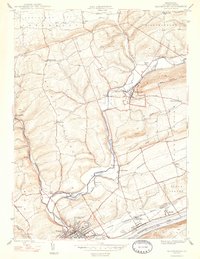 1947 Bloomsburg1947 Print · USGSColumbia County at the dawn of the postwar era reveals a bustling river valley centered on Bloomsburg. Researchers can trace the legacy of the State Teachers College, local industry at the Paper Mill, and rural sites like Hidlay Ch.2 unique versions available
 - 1947 Map of Mifflinville
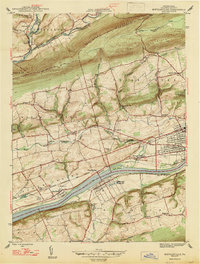 1947 Mifflinville1947 Print · USGSThe Susquehanna River valley in the late 1940s reveals a corridor of industrial growth and rural tradition. Researchers can trace family roots at Roselawn Cem, locate the old Center Sch, or follow the rail lines through Lime Ridge and Mifflinville.2 unique versions available
 - 1953 Map of Bloomsburg, 1955 Print
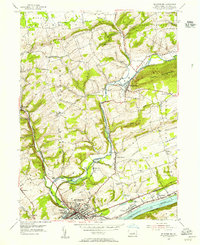 1953 Bloomsburg1955 Print · USGSBloomsburg and the Susquehanna River valley are captured here in the early fifties, showing a landscape defined by collegiate growth and industrial transit. Researchers can locate State Teachers College, the Irondale Dam, and neighborhood landmarks like Espy and the New Rosemont Cemetery.4 unique versions available
 - 1954 Map of Williamsport
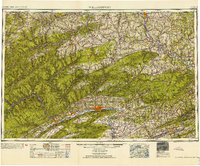 1954 Williamsport1954 Print · USGSNorth-central Pennsylvania in the mid-fifties is defined by the winding West Branch Susquehanna River and its industrial valley. Local historians can trace the massive Susquehanna Ordnance Depot and the extensive rail networks of the Pennsylvania Railroad.
 - 1954 Map of Mifflinville, 1955 Print
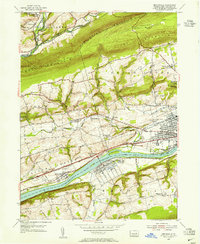 1954 Mifflinville1955 Print · USGSThe Susquehanna River valley in the mid-1950s is shown here at its industrial and agrarian height, dominated by the great rail lines and river towns. Genealogists and local historians can trace family roots at Roselawn Cemetery, the Old Stone Ch, and vanished markers near Dennis Mills.4 unique versions available
 - 1954 Map of Bloomsburg, 1955 Print
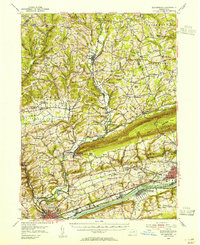 1954 Bloomsburg1955 Print · USGSBloomsburg and the Susquehanna River valley are captured in the mid-fifties, showing the region's transition from riverfront industry to upland farming. Genealogists can trace family names across Coles Mill, Hidlay Ch Cem, and the State Teachers College.2 unique versions available
 - 1960 Map of Williamsport
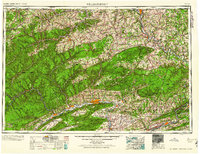 1960 Williamsport1960 Print · USGSNorth-central Pennsylvania in the mid-twentieth century was a vital corridor of rail and river industry stretching from the New York line to the coal regions. Genealogists can trace the rail networks of the Pennsylvania RR and Lehigh Valley RR connecting towns like Williamsport, Towanda, and Lock Haven.
 - 1962 Map of Williamsport, 1966 Print
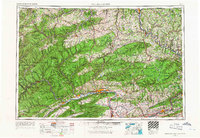 1962 Williamsport1966 Print · USGSNorth-central Pennsylvania was a landscape of industrial river hubs and vast state woodlands in the early sixties. Researchers can trace the path of the Pennsylvania Railroad through Williamsport and explore the remote reaches of Bucktail State Park.5 unique versions available
 - 1965 Map of Williamsport
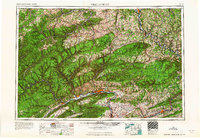 1965 Williamsport1965 Print · USGSNorth-central Pennsylvania in the mid-1960s is defined by the industrial river towns and vast timberlands of the Allegheny Plateau. Researchers can trace historic rail lines like the Erie Lackawanna and Reading as they thread through Williamsport, Lock Haven, and Jersey Shore.
 - 1966 Map of Williamsport
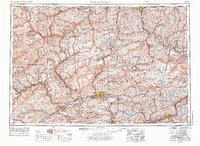 1966 Williamsport1966 Print · USGSThe Susquehanna Valley was a hub of transit and industry in the mid-seventies, where the river's West Branch connected major college towns and timberlands. Researchers can trace historical rail lines like the Reading or locate regional landmarks from Jersey Shore to Ricketts Glen State Park.
 - 1984 Map of Williamsport East, 1985 Print
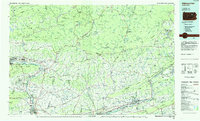 1984 Williamsport East1985 Print · USGSThe Susquehanna River valley and Allegheny highlands come together in this mid-eighties survey of central Pennsylvania. Trace family roots at Muncy Cem or locate institutional landmarks like Lycoming College and the State Correctional Institution at Retreat.2 unique versions available
 - 1999 Map of Bloomsburg, 2001 Print
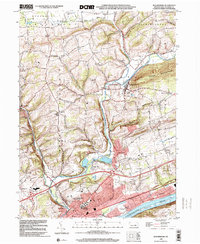 1999 Bloomsburg2001 Print · USGSThe Susquehanna River valley near Bloomsburg is seen here in the late twentieth century as a hub of education and industry. Researchers can trace the layout of the State Teachers College, local churches like Canby Ch, and the historic community of Light Street.
End of results
Showing maps 1-12 of 12
Top cities near Orange Township
- Bloomsburg historical maps
- Berwick historical maps
- Elysburg historical maps
- Greenwood Township historical maps
- North Centre Township historical maps
- Riverside historical maps
See more
Frequently asked questions
- What are the different types of historical maps available for Orange Township?
- What is the oldest map of Orange Township?
- Where can I purchase historical maps of Orange Township for my home or office?
- Where can I download high-res historical maps of Orange Township?
- Are there historical topographic maps available for Orange Township?
- Is there historical aerial imagery available for Orange Township?
- Where are historical maps of Orange Township sourced from?