1960s Maps of Greene County, Pennsylvania
Explore 17 historic maps of Greene County from the 1960s. These maps offer a rare glimpse into what life looked like during the 1960s — showing old roads, neighborhoods, homes, and landmarks that have changed or disappeared over time.
Whether you're researching your family's past, planning a metal detecting trip, or studying how Greene County's landscape evolved across the 1960s, these high-resolution maps are a powerful tool for exploring the history of this region.
- Focus on a specific era: All maps on this page are from the 1960s, giving you a focused view of this time period.
- See what’s changed: Compare century-old streets, trails, and buildings to today's modern landscape using overlays and satellite layers.
- Research with precision: Use these maps for genealogy, historical research, land use analysis, or educational projects.
- View, download, or print: Maps are fully viewable online in high resolution, and can be downloaded or printed for your own records.
Start exploring Greene County's history through authentic maps from the 1960s. This is your window into the past.
Greene County, PA maps
(17)- 1960 Map of Cameron, 1961 Print
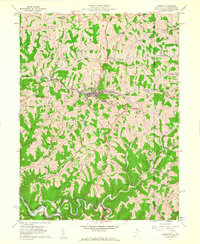 1960 Cameron1961 Print · USGSThe Marshall County highlands are captured here in the early sixties, showing the vital link between the Baltimore and Ohio railroad and the town of Cameron. Researchers can trace old family names and rural sites like Mount Carmel Church, the Highland Cemetery, and the Gas Field near Kausooth.4 unique versions available
 - 1960 Map of Littleton, 1962 Print
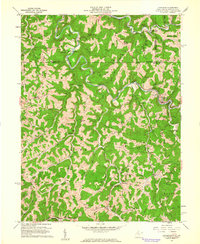 1960 Littleton1962 Print · USGSWetzel County in the early sixties was a landscape of winding creek valleys and oil-and-gas development. Trace the Baltimore and Ohio RR through Littleton and locate remote landmarks like Miller Chapel and Mount Zion Cem.2 unique versions available
 - 1961 Map of Clarksburg
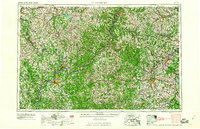 1961 Clarksburg1961 Print · USGSThe mid-century industrial and river landscapes of West Virginia and Ohio are detailed here, centered on the Ohio River. Researchers can trace the Baltimore and Ohio rail lines connecting towns like Parkersburg, Clarksburg, and Monongah.
 - 1961 Map of Cumberland
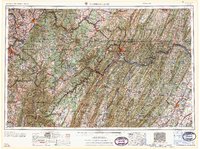 1961 Cumberland1961 Print · USGSThe tri-state highlands of Maryland, West Virginia, and Pennsylvania are shown in the mid-twentieth century as a complex landscape of ridges and river valleys. Researchers can trace the winding Potomac River and find old rail-and-river towns like Cumberland, Keyser, and Morgantown.
 - 1961 Map of Oak Forest, 1963 Print
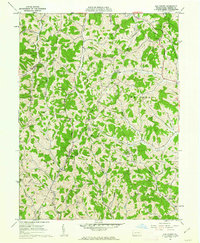 1961 Oak Forest1963 Print · USGSGreene County’s rural character is captured here in the early 1960s, showing a landscape of hollows and ridge-top settlements. Genealogists can trace family landmarks and rural hubs like Oak Forest, Spraggs, and the Shannon Run Sch.4 unique versions available
 - 1961 Map of Waynesburg, 1963 Print
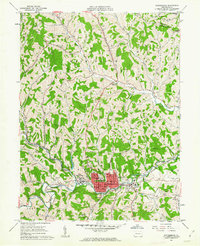 1961 Waynesburg1963 Print · USGSMid-century Greene County comes to life in this detailed survey centered on the collegiate town of Waynesburg. Researchers can locate family sites at Green Mount Cem, trace the local coal landscape at Grimes Portal, or find the old Drive-in Theater.4 unique versions available
 - 1961 Map of Garards Fort, 1963 Print
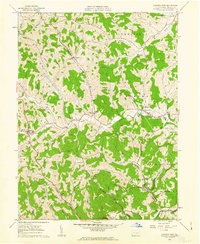 1961 Garards Fort1963 Print · USGSGreene County in the early sixties remains a patchwork of family cemeteries and coal shafts. Genealogists can trace ancestral sites like Morris Cem or the Asbury Ch, while others can find the exact locations of the Garards Fort Shaft and old Covered Bridge.4 unique versions available
 - 1961 Map of Mather, 1963 Print
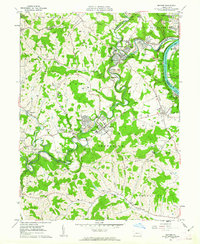 1961 Mather1963 Print · USGSThe industrial coal and river economy of Greene County is on full display in the early 1960s. Researchers can trace the layout of mining-era housing like Braden Plan, locate the Emerald Mine, or find ancestors at Pollock Cem and Mt Zion Cem & Ch.3 unique versions available
 - 1962 Map of Cumberland
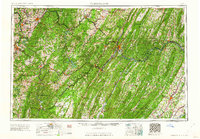 1962 Cumberland1962 Print · USGSThe central Appalachians meet at the height of the mid-century industrial era, showing the rugged topography between Morgantown and Winchester. Genealogists can trace family lands near Fort Necessity or along the vital Baltimore & Ohio RR corridors.
 - 1962 Map of Canton
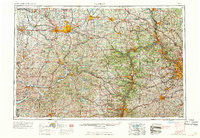 1962 Canton1962 Print · USGSThe industrial heartland of Eastern Ohio and Western Pennsylvania thrives in the early sixties as steel mills and rail lines dominate the river valleys. Genealogists and historians can trace local landmarks like McKinley National Memorial, Malone College, and industrial sites such as Republic Steel Corp.2 unique versions available
 - 1964 Map of Carmichaels, 1965 Print
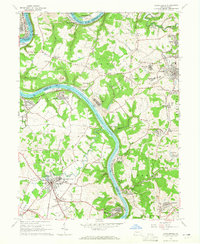 1964 Carmichaels1965 Print · USGSSouthwestern Pennsylvania's coal and river corridor is captured here in the mid-1960s during a period of intense industrial activity. Genealogists and historians can trace the intricate layouts of company towns like Crucible, Nemacolin, and Republic, or locate rural landmarks such as Hopewell Ch and the Township High Sch.5 unique versions available
 - 1964 Map of Rogersville, 1965 Print
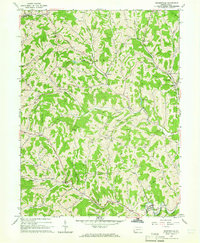 1964 Rogersville1965 Print · USGSGreene County entered the mid-sixties with a landscape defined by its deep creek valleys and a growing network of gas and oil infrastructure. Researchers can locate dozens of Gas Wells, the historic Covered Bridge, and community anchors like Nineveh and Beulah Ch.4 unique versions available
 - 1964 Map of Wind Ridge, 1965 Print
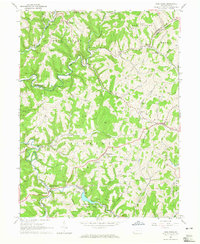 1964 Wind Ridge1965 Print · USGSGreene and Washington Counties are shown in the mid-sixties as a rural landscape of winding forks and deep-rooted small communities. Genealogists and local historians can locate family landmarks like Simpson Store, the Jacktown Fairgrounds, and several Covered Bridges.3 unique versions available
 - 1964 Map of New Freeport, 1965 Print
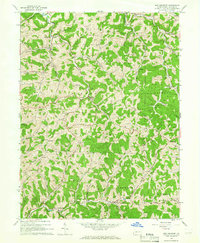 1964 New Freeport1965 Print · USGSGreene County is shown in the mid-1960s as a landscape of isolated hollows and high ridges connected by creek-side hamlets. Researchers can trace family history through sites like Dunkard Cem, the Covered Bridge near Strawn, and rural schools like Springhill-Freeport Sch.3 unique versions available
 - 1964 Map of Holbrook, 1965 Print
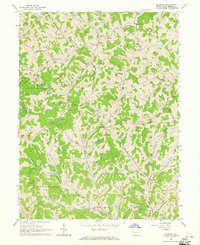 1964 Holbrook1965 Print · USGSGreene County's ridge-and-valley landscape is shown in the mid-1960s as gas extraction and rural farming shaped the local economy. Researchers can trace family roots at Higgins Cem, Pine Bank, and small country parishes like Bethany Ch.2 unique versions available
 - 1964 Map of Prosperity, 1966 Print
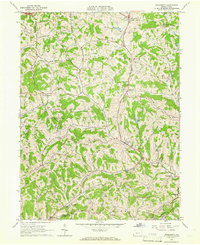 1964 Prosperity1966 Print · USGSSouthern Washington County is captured here in the mid-1960s, showing a landscape of deep valleys and hilltop farms. Researchers can trace old family sites near South Buffalo Cem or find local landmarks like the Covered Bridge and Prosperity Township Sch.3 unique versions available
 - 1964 Map of Masontown, 1966 Print
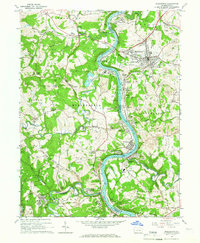 1964 Masontown1966 Print · USGSThe Monongahela River valley in the early 1960s is a landscape of industrious coal towns and river-fed commerce. Researchers can trace family ties at Mundell Cemetery or locate historic industry at the Coke Ovens and Lock and Dam No 7.3 unique versions available
End of results
Showing maps 1-17 of 17
Top cities of Greene County
- Waynesburg historical maps
- Dunkard Township historical maps
- Aleppo Township historical maps
- Carmichaels historical maps
- Rices Landing historical maps
- Jefferson historical maps
See more
Frequently asked questions
- What are the different types of historical maps available for Greene County?
- What is the oldest map of Greene County?
- Where can I purchase historical maps of Greene County for my home or office?
- Where can I download high-res historical maps of Greene County?
- Are there historical topographic maps available for Greene County?
- Is there historical aerial imagery available for Greene County?
- Where are historical maps of Greene County sourced from?