Old Maps of Fell Township, Pennsylvania for Academic Research
Study the evolution of Fell Township with 44 high-resolution historic maps. Whether you're teaching, researching, or modeling changes in land use, these maps provide essential visual documentation of urban, environmental, and geographic change.
- Analyze long-term change: Track patterns in development, transportation, and natural features.
- Ideal for environmental or urban studies: Support academic projects with primary historical map data.
- Use in the classroom or lab: Educators and researchers rely on these maps to bring historical context to life.
These maps are a powerful tool for teaching, research, and visualizing how Fell Township has changed over the decades.
Fell Township, PA maps
(44)- 1892 Map of Honesdale
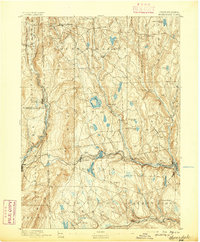 1892 Honesdale1892 Print · USGSWayne County was at its industrial peak in the 1890s, when gravity railroads and standard steam lines converged to move anthracite coal. You can trace the unique route of the Delaware and Hudson Canal Co Gravity Railroad and find early village layouts in Honesdale, Bethany, and Waymart.7 unique versions available
 - 1892 Map of Dundaff
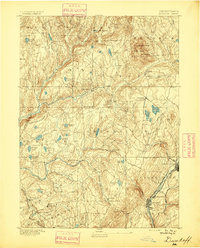 1892 Dundaff1892 Print · USGSNortheastern Pennsylvania’s coal and rail corridors emerge in the 1890s as industry meets a landscape of glacial lakes and high ridges. Researchers can trace the early footprints of Carbondale and Jermyn or locate family homesteads near Crystal Lake and Dundaff.6 unique versions available
 - 1943 Map of Honesdale
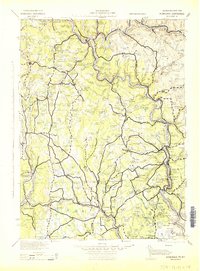 1943 Honesdale1943 Print · USGSThe northern Poconos and the Upper Delaware River valley appear here during the early war years, showing a network of mountain hamlets and riverfront rail towns. Genealogists can trace family roots through numerous remote institutions like Kingsbury Hill Church, Peakville P O, and the Hiawatha School.
 - 1946 Map of Forest City, 1966 Print
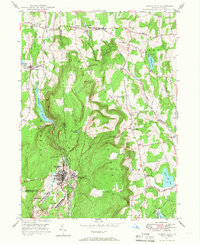 1946 Forest City1966 Print · USGSPost-war Susquehanna County is captured here as the coal and rail era transitions into a new chapter. Genealogists can trace family lines through Forest City and find rural landmarks like the Curtis Valley Sch or Maple Grove Cem.3 unique versions available
 - 1946 Map of Carbondale, 1966 Print
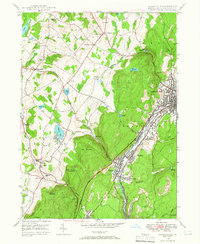 1946 Carbondale1966 Print · USGSThe Lackawanna River valley hummed with industry and rail activity in the years following the war. Researchers can trace the dual rail paths of the New York Ontario and Western and Delaware and Hudson through Carbondale, Jermyn, and Mayfield.3 unique versions available
 - 1946 Map of Waymart, 1968 Print
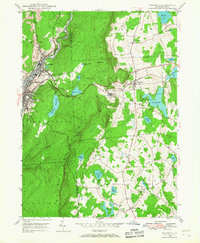 1946 Waymart1968 Print · USGSWayne and Lackawanna counties showcase a mix of industrial coal valley life and rural highland settlements in the mid-1940s. Genealogists and historians can trace family roots through the Russian Monastery, Old Canaan Cem, and the Fairview State Hospital.4 unique versions available
 - 1946 Map of Clifford, 1971 Print
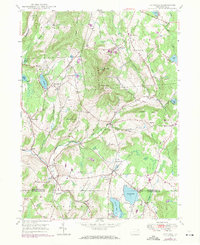 1946 Clifford1971 Print · USGSSusquehanna and Lackawanna counties come together in this mid-century survey of the high country around Elk Hill. Genealogists and local historians can trace the Old Newburg Turnpike and locate family burial grounds like Burdick Cem and Lyons Street Cem.2 unique versions available
 - 1948 Map of Clifford
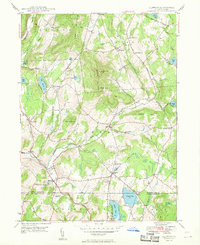 1948 Clifford1948 Print · USGSThe rolling uplands of Susquehanna County are captured here in the late 1940s, centered on the high peaks of Elk Hill. Genealogists can trace family names through many rural burial grounds like Willow View Cem and the crossroads at Burdick Corners.
 - 1948 Map of Waymart
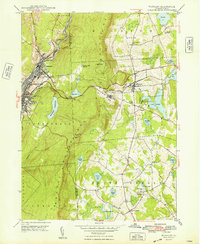 1948 Waymart1948 Print · USGSThe Lackawanna River valley and the eastern plateaus are shown in the late 1940s, just as the regional rail network remained at its peak. Researchers can trace the Erie Railroad through Carbondale and locate landmarks like the Russian Monastery or South Clinton Sch.2 unique versions available
 - 1949 Map of Carbondale
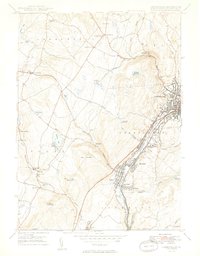 1949 Carbondale1949 Print · USGSThe industrial Lackawanna Valley is shown in detail during the late 1940s, tracing the river-and-rail corridor through Carbondale and Jermyn. Researchers can locate family landmarks like Scott High Sch, Mt Carmel Ch, and the Mid Valley Airport.2 unique versions available
 - 1949 Map of Forest City
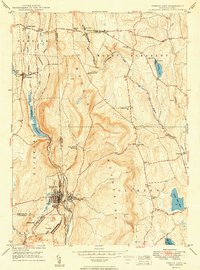 1949 Forest City1949 Print · USGSIn the decade following the war, this Pennsylvania landscape shows the enduring rail-and-river network of the Moosic Mountains. Genealogists and historians can trace family-named landmarks and rural hubs such as Pleasant Mount, Uniondale, and the St Peter and Paul Ch.2 unique versions available
 - 1949 Map of Clifford
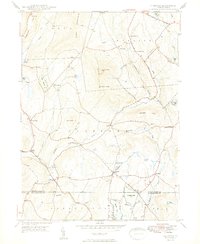 1949 Clifford1949 Print · USGSSusquehanna County in the late 1940s is a landscape of high ridges and rural hamlets linked by the Old Newburg Turnpike. Researchers can trace old family sites and crossroads communities like Burdick Corners, Birchtown, and Welch Hill Ch.2 unique versions available
 - 1950 Map of Scranton, 1952 Print
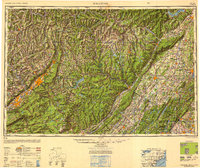 1950 Scranton1952 Print · USGSMid-century Northeast Pennsylvania and the Hudson Valley come alive in this survey of the tri-state region. Genealogists and historians can trace the dense rail networks of the Erie RR and DL&W RR between industrial hubs like Scranton and Wilkes-Barre.
 - 1953 Map of Scranton
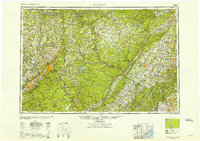 1953 Scranton1953 Print · USGSNortheastern Pennsylvania and the Catskills are shown in great detail during the early fifties, a time when rail lines and river valleys dictated the region's growth. Genealogists and historians can trace the industrial hearts of Scranton and Wilkes-Barre or locate remote landmarks like High Point and Lake Wallenpaupack.
 - 1959 Map of Scranton
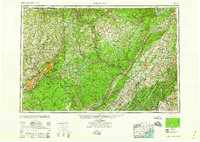 1959 Scranton1959 Print · USGSThe northern coalfields and the Hudson Valley meet in this mid-century survey of the Pennsylvania and New York borderlands. Genealogists and historians can trace the intricate rail networks of the Erie Railroad and the vast waters of Lake Wallenpaupack.2 unique versions available
 - 1962 Map of Scranton, 1977 Print
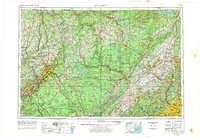 1962 Scranton1977 Print · USGSThe industrial heart of eastern Pennsylvania and the New York Catskills are captured here in the early sixties. Genealogists and historians can trace the dense valley settlements from Scranton to Wilkes-Barre and the rail lines of the Erie Lackawanna Railroad.2 unique versions available
 - 1965 Map of Scranton
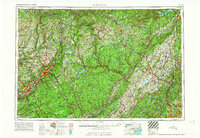 1965 Scranton1965 Print · USGSThe tri-state highlands of Pennsylvania, New York, and New Jersey come alive in the mid-sixties as industry and recreation converge. Trace the intricate rail lines of the Erie Lackawanna RR or locate landmarks like the U S Military Academy.2 unique versions available
 - 1986 Map of Honesdale
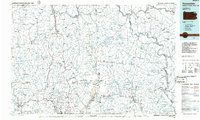 1986 Honesdale1986 Print · USGSNortheastern Pennsylvania and the New York borderlands appear here in the mid-1980s, during a period of transition for the region's industrial river valleys. Genealogists can trace family connections across the Moosic Mountains between the coal towns of Carbondale and the canal-era heritage of Honesdale.2 unique versions available
 - 1994 Map of Clifford, 1995 Print
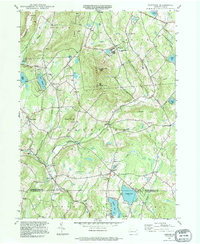 1994 Clifford1995 Print · USGSIn the mid-1990s, this area of Susquehanna County maintained its quiet character among the high peaks of the Endless Mountains. Genealogists and local historians can trace family ties at Dundaff Cem, St Johns Ch, and the long-established settlement of Clifford.
 - 1994 Map of Carbondale, 1995 Print
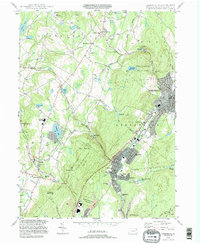 1994 Carbondale1995 Print · USGSThe Lackawanna River valley in the mid-nineties shows a transition from coal-era industry to modern conservation. Researchers can trace ancestral sites at Our Mother of Sorrows Cem or explore the geography of Archbald Pothole State Park and Finch Hill.
 - 1994 Map of Waymart, 1996 Print
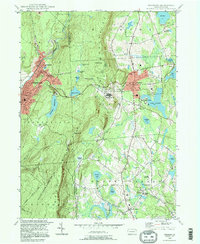 1994 Waymart1996 Print · USGSThe Moosic Mountains divide the industrial Lackawanna valley from the rural plateaus of Wayne County in the mid-1990s. Researchers can trace the anthracite heritage of Carbondale or find local landmarks like St Nicholas Seminary and Keen Lake.
 - 1994 Map of Forest City, 1996 Print
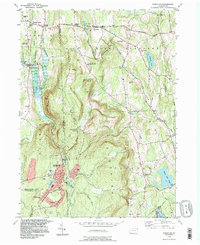 1994 Forest City1996 Print · USGSNortheastern Pennsylvania’s high country near the turn of the millennium shows a landscape defined by the Lackawanna River and its upland reservoirs. Trace the historic Old Newburgh Turnpike and locate old family cemeteries like Maple Grove Cem and Sherwood Cem.
 - 1999 Map of Carbondale, 2001 Print
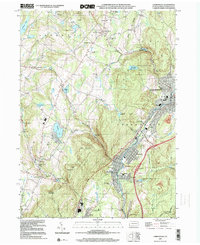 1999 Carbondale2001 Print · USGSThe Lackawanna River valley shows its transition from coal country to a modern residential and industrial corridor at the close of the century. Trace the heritage of anthracite towns through Brookside Cemetery or the geological wonders of Archbald Pothole State Park.
 - 1999 Map of Waymart, 2001 Print
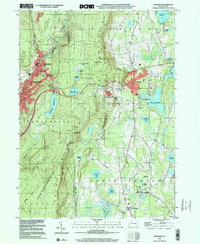 1999 Waymart2001 Print · USGSWayne and Lackawanna counties appear here at the turn of the millennium, showing the transition from industrial valleys to mountain plateaus. Genealogists and historians can locate St Tikhons Seminary, the Russian Monastery, and several graveyards including South Canaan Cem.
 - 2010 Map of Carbondale, 2010 Print
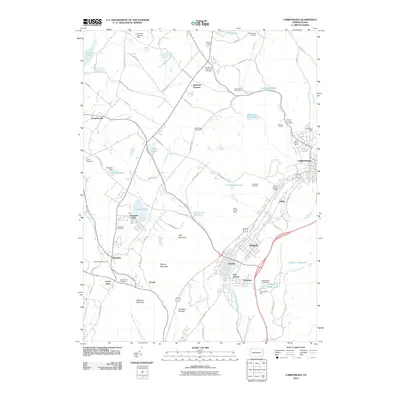 2010 Carbondale2010 Print · USGSThe Lackawanna River valley in the early twenty-first century reveals a landscape deeply connected to its coal-mining heritage and riverine geography. Researchers can trace the industrial footprint of Murrins Mines and the Coal Brook Tunnel alongside the geological site of the Archbald Pothole.
Showing maps 1-25 of 44
Top cities near Fell Township
- Scranton historical maps
- Dunmore historical maps
- Carbondale historical maps
- Blakely historical maps
- Archbald historical maps
- Dickson City historical maps
See more
Top neighborhoods of Fell Township
Frequently asked questions
- What are the different types of historical maps available for Fell Township?
- What is the oldest map of Fell Township?
- Where can I purchase historical maps of Fell Township for my home or office?
- Where can I download high-res historical maps of Fell Township?
- Are there historical topographic maps available for Fell Township?
- Is there historical aerial imagery available for Fell Township?
- Where are historical maps of Fell Township sourced from?