1940s Maps of Scott Township, Pennsylvania
Explore 8 historic maps of Scott Township from the 1940s. These maps offer a rare glimpse into what life looked like during the 1940s — showing old roads, neighborhoods, homes, and landmarks that have changed or disappeared over time.
Whether you're researching your family's past, planning a metal detecting trip, or studying how Scott Township's landscape evolved across the 1940s, these high-resolution maps are a powerful tool for exploring the history of this region.
- Focus on a specific era: All maps on this page are from the 1940s, giving you a focused view of this time period.
- See what’s changed: Compare century-old streets, trails, and buildings to today's modern landscape using overlays and satellite layers.
- Research with precision: Use these maps for genealogy, historical research, land use analysis, or educational projects.
- View, download, or print: Maps are fully viewable online in high resolution, and can be downloaded or printed for your own records.
Start exploring Scott Township's history through authentic maps from the 1940s. This is your window into the past.
Scott Township, PA maps
(8)- 1943 Map of Scranton
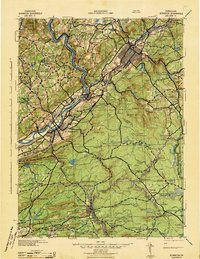 1943 Scranton1943 Print · USGSNortheastern Pennsylvania’s coal and rail corridor comes to life in the 1940s, showcasing the dense urban industrial centers of the Wyoming Valley. Genealogists can locate family landmarks like the Fayette School and Locust Ridge School or trace the early paths of the DL & W and Erie railroads.
 - 1946 Map of Dalton, 1958 Print
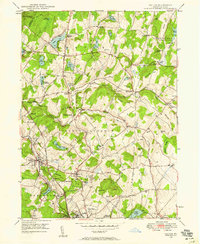 1946 Dalton1958 Print · USGSLackawanna County villages and railroad stops are captured here in the mid-1940s as the regional landscape balanced industry and agriculture. Trace family sites and community landmarks from La Plume Sta and Waverly to the Ackerly Fairgrounds and Hickory Grove Cem.5 unique versions available
 - 1946 Map of Olyphant, 1960 Print
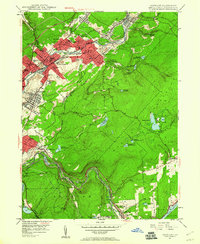 1946 Olyphant1960 Print · USGSThe Lackawanna Valley at the end of the 1940s reveals a landscape defined by coal and rail connectivity. Genealogists and historians can trace the foundations of local life through the St Nicholas Orphanage, Jessup High Sch, and various family cemeteries.6 unique versions available
 - 1946 Map of Carbondale, 1966 Print
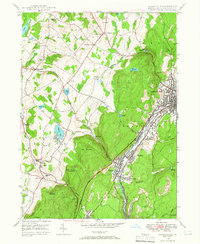 1946 Carbondale1966 Print · USGSThe Lackawanna River valley hummed with industry and rail activity in the years following the war. Researchers can trace the dual rail paths of the New York Ontario and Western and Delaware and Hudson through Carbondale, Jermyn, and Mayfield.3 unique versions available
 - 1947 Map of Scranton, 1957 Print
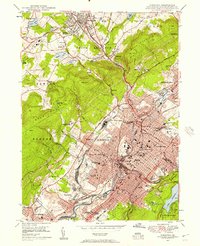 1947 Scranton1957 Print · USGSThe Lackawanna Valley in the late 1940s is a high-density industrial corridor defined by its deep coal roots and rail networks. Genealogists can locate family names at Forest Hill Cemetery, trace the early campus of Scranton University, or find vanished neighborhood landmarks like the State Oral Sch.4 unique versions available
 - 1948 Map of Olyphant
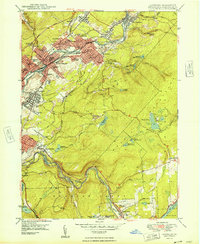 1948 Olyphant1948 Print · USGSThe Lackawanna Valley at the height of its industrial era shows a landscape shaped by coal and rail. Genealogists and historians can trace neighborhood schools and parish cemeteries like St Marys Cem or locate the St Nicholas Orphanage and Sturgis.2 unique versions available
 - 1949 Map of Carbondale
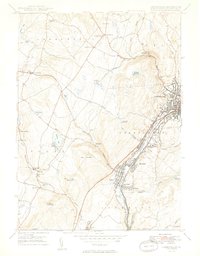 1949 Carbondale1949 Print · USGSThe industrial Lackawanna Valley is shown in detail during the late 1940s, tracing the river-and-rail corridor through Carbondale and Jermyn. Researchers can locate family landmarks like Scott High Sch, Mt Carmel Ch, and the Mid Valley Airport.2 unique versions available
 - 1949 Map of Dalton
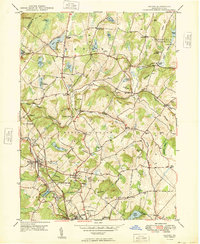 1949 Dalton1949 Print · USGSThe rural landscape north of Scranton in the 1940s reveals a dense network of family-named hills and small lakeside settlements. Researchers can trace the Delaware Lackawanna and Western line past the Blakely Home or locate early burial sites like Hickory Grove Cem and Wallsville Cem.
End of results
Showing maps 1-8 of 8
Top cities near Scott Township
- Scranton historical maps
- Dunmore historical maps
- Carbondale historical maps
- Old Forge historical maps
- Pittston historical maps
- Blakely historical maps
See more
Top neighborhoods of Scott Township
- Montdale historical maps
- Powell historical maps
- Chapman Lake historical maps
- Green Grove historical maps
- Tompkinsville historical maps
- Edella historical maps
See more
Frequently asked questions
- What are the different types of historical maps available for Scott Township?
- What is the oldest map of Scott Township?
- Where can I purchase historical maps of Scott Township for my home or office?
- Where can I download high-res historical maps of Scott Township?
- Are there historical topographic maps available for Scott Township?
- Is there historical aerial imagery available for Scott Township?
- Where are historical maps of Scott Township sourced from?