Old Maps of Washington Township, Pennsylvania for Hiking & Exploration
Hike through history with 46 historic maps of Washington Township. Explore old trails, ghost towns, and forgotten backroads — perfect for outdoor adventurers and local explorers.
- Rediscover forgotten places: Map out old mining camps, roads, and footpaths that no longer exist on modern maps.
- Layer with modern tools: Combine with LiDAR or satellite views to plan hikes through historical terrain.
- Made for exploration: Popular among hikers, overlanders, and local history lovers.
Use these maps to find adventure and explore the hidden past of Washington Township.
Washington Township, PA maps
(46)- 1902 Map of Slatington
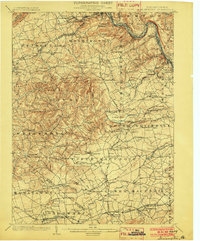 1902 Slatington1902 Print · USGSLehigh County's industrial and quarrying heart comes into focus at the dawn of the 1900s. Researchers can trace the path of the Lehigh Canal and locate family landmarks like Peters Store, Jordan Church, and the Consolidated Quarries.5 unique versions available
 - 1922 Map of Mauch Chunk, 1952 Print
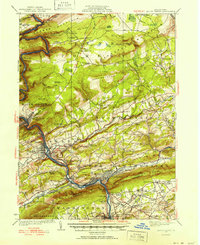 1922 Mauch Chunk1952 Print · USGSThe industrial Lehigh Valley thrives in the early 1920s, dominated by the winding river and two major competing railroad lines. Genealogists can locate old rural landmarks like the Larrytown Poor Farm, Indian Hills School, and the busy rail hub of Mauch Chunk.2 unique versions available
 - 1924 Map of Mauch Chunk
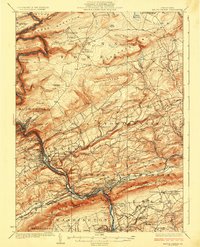 1924 Mauch Chunk1924 Print · USGSCarbon County in the early twenties is a landscape of industrial power and rural mountain life, dominated by the winding Lehigh River. Genealogists and historians can trace family roots through numerous small schools like Lentz School and old settlements from Mauch Chunk to Palmerton.4 unique versions available
 - 1937 Map of Allentown West
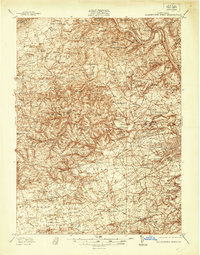 1937 Allentown West1937 Print · USGSLehigh County at the end of the Depression era reveals a dense network of rural schoolhouses and crossroads hamlets before post-war expansion. Genealogists can trace family names at James Peters Sch or Heidelberg Sch, and locate landmarks like Schantz Spr and Rising Sun.
 - 1942 Map of Allentown West
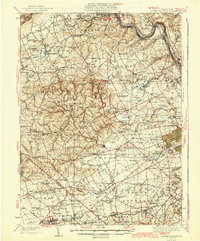 1942 Allentown West1942 Print · USGSLehigh County during the early war years displays a landscape of industrial river towns and agrarian crossroads. Researchers can locate dozens of country schools like Snyder Sch, historic landmarks like Cedar Crest College, and the sprawling Trexler Game Preserve.3 unique versions available
 - 1943 Map of Mauch Chunk
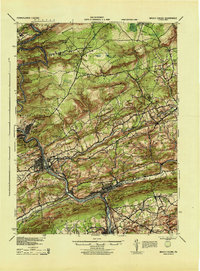 1943 Mauch Chunk1943 Print · USGSThe Lehigh River corridor is captured here during the mid-forties, showing the vital rail and industry centers of Carbon County. Genealogists and researchers can trace dozens of rural schoolhouses and family-named landmarks like the Larrytown Poor Farm, St Pauls Ch, and Three O'clock Spring.
 - 1944 Map of Newark, 1971 Print
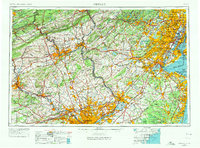 1944 Newark1971 Print · USGSThe industrial corridor from Philadelphia to New York was in a period of massive transition during the mid-forties. Genealogists and researchers can trace the rail lines of the Lehigh Valley RR, locate military installations like Picatinny Arsenal, and explore the early sprawl near Levittown.5 unique versions available
 - 1949 Map of Newark
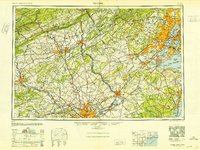 1949 Newark1949 Print · USGSThe industrial corridor between Philadelphia and New York comes alive in this post-war survey. Genealogists and historians can trace the massive rail networks of the Reading Railroad and locate major installations like Fort Dix or Picatinny Arsenal.2 unique versions available
 - 1956 Map of Newark
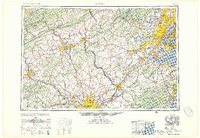 1956 Newark1956 Print · USGSThe industrial heart of the Mid-Atlantic is captured here at the dawn of the highway era, tracing the dense corridors between Newark and Philadelphia. Genealogists and local historians can map the rail networks of the Reading RR or locate mid-century military life at Fort Dix Military Reservation.2 unique versions available
 - 1957 Map of Newark
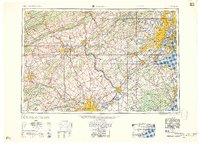 1957 Newark1957 Print · USGSThe industrial and military heart of the Mid-Atlantic is mapped during its post-war suburban boom. Genealogists and historians can trace the intricate rail corridors of the Reading Railroad and locate key landmarks from Princeton University to Fort Hancock.
 - 1957 Map of Alburtis, 1960 Print
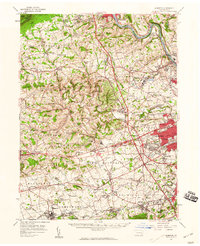 1957 Alburtis1960 Print · USGSLehigh County thrives at mid-century as a hub of heavy industry and suburban expansion along the winding Lehigh River. Trace the rail lines of the Ironton RR, find the early grounds of Dorney Park, or locate family sites near Laurys Station.3 unique versions available
 - 1960 Map of Newark
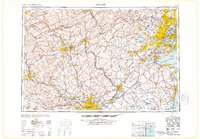 1960 Newark1960 Print · USGSThe industrial heart of the Mid-Atlantic is shown at mid-century, stretching from the dense urban centers of Newark and Philadelphia to the Blue Mountain ridges. Researchers can trace historic rail lines, coastal defenses at Fort Hancock, and the riverfront growth of Trenton and Easton.3 unique versions available
 - 1960 Map of Palmerton, 1961 Print
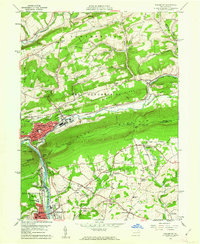 1960 Palmerton1961 Print · USGSPalmerton and the Lehigh Gap are captured at a mid-century industrial peak, framed by ridges and the busy river corridor. Genealogists and historians can trace family-named landmarks like Bassards Corner, the St Nicholas Ch, and the historic path of the Lehigh Canal.6 unique versions available
 - 1960 Map of Lehighton, 1961 Print
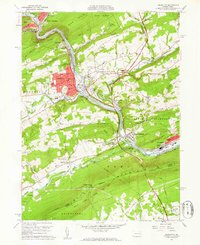 1960 Lehighton1961 Print · USGSCarbon County industrial and mountain landscapes are captured here during the early sixties, centered on the river-and-rail corridor. Genealogists and hikers can trace the Appalachian Trail along the ridge or locate family plots at Packerton Cem and Dinkey Memorial Cem.6 unique versions available
 - 1964 Map of Newark
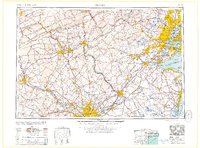 1964 Newark1964 Print · USGSGreater New Jersey and eastern Pennsylvania appear at the peak of their industrial and rail-centered development in the mid-sixties. Genealogists and historians can trace the paths of the Pennsylvania RR, identify mid-century landmarks like CAMP KILMER, or follow the Schuylkill River through READING.2 unique versions available
 - 1964 Map of Cementon, 1966 Print
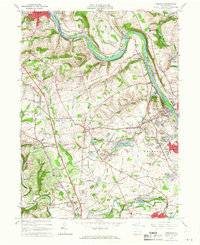 1964 Cementon1966 Print · USGSThe Lehigh Valley's industrial heart is captured here in the mid-1960s, showing a landscape shaped by river commerce and heavy quarrying. Genealogists and historians can trace the Lehigh Valley Railroad through Cementon or locate Old Union Cem and the Mary Immaculate Missionary College.3 unique versions available
 - 1965 Map of Slatedale, 1966 Print
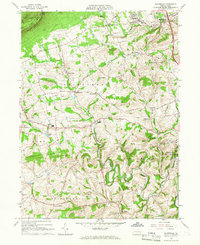 1965 Slatedale1966 Print · USGSLehigh County's northern townships are captured here in the mid-1960s, showing a landscape of slate quarries and ridge-top trails. Researchers can trace historic family landmarks and rural infrastructure from Lehigh Furnace and Peters Sch to the Old Railroad Grade.4 unique versions available
 - 1976 Map of Palmerton, 1978 Print
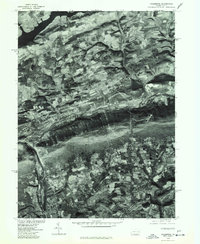 1976 Palmerton1978 Print · USGSPalmerton and the Lehigh Valley area appear in sharp detail in this mid-seventies orthophotoquad. Researchers can trace the industrial layout of Palmerton or the rural surroundings of Danielsville, Slatington, and Beltzville Lake.
 - 1984 Map of Allentown, 1985 Print
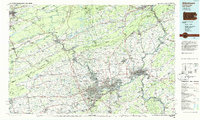 1984 Allentown1985 Print · USGSThe Lehigh Valley and southern Poconos are captured in the mid-eighties as industry and academic life converge along the river corridor. Trace the rail-and-water networks connecting Jim Thorpe and Bethlehem, or explore landmarks like Lehigh University and the Delaware Water Gap.3 unique versions available
 - 1992 Map of Cementon, 1995 Print
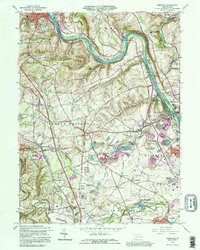 1992 Cementon1995 Print · USGSThe Lehigh Valley corridor shows its industrial character in the 1990s as quarries and suburban growth meet historic settlements. Trace local family roots and early industry near Cementon, the Dewey Heights Quarry, and the Old Union Cem.
 - 1992 Map of Lehighton, 1995 Print
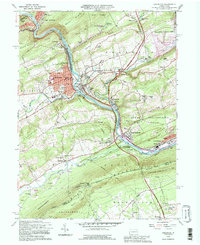 1992 Lehighton1995 Print · USGSThe Lehigh Valley industrial corridor is captured here in the early 1990s, where the river meets the steep ridges of Carbon County. Researchers can trace the legacy of the Packerton Yards, locate ancestral sites like Slatedale Cem, or follow the Appalachian Trail along Blue Mountain.
 - 1997 Map of Lehighton, 1998 Print
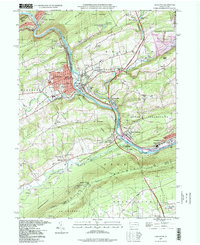 1997 Lehighton1998 Print · USGSCarbon County industrial and river life are captured here in the late twentieth century as the rail lines navigate the narrow Lehigh gap. Genealogists and hikers can trace the Appalachian Trail along the ridge or locate family sites at Packerton Cem and St Peters Ch.
 - 1997 Map of Palmerton, 1999 Print
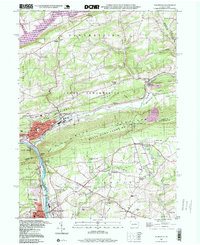 1997 Palmerton1999 Print · USGSThe industrial corridor of the Lehigh Valley meets the ridgeline of the Appalachians in the late nineties. Researchers can trace the legacy of the Lehigh Canal and identify local landmarks like the Drive-in Theater, Bethany Tabernacle, and Slatington Airport.
 - 1999 Map of Cementon, 2001 Print
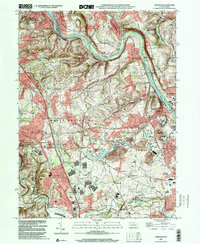 1999 Cementon2001 Print · USGSLehigh Valley industry and residential growth are captured here at the turn of the millennium. Genealogists can trace family roots through historic settlements like Egypt, Balliettsville, and Laurys Station, or locate ancestors at Union Cem.
 - 1999 Map of Lehighton, 2001 Print
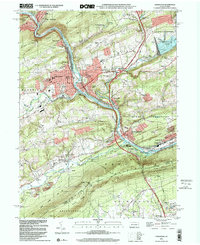 1999 Lehighton2001 Print · USGSThe Lehigh River valley at the close of the twentieth century shows a landscape defined by industrial heritage and modern recreation. Genealogists and historians can trace rail lines through Lizard Creek Junction or locate family sites at Packerton Cem and North Weissport.
Showing maps 1-25 of 46
Top cities near Washington Township
- Allentown historical maps
- Bethlehem historical maps
- Fullerton historical maps
- Emmaus historical maps
- Hanover Township historical maps
- Northampton historical maps
See more
Top neighborhoods of Washington Township
- Friedens historical maps
- Lehigh Furnace historical maps
- Newside historical maps
- River View historical maps
- Welshtown historical maps
- Emerald historical maps
See more
Frequently asked questions
- What are the different types of historical maps available for Washington Township?
- What is the oldest map of Washington Township?
- Where can I purchase historical maps of Washington Township for my home or office?
- Where can I download high-res historical maps of Washington Township?
- Are there historical topographic maps available for Washington Township?
- Is there historical aerial imagery available for Washington Township?
- Where are historical maps of Washington Township sourced from?