1960s Maps of Northampton County, Pennsylvania
Explore 11 historic maps of Northampton County from the 1960s. These maps offer a rare glimpse into what life looked like during the 1960s — showing old roads, neighborhoods, homes, and landmarks that have changed or disappeared over time.
Whether you're researching your family's past, planning a metal detecting trip, or studying how Northampton County's landscape evolved across the 1960s, these high-resolution maps are a powerful tool for exploring the history of this region.
- Focus on a specific era: All maps on this page are from the 1960s, giving you a focused view of this time period.
- See what’s changed: Compare century-old streets, trails, and buildings to today's modern landscape using overlays and satellite layers.
- Research with precision: Use these maps for genealogy, historical research, land use analysis, or educational projects.
- View, download, or print: Maps are fully viewable online in high resolution, and can be downloaded or printed for your own records.
Start exploring Northampton County's history through authentic maps from the 1960s. This is your window into the past.
Northampton County, PA maps
(11)- 1960 Map of Newark
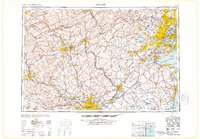 1960 Newark1960 Print · USGSThe industrial heart of the Mid-Atlantic is shown at mid-century, stretching from the dense urban centers of Newark and Philadelphia to the Blue Mountain ridges. Researchers can trace historic rail lines, coastal defenses at Fort Hancock, and the riverfront growth of Trenton and Easton.3 unique versions available
 - 1960 Map of Palmerton, 1961 Print
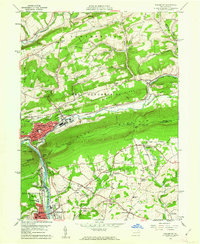 1960 Palmerton1961 Print · USGSPalmerton and the Lehigh Gap are captured at a mid-century industrial peak, framed by ridges and the busy river corridor. Genealogists and historians can trace family-named landmarks like Bassards Corner, the St Nicholas Ch, and the historic path of the Lehigh Canal.6 unique versions available
 - 1960 Map of Wind Gap, 1962 Print
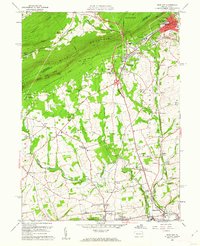 1960 Wind Gap1962 Print · USGSNorthampton County during the early sixties is shown as a landscape of slate quarries and ridge-top crossings. You can trace the Erie-Lackawanna Railroad through industrial hubs like Pen Argyl or locate family sites near St Peters Union Ch and the Township Sch.5 unique versions available
 - 1960 Map of Kunkletown, 1962 Print
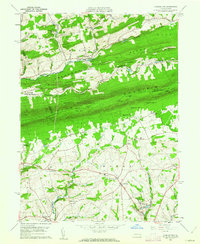 1960 Kunkletown1962 Print · USGSNorthampton and Monroe counties are divided by the steep ridge of Blue Mountain in the early 1960s, a landscape defined by valley farming and upland ridges. Genealogists can trace family names at Fairview Cem or locate rural hubs like Klecknersville and the industries at the Clay Pits.3 unique versions available
 - 1960 Map of Saylorsburg, 1962 Print
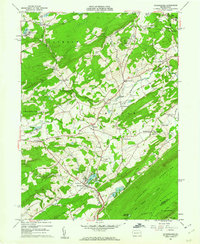 1960 Saylorsburg1962 Print · USGSMonroe County was transitioning from its rural roots to a burgeoning retreat destination in the early sixties. Researchers can trace family history through numerous landmarks like Green Ridge Cem, the Township Sch, and the Old Railroad Grade.6 unique versions available
 - 1964 Map of Newark
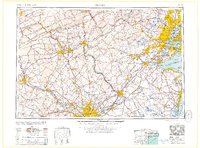 1964 Newark1964 Print · USGSGreater New Jersey and eastern Pennsylvania appear at the peak of their industrial and rail-centered development in the mid-sixties. Genealogists and historians can trace the paths of the Pennsylvania RR, identify mid-century landmarks like CAMP KILMER, or follow the Schuylkill River through READING.2 unique versions available
 - 1964 Map of Cementon, 1966 Print
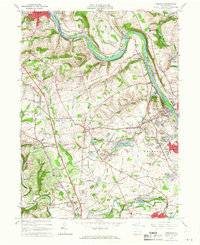 1964 Cementon1966 Print · USGSThe Lehigh Valley's industrial heart is captured here in the mid-1960s, showing a landscape shaped by river commerce and heavy quarrying. Genealogists and historians can trace the Lehigh Valley Railroad through Cementon or locate Old Union Cem and the Mary Immaculate Missionary College.3 unique versions available
 - 1964 Map of Nazareth, 1966 Print
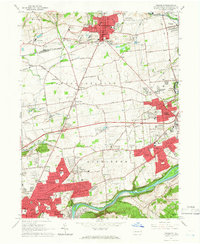 1964 Nazareth1966 Print · USGSThe Northampton County landscape in the mid-sixties reveals the steady growth between Bethlehem and Nazareth. Local historians can trace the development of Hecktown, locate the Gracedale County Home, and identify the various Quarries that shaped the regional economy.6 unique versions available
 - 1964 Map of Catasauqua, 1966 Print
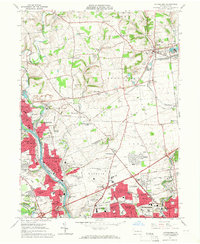 1964 Catasauqua1966 Print · USGSThe Lehigh Valley in the mid-sixties reveals a landscape of industrial river towns and emerging suburban developments near the regional airport. Genealogists and historians can trace family roots through numerous sites like Cedar Hill Memorial Park, Schoenersville, and the State Hospital Farm.6 unique versions available
 - 1964 Map of Allentown East, 1967 Print
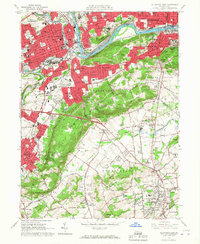 1964 Allentown East1967 Print · USGSLehigh County and its industrial hubs thrive in the 1960s as suburban expansion reaches the slopes of South Mountain. Researchers can trace the path of the Lehigh Canal, locate the Carmelite Monastery, or explore the rail yards at Emmaus Junction.5 unique versions available
 - 1965 Map of Hellertown, 1967 Print
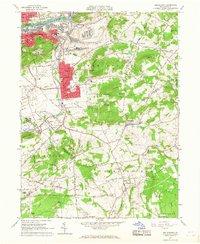 1965 Hellertown1967 Print · USGSThe Saucon Valley was thriving in the mid-sixties, with industry concentrated along the river while quiet rural townships remained largely unchanged. Genealogists can trace family names and sites through Nisky Hill Cemetery, St Josephs Cem, and the small community of Leithsville.4 unique versions available
End of results
Showing maps 1-11 of 11
Top cities of Northampton County
- Easton historical maps
- Lower Saucon Township historical maps
- Hanover Township historical maps
- Northampton historical maps
- Wilson historical maps
- Nazareth historical maps
See more
Frequently asked questions
- What are the different types of historical maps available for Northampton County?
- What is the oldest map of Northampton County?
- Where can I purchase historical maps of Northampton County for my home or office?
- Where can I download high-res historical maps of Northampton County?
- Are there historical topographic maps available for Northampton County?
- Is there historical aerial imagery available for Northampton County?
- Where are historical maps of Northampton County sourced from?