1940s Maps of Eaton Township, Pennsylvania
Explore 11 historic maps of Eaton Township from the 1940s. These maps offer a rare glimpse into what life looked like during the 1940s — showing old roads, neighborhoods, homes, and landmarks that have changed or disappeared over time.
Whether you're researching your family's past, planning a metal detecting trip, or studying how Eaton Township's landscape evolved across the 1940s, these high-resolution maps are a powerful tool for exploring the history of this region.
- Focus on a specific era: All maps on this page are from the 1940s, giving you a focused view of this time period.
- See what’s changed: Compare century-old streets, trails, and buildings to today's modern landscape using overlays and satellite layers.
- Research with precision: Use these maps for genealogy, historical research, land use analysis, or educational projects.
- View, download, or print: Maps are fully viewable online in high resolution, and can be downloaded or printed for your own records.
Start exploring Eaton Township's history through authentic maps from the 1940s. This is your window into the past.
Eaton Township, PA maps
(11)- 1943 Map of Scranton
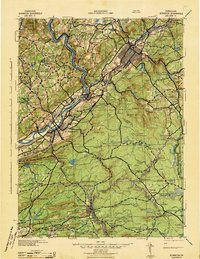 1943 Scranton1943 Print · USGSNortheastern Pennsylvania’s coal and rail corridor comes to life in the 1940s, showcasing the dense urban industrial centers of the Wyoming Valley. Genealogists can locate family landmarks like the Fayette School and Locust Ridge School or trace the early paths of the DL & W and Erie railroads.
 - 1945 Map of Meshoppen, 1952 Print
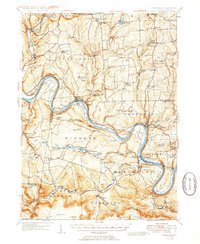 1945 Meshoppen1952 Print · USGSNortheastern Pennsylvania hill country and the winding Susquehanna River are captured here in the years following the war. Researchers can trace the legacy of small farming and rail communities through landmarks like Skinners Eddy, Mehoopany Sta, and Golden Hill Sch.4 unique versions available
 - 1945 Map of Meshoppen, 1956 Print
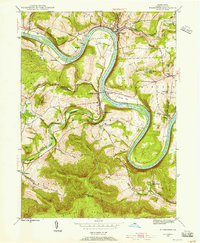 1945 Meshoppen1956 Print · USGSThe Susquehanna River loops through Wyoming County just after the war, creating a landscape defined by sharp bends and rail transit. Researchers can trace the Lehigh Valley line through the Vosburg Tunnel and locate the Russell Hill Sch and Overfield Cem.4 unique versions available
 - 1946 Map of Tunkhannock, 1952 Print
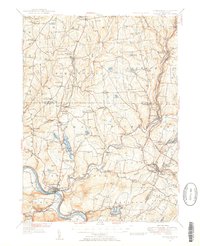 1946 Tunkhannock1952 Print · USGSThe northern Susquehanna River valley and the Wyoming County highlands are captured here in the mid-1940s. Genealogists and historians can trace the rail-connected settlements of Nicholson and Springville or locate family landmarks like Bunnell Cem and Castle Sch.3 unique versions available
 - 1946 Map of Noxen, 1963 Print
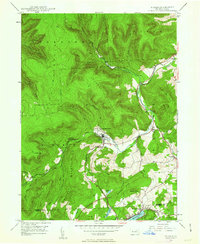 1946 Noxen1963 Print · USGSWyoming County settlement and mountain terrain are captured here just after the war, showing the area's transition into Luzerne County. Genealogists can trace family footprints in small hamlets like Noxen, Evans Falls, and Beaumont, or locate the Childrens Welfare Center and Faggles.5 unique versions available
 - 1946 Map of Center Moreland, 1969 Print
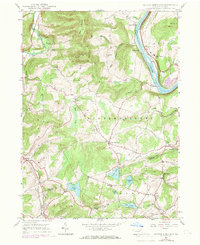 1946 Center Moreland1969 Print · USGSThe Susquehanna River valley and the hills of Wyoming County appear in detail during the post-war era. Researchers can trace the river's transport legacy via the Lehigh Valley line and locate community landmarks like Thurston Ch and the Hunter Sch.3 unique versions available
 - 1946 Map of Tunkhannock, 1971 Print
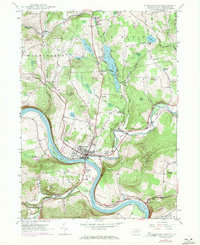 1946 Tunkhannock1971 Print · USGSTunkhannock and the winding Susquehanna River are captured here in the mid-twentieth century as the regional rail and road networks matured. Researchers can locate family sites at Sunnyside Cem, old rural schoolhouses like Castle Sch, and the grounds of St Andrews Camp.3 unique versions available
 - 1947 Map of Meshoppen
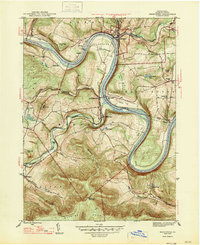 1947 Meshoppen1947 Print · USGSThe Susquehanna River dominates the Wyoming County landscape in the years following the war, where rail and river networks shaped local life. Researchers can trace family history through sites like Fox Hollow Ch, the Vosburg Tunnel, and the old Mehoopany Sta.2 unique versions available
 - 1948 Map of Tunkhannock
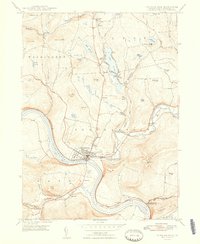 1948 Tunkhannock1948 Print · USGSTunkhannock and the Susquehanna River valley are captured here in the years following World War II, showing a landscape defined by rail and river. Genealogists can trace family names and local landmarks like Osterhout PO, Castle Sch, and Sunnyside Cem.2 unique versions available
 - 1949 Map of Center Moreland
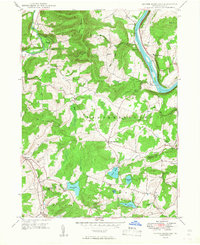 1949 Center Moreland1949 Print · USGSThe Susquehanna River corridor in the late 1940s is captured here just as local rural life revolved around the Lehigh Valley rail line and small upland hamlets. Genealogists and researchers can locate family-named landmarks and institutions like Whites Ferry, Thurston Ch, and Hunter Sch.2 unique versions available
 - 1949 Map of Noxen
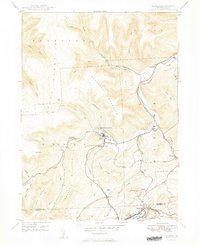 1949 Noxen1949 Print · USGSThe mountainous border of Wyoming and Luzerne counties comes into focus in the years after the war, showing the industrial and social hubs of the region. Local researchers can trace the Lehigh Valley rail corridor through Noxen and locate landmarks like the Childrens Welfare Center and Harvey Lake.2 unique versions available
End of results
Showing maps 1-11 of 11
Top cities near Eaton Township
- Plains Township historical maps
- Dallas Township historical maps
- Pittston historical maps
- Kingston Township historical maps
- Exeter historical maps
- Swoyersville historical maps
See more
Top neighborhoods of Eaton Township
- Jenks historical maps
- Eatonville historical maps
- Rosengrant historical maps
- South Eaton historical maps
Frequently asked questions
- What are the different types of historical maps available for Eaton Township?
- What is the oldest map of Eaton Township?
- Where can I purchase historical maps of Eaton Township for my home or office?
- Where can I download high-res historical maps of Eaton Township?
- Are there historical topographic maps available for Eaton Township?
- Is there historical aerial imagery available for Eaton Township?
- Where are historical maps of Eaton Township sourced from?