1900s (20th Century) Maps of Marion, South Carolina
Explore 6 historic maps of Marion from the 1900s (20th Century). These maps offer a rare glimpse into what life looked like during the 1900s — showing old roads, neighborhoods, homes, and landmarks that have changed or disappeared over time.
Whether you're researching your family's past, planning a metal detecting trip, or studying how Marion's landscape evolved across the 1900s, these high-resolution maps are a powerful tool for exploring the history of this region.
- Focus on a specific era: All maps on this page are from the 1900s, giving you a focused view of this time period.
- See what’s changed: Compare century-old streets, trails, and buildings to today's modern landscape using overlays and satellite layers.
- Research with precision: Use these maps for genealogy, historical research, land use analysis, or educational projects.
- View, download, or print: Maps are fully viewable online in high resolution, and can be downloaded or printed for your own records.
Start exploring Marion's history through authentic maps from the 1900s. This is your window into the past.
Marion, SC maps
(6)- 1946 Map of Mullins, 1956 Print
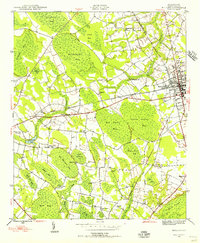 1946 Mullins1956 Print · USGSMarion County was an active railroad and agricultural hub in the mid-1940s, centered on the junction of two major rail lines. Genealogists can trace rural family roots through landmarks like Livingston Cem, Gapway Sch, and Little Bethel Ch.4 unique versions available
 - 1947 Map of Marion
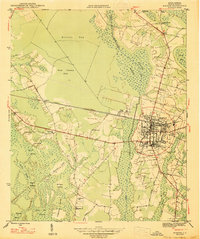 1947 Marion1947 Print · USGSMarion emerges as a post-war rail and agricultural hub in the late 1940s, situated between significant wetlands and the Atlantic Coast Line. Researchers can trace rural community life through landmarks like Singletary Ch, Springville Sch, and Rose Hill Cem.3 unique versions available
 - 1947 Map of Mullins
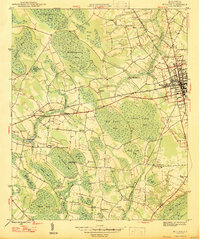 1947 Mullins1947 Print · USGSMarion County at the close of the 1940s is a landscape of intersecting railroads and unique Carolina Bays. Researchers can trace rural life through sites like Smith Swamp Sch, Wise Chapel, and numerous family burials including Ammons Cem.2 unique versions available
 - 1953 Map of Florence, 1964 Print
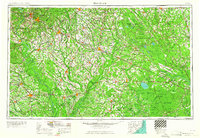 1953 Florence1964 Print · USGSThe Carolina borderlands in the mid-fifties were a landscape of vast river swamps and rising rail towns. Trace the legacy of the Seaboard Air Line through Florence or explore the wetlands surrounding Lake Waccamaw and the Green Swamp.3 unique versions available
 - 1954 Map of Florence
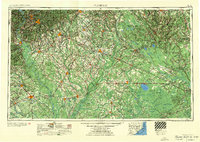 1954 Florence1954 Print · USGSThe Carolinas borderlands come alive in the early fifties, showing the vital rail-and-river networks of the coastal plain. Genealogists can trace family footprints across the Green Swamp or through settlements like Red Springs, Chadbourn, and McColl.
 - 1983 Map of Florence, 1985 Print
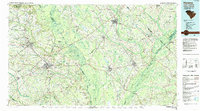 1983 Florence1985 Print · USGSThe Pee Dee region in the early eighties shows a landscape shaped by river commerce and rail expansion. Researchers can trace historic river crossings at Galivants Ferry or locate vanished rail stops like Willow Creek Siding and Blue Brick.
End of results
Showing maps 1-6 of 6
Top cities near Marion
- Dillon historical maps
- Mullins historical maps
- Pamplico historical maps
- Lake View historical maps
- Aynor historical maps
- Sellers historical maps
Frequently asked questions
- What are the different types of historical maps available for Marion?
- What is the oldest map of Marion?
- Where can I purchase historical maps of Marion for my home or office?
- Where can I download high-res historical maps of Marion?
- Are there historical topographic maps available for Marion?
- Is there historical aerial imagery available for Marion?
- Where are historical maps of Marion sourced from?