Old Maps of Shooks Gap, Tennessee for Academic Research
Study the evolution of Shooks Gap with 21 high-resolution historic maps. Whether you're teaching, researching, or modeling changes in land use, these maps provide essential visual documentation of urban, environmental, and geographic change.
- Analyze long-term change: Track patterns in development, transportation, and natural features.
- Ideal for environmental or urban studies: Support academic projects with primary historical map data.
- Use in the classroom or lab: Educators and researchers rely on these maps to bring historical context to life.
These maps are a powerful tool for teaching, research, and visualizing how Shooks Gap has changed over the decades.
Shooks Gap, TN maps
(21)- 1886 Map of Knoxville
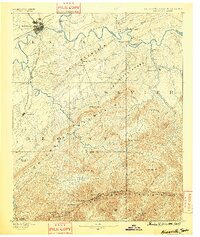 1886 Knoxville1886 Print · USGSEast Tennessee in the late nineteenth century was a landscape of river ferries and mountain coves centered around the growing hub of Knoxville. Genealogists can locate family landmarks like Spencer Cabin, Montvale Springs, and the old Brabsons Ferry river crossing.
 - 1892 Map of Knoxville
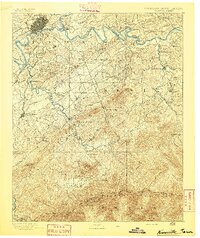 1892 Knoxville1892 Print · USGSEastern Tennessee in the late nineteenth century shows a landscape of river-valley commerce transitioning into the Great Smokies. Genealogists can trace early homesteads near Sevierville or locate landmarks like Porter Academy and Boyd Ferry.
 - 1894 Map of Knoxville
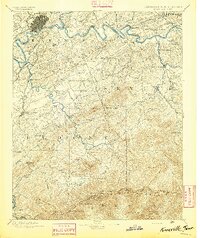 1894 Knoxville1894 Print · USGSThe Tennessee valley meets the high Smokies in the 1890s, revealing a landscape of river ferries, mountain coves, and emerging rail towns. Genealogists and historians can trace early crossings at Boyd Ferry, established schools like Porter Academy, and the early footprints of Gatlinburg and Pigeon Forge.
 - 1895 Map of Knoxville
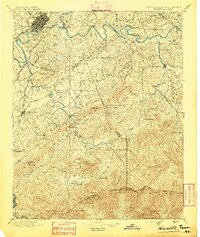 1895 Knoxville1895 Print · USGSThe Tennessee and French Broad Rivers converge in this late-nineteenth-century survey of East Tennessee’s rising landscape. Trace the early rail lines and mountain crossings that shaped life for families in Sevierville, Gatlinburg, and Maryville.2 unique versions available
 - 1901 Map of Knoxville
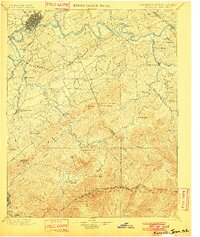 1901 Knoxville1901 Print · USGSThe East Tennessee borderlands meet the high Smokies at the turn of the century. Genealogists can trace early homesteads and crossroads near Sevierville and Maryville, or find landmarks like Cade Cove and Gatlinburg before they became tourist hubs.5 unique versions available
 - 1935 Map of Knoxville
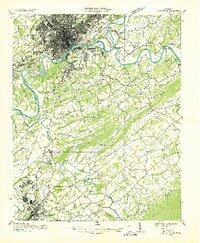 1935 Knoxville1935 Print · USGSKnoxville and its southern Blount County neighbors appear here in the mid-1930s as the TVA era begins. Researchers can trace family roots through Mt Olive Cem, locate the old Eastern State Hospital, or study the early layout of Sequoyah Hills.
 - 1936 Map of Shooks Gap
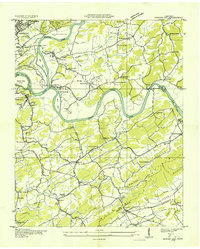 1936 Shooks Gap1936 Print · USGSEast of Knoxville in the mid-1930s, the confluence of the French Broad and Holston rivers shaped a landscape of ferry crossings and ridge-top farming. Genealogists can trace family footprints at Old Salem Cem, Whites Village, and the many rural schools like Anderson Sch.
 - 1940 Map of Shooks Gap
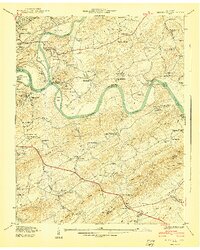 1940 Shooks Gap1940 Print · USGSThe confluence of the French Broad and Holston rivers defines this 1940 Knox County landscape just east of Knoxville. Genealogists can trace family sites at Asbury Cem, find the Riverdale Ferry crossing, or locate old schoolhouses like New Prospect Sch.3 unique versions available
 - 1953 Map of Shooks Gap, 1954 Print
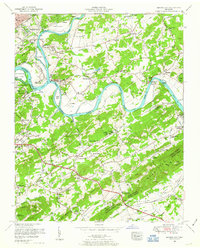 1953 Shooks Gap1954 Print · USGSEast of Knoxville in the early fifties, the landscape was a mix of river-bottom farms and rising suburban development. Genealogists can find family landmarks like McCammon Cemetery, industrial sites at Meades Quarry, and the historic Riverdale Ferry crossing.3 unique versions available
 - 1955 Map of Knoxville
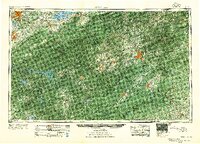 1955 Knoxville1955 Print · USGSThe Southern Appalachians and the Smoky Mountains are shown here at a peak of mid-century development and conservation. Genealogists and historians can trace the early road networks connecting Gatlinburg, Waynesville, and the Cherokee Indian Reservation across the high ridges.
 - 1957 Map of Knoxville, 1966 Print
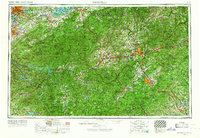 1957 Knoxville1966 Print · USGSThe Southern Appalachians of Tennessee and North Carolina are mapped here during the mid-twentieth century as new highways reached the high country. Genealogists and historians can trace the topography between Knoxville and Asheville, locating family landmarks near Fontana Lake or along the Blue Ridge Parkway.4 unique versions available
 - 1960 Map of Knoxville
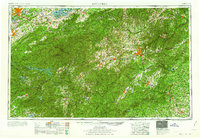 1960 Knoxville1960 Print · USGSThe Southern Appalachians come alive in the 1950s, showing the intersection of new national park tourism and deep-rooted mountain industry. Trace old rail lines like the Clinchfield RR and find high-altitude landmarks from Mt Le Conte to the Cherokee Indian Reservation.2 unique versions available
 - 1964 Map of Knoxville
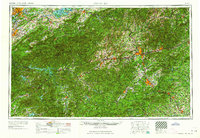 1964 Knoxville1964 Print · USGSThe Southern Appalachians and Great Smokies are captured here during the mid-sixties, showing the rugged borderlands of Tennessee and North Carolina. Researchers can trace historic mountain routes like U S 441, the expanse of Pisgah National Forest, and the growing footprints of Asheville and Knoxville.
 - 1966 Map of Shooks Gap, 1968 Print
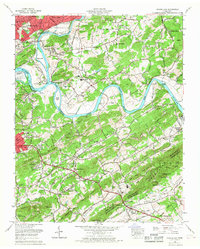 1966 Shooks Gap1968 Print · USGSSoutheast of Knoxville in the mid-sixties, the river valley landscape shows a mix of industrial quarrying and suburban growth. Genealogists can trace family connections at Hendron Chapel, Asbury Cem, and schools like Mountain View School.
 - 1979 Map of Shooks Gap
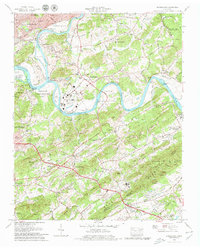 1979 Shooks Gap1979 Print · USGSEast of Knoxville in the late seventies, this region showcases the confluence of the Holston and French Broad rivers. Genealogists can trace family roots at Asbury Cem or Shook Cem, while historians can locate old landmarks like Meades Quarry and Gap Creek School.4 unique versions available
 - 1983 Map of Knoxville, 1984 Print
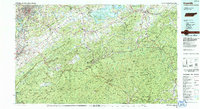 1983 Knoxville1984 Print · USGSThe Tennessee valley and the rising Smokies are captured here in the early eighties, showing the region as the tourism and transit hub of the Southern Appalachians. Researchers can trace the layout of the University of Tennessee or locate rural landmarks like Shady Grove Ch and Pleasant Hill Cem.
 - 2010 Map of Shooks Gap, 2010 Print
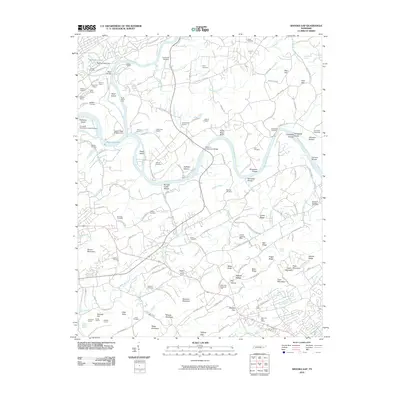 2010 Shooks Gap2010 Print · USGSSoutheast of Knoxville in the early 2000s, the convergence of the French Broad and Holston rivers defines a landscape of heavy industry and quiet community roots. Trace the locations of historic burial grounds like McNutt Cemetery or follow the industrial footprint of the Gray Knox Quarry and Tadpole Quarry.
 - 2014 Map of Shooks Gap, 2014 Print
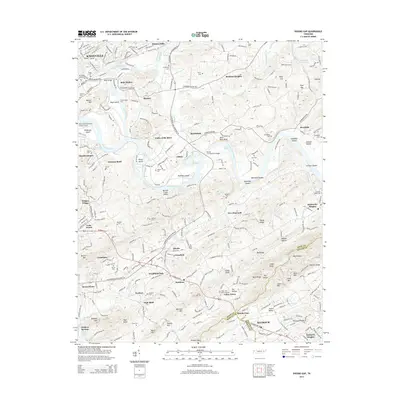 2014 Shooks Gap2014 Print · USGSThe convergence of the Holston and French Broad Rivers highlights this mid-2010s survey of the eastern Knoxville outskirts. Researchers can locate family heritage sites and local landmarks including Meades Quarry, Johnson Bible Coll, and the Dunn Cem.
 - 2016 Map of Shooks Gap, 2016 Print
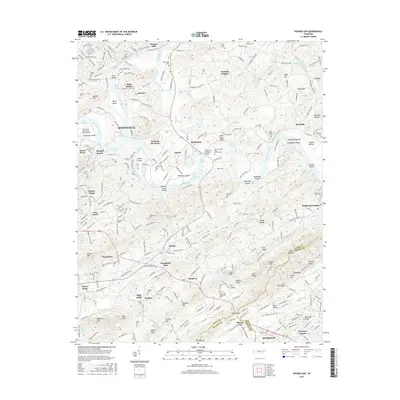 2016 Shooks Gap2016 Print · USGSThe eastern outskirts of Knoxville meet the convergence of the Holston and French Broad Rivers in this mid-2010s survey. Researchers can locate established landmarks like Johnson Bible College, Meades Quarry, and the East Tennessee State Veterans Cemetery.
 - 2019 Map of Shooks Gap, 2019 Print
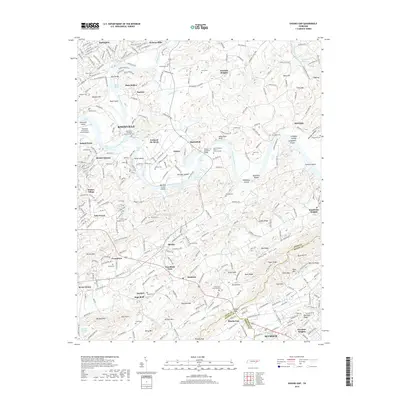 2019 Shooks Gap2019 Print · USGSEast of Knoxville in the late 2010s, the landscape follows the winding convergence of the Holston and French Broad rivers. Genealogists and local historians can locate numerous family burial sites like Old Salem Cem and McCall Cem, or trace the ridgelines at Shooks Gap and Lundy Ridge.
 - 2022 Map of Shooks Gap, 2022 Print
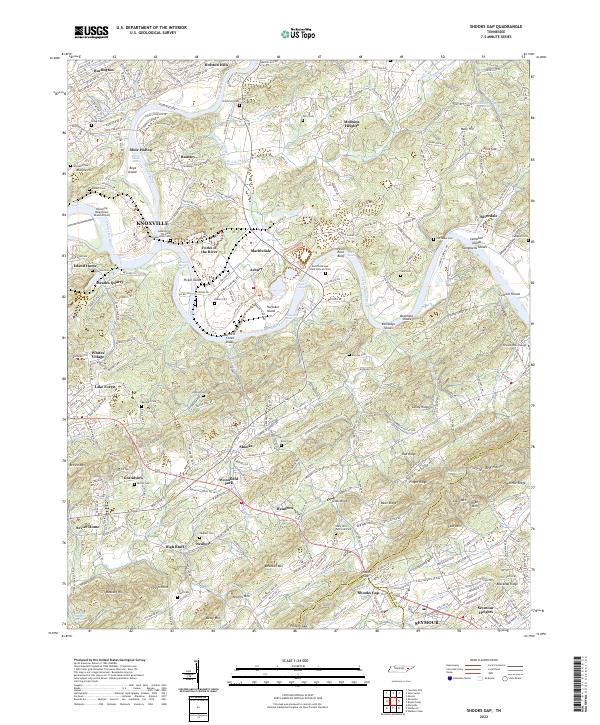 2022 Shooks Gap2022 Print · USGSKnoxville and its southern rural outskirts are shown at a period of modern growth and historical preservation along the Tennessee River. Researchers can trace family sites at Lebanon In The Fork Presbyterian Cem, the industrial grounds of Meades Quarry, and the namesake Shooks Gap.
End of results
Showing maps 1-21 of 21
Top cities near Shooks Gap
- Knoxville historical maps
- Maryville historical maps
- Sevierville historical maps
- Powell historical maps
- Halls Crossroads historical maps
- Alcoa historical maps
See more
Frequently asked questions
- What are the different types of historical maps available for Shooks Gap?
- What is the oldest map of Shooks Gap?
- Where can I purchase historical maps of Shooks Gap for my home or office?
- Where can I download high-res historical maps of Shooks Gap?
- Are there historical topographic maps available for Shooks Gap?
- Is there historical aerial imagery available for Shooks Gap?
- Where are historical maps of Shooks Gap sourced from?