Old Maps of Hunter, Tennessee for Genealogy
Trace your family roots with 26 historic maps of Hunter. These high-res maps reveal old neighborhoods, homesites, landmarks, and streets — helping you uncover where your ancestors lived and how the area evolved over time.
- Explore historic neighborhoods: Identify where your relatives may have lived in the 1800s or 1900s.
- Compare maps over time: Trace the changes in streets, buildings, and landmarks for multi-generational research.
- Perfect for genealogy & ancestry research: Used by family historians and researchers to map out lineage and migration.
These maps are an incredible resource for exploring your personal connection to Hunter's past.
Hunter, TN maps
(26)- 1891 Map of Roan Mountain
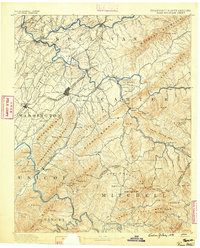 1891 Roan Mountain1891 Print · USGSThe Tennessee-North Carolina border country comes alive in the 1890s, when narrow-gauge railroads and mountain ferries still moved the region's goods. Genealogists and historians can trace early crossings like Shipley's Ferry, industrial sites at Embreeville, and high-country settlements like Cloudland.
 - 1894 Map of Roan Mountain
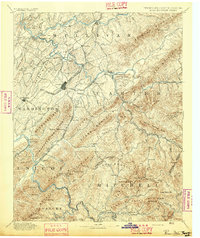 1894 Roan Mountain1894 Print · USGSNortheast Tennessee and Western North Carolina are mapped here in the late nineteenth century as the rail network expands through the Unaka Range. Trace early industrial footprints and family lands near Elizabethton, Terry Furnace, and the high summit at Cloudland.3 unique versions available
 - 1904 Map of Roan Mountain
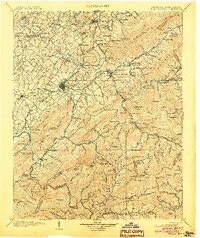 1904 Roan Mountain1904 Print · USGSUpper East Tennessee and Western North Carolina are documented here at a time when river fords and narrow-gauge railroads still connected mountain hollows. Trace the paths to Hodge Ore Bank, find old Poplar Ridge Church, or locate river crossings like Yoakley Ferry.4 unique versions available
 - 1935 Map of Watauga Valley
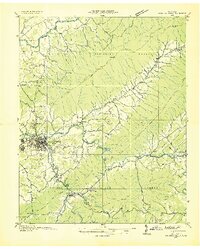 1935 Watauga Valley1935 Print · USGSUpper East Tennessee's river valleys and mountain ridges are documented here during the mid-thirties, centered on the growing industrial hub of Elizabethton. Researchers can locate numerous vanished landmarks, from the Manganese Mine to rural schoolhouses like Caldwell Springs Sch.
 - 1935 Map of Elizabethton
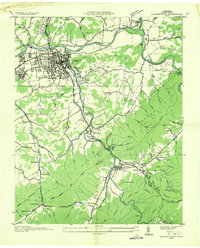 1935 Elizabethton1935 Print · USGSElizabethton and the surrounding mountain coves come into sharp focus in the mid-1930s as industrial growth meets traditional Appalachian life. Genealogists can locate family landmarks like Dungan Mill, the County Home, and numerous rural churches including Doe River Ch.
 - 1935 Map of Keenburg
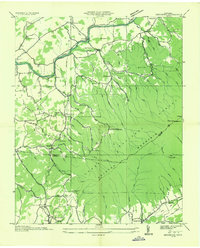 1935 Keenburg1935 Print · USGSSullivan and Carter counties come alive in the mid-1930s, showing a landscape where heavy industry and mountain trails meet. Genealogists and historians can trace family roots through sites like Harmony Chapel, Hickory Tree, and the Old Bauxite Mines.
 - 1938 Map of Keenburg
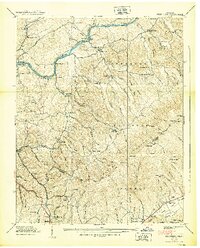 1938 Keenburg1938 Print · USGSSullivan and Carter Counties appear in the late thirties as a landscape of mountain hollows and riverside settlements. Genealogists and local historians can locate several rural schools and churches, including Keenburg Sch, Mt Holston Ch, and the riverside Island Park.2 unique versions available
 - 1938 Map of Elizabethton
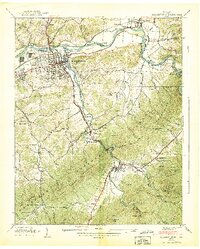 1938 Elizabethton1938 Print · USGSElizabethton and the surrounding Carter County highlands are captured here during a period of industrial expansion and mountain farming. Local historians can trace the rail lines of the ET&WNC and locate vanished landmarks like Dugan Mill, Bemberg, and Lyons Cem.2 unique versions available
 - 1955 Map of Johnson City
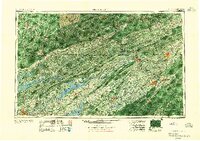 1955 Johnson City1955 Print · USGSEast Tennessee and the bordering highlands of Virginia and Kentucky appear here during the post-war industrial boom. You can trace the complex network of mountain ridges and new TVA lakes, from Johnson City to the coalfields near Middlesboro and Lynch.
 - 1957 Map of Johnson City, 1966 Print
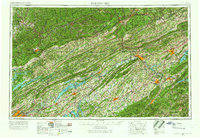 1957 Johnson City1966 Print · USGSUpper East Tennessee and Southwest Virginia are shown here during the mid-sixties transition of the Appalachians. Researchers can trace the industrial rail hubs of Kingsport, the sprawling waters of Cherokee Lake, and the historic Cumberland Gap.
 - 1959 Map of Elizabethton, 1962 Print
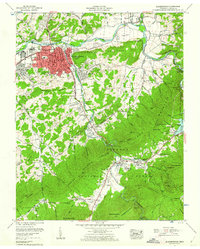 1959 Elizabethton1962 Print · USGSElizabethton and the surrounding Carter County highlands are shown in detail during the late fifties, as the ET&WNC Railroad still served the valley. Genealogists can locate dozens of family burial sites including Hazelwood Cem and Bowers Cem or trace the early path of the Appalachian Trail.4 unique versions available
 - 1960 Map of Johnson City
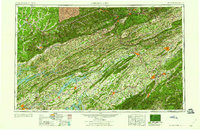 1960 Johnson City1960 Print · USGSUpper East Tennessee and the surrounding tri-state area are shown in the mid-fifties during the height of the TVA reservoir era. Trace the industrial rail lines of the Southern and Louisville and Nashville between Kingsport and Johnson City.
 - 1960 Map of Keenburg, 1962 Print
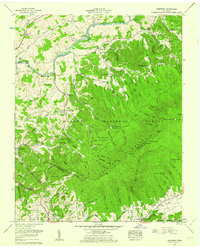 1960 Keenburg1962 Print · USGSThe Tennessee Valley during the early sixties shows a landscape of river-fed settlements and rising ridges. Genealogists and historians can trace numerous family cemeteries such as Crockett Cem, the Tri-City Speedway, and Keenburg Church.3 unique versions available
 - 1963 Map of Johnson City
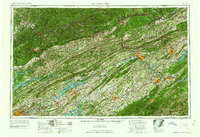 1963 Johnson City1963 Print · USGSThe Tri-Cities and the surrounding Appalachian ridges are shown in detail during the early sixties, highlighting the era's vital rail and river networks. Genealogists and historians can trace the routes of the Clinchfield RR and locate settlements from Rogersville to Elizabethton.
 - 1980 Map of Johnson City, 1981 Print
 1980 Johnson City1981 Print · USGSEast Tennessee in the early eighties shows a landscape of mountain ridges and growing valley towns. Trace local history through Washington College and the Andrew Johnson National Cemetery, or find sites like David Crockett Birthplace State Park.
 - 2003 Map of Keenburg, 2004 Print
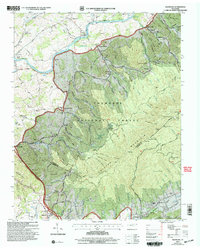 2003 Keenburg2004 Print · USGSSullivan and Carter Counties at the turn of the 21st century reveal a landscape of mountain ridges and riverside communities. Genealogists can trace family roots through numerous sites like Crockett Cem, Chinquapin Grove Cem, and Mellon Memorial Ch.
 - 2011 Map of Keenburg, 2011 Print
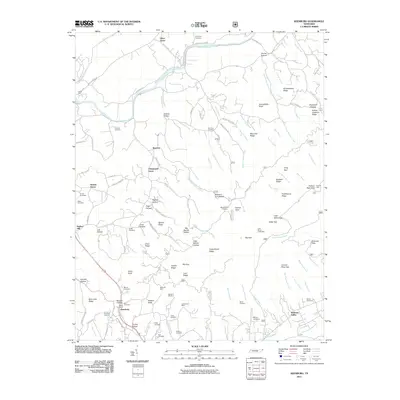 2011 Keenburg2011 Print · USGSNortheast of Elizabethton in the early twenty-first century, this area of Carter County shows a landscape deeply defined by its ridges and mining heritage. Researchers can locate family burial sites like Webb Cemetery and trace historical extractive sites including Turkeytown Mine and Watauga Mine.
 - 2011 Map of Elizabethton, 2011 Print
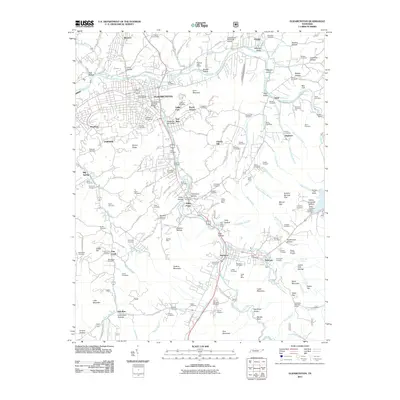 2011 Elizabethton2011 Print · USGSElizabethton and the surrounding Carter County river valleys are captured here in the early twenty-first century. Researchers can trace family sites like the Kitzmiller Cemetery or explore industrial landmarks such as Wilbur Dam and the Elizabethton Covered Bridge.
 - 2013 Map of Elizabethton, 2013 Print
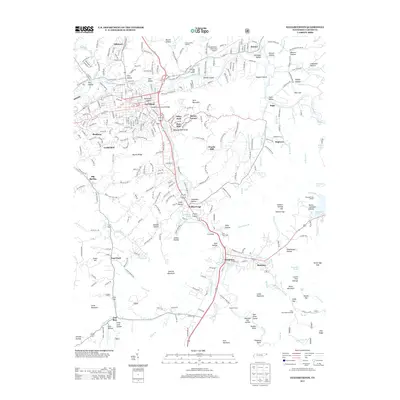 2013 Elizabethton2013 Print · USGSElizabethton and the surrounding Carter County river valleys are captured here in the early twenty-first century. Researchers can trace the development of older settlements like Siam and Valley Forge or locate the historic Elizabethton Covered Bridge.
 - 2013 Map of Keenburg, 2013 Print
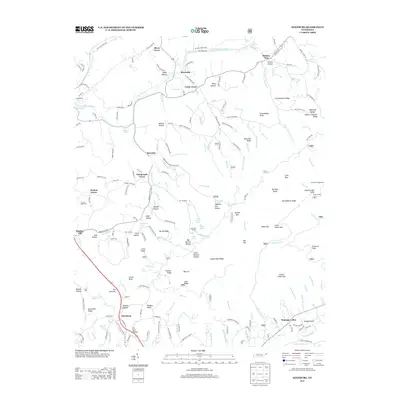 2013 Keenburg2013 Print · USGSNortheast Tennessee in the early twenty-first century reveals a landscape defined by the S Fork Holston River and the high ridges of the Appalachian foothills. Local historians can trace old community lines in Chinquapin Grove and locate unique landmarks like Tin Can Hollow and Tri-City Speedway.
 - 2016 Map of Elizabethton, 2016 Print
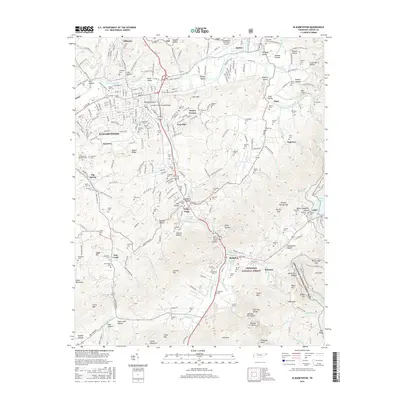 2016 Elizabethton2016 Print · USGSElizabethton and the surrounding river valleys are shown here in recent years as they interface with the Cherokee National Forest. Researchers can trace generations of local families through landmarks like the Elizabethton Covered Bridge and numerous plots such as Colbaugh Cem and Peters Cem.
 - 2016 Map of Keenburg, 2016 Print
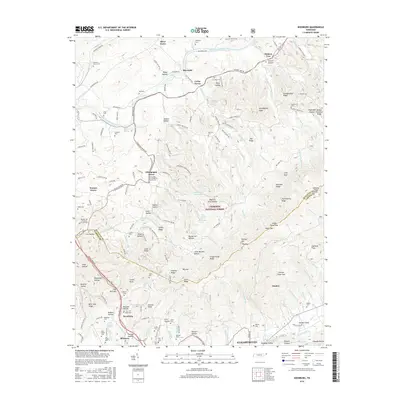 2016 Keenburg2016 Print · USGSElizabethton and the surrounding hills of Carter and Sullivan counties are captured here in the mid-2010s. Genealogists and local historians can locate many small family cemeteries and historic congregations like Chinquapin Grove Baptist Church or Crockett Cem.
 - 2019 Map of Elizabethton, 2019 Print
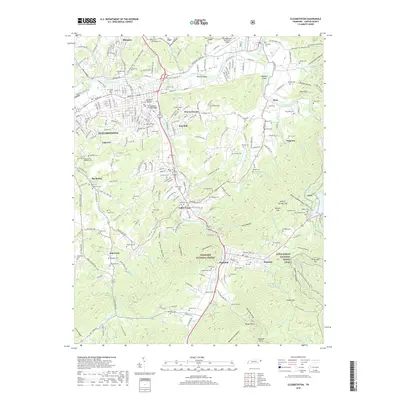 2019 Elizabethton2019 Print · USGSElizabethton and the Watauga River valley are captured in this recent survey, showing the mix of urban growth and mountain wilderness. Researchers can locate numerous family burial sites like Van Huss Cem and trace the Appalachian National Scenic Trail through the Doe River Gorge.
 - 2019 Map of Keenburg, 2019 Print
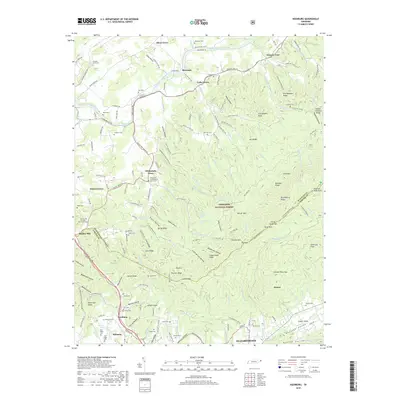 2019 Keenburg2019 Print · USGSThe northern reaches of the Watauga Valley meet the Holston River in this modern survey of Carter and Sullivan counties. Researchers can trace historic family lineages through local landmarks like Chinquapin Grove Baptist Church and Crockett Cem.
 - 2022 Map of Elizabethton, 2022 Print
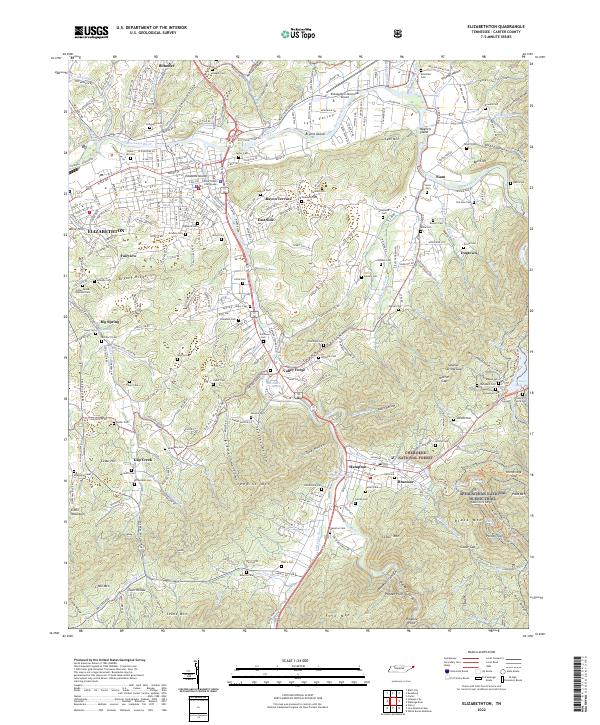 2022 Elizabethton2022 Print · USGSThe convergence of the Watauga and Doe Rivers defines this contemporary view of the Carter County seat. Genealogists can trace family landmarks like Carter Cem, Stover Cem, and the community of Valley Forge near the National Forest boundary.
Showing maps 1-25 of 26
Top cities near Hunter
- Johnson City historical maps
- Bristol historical maps
- Bristol historical maps
- Elizabethton historical maps
- Unicoi historical maps
- Blountville historical maps
See more
Top neighborhoods of Hunter
Frequently asked questions
- What are the different types of historical maps available for Hunter?
- What is the oldest map of Hunter?
- Where can I purchase historical maps of Hunter for my home or office?
- Where can I download high-res historical maps of Hunter?
- Are there historical topographic maps available for Hunter?
- Is there historical aerial imagery available for Hunter?
- Where are historical maps of Hunter sourced from?