1960s Maps of Knoxville, Tennessee
Explore 16 historic maps of Knoxville from the 1960s. These maps offer a rare glimpse into what life looked like during the 1960s — showing old roads, neighborhoods, homes, and landmarks that have changed or disappeared over time.
Whether you're researching your family's past, planning a metal detecting trip, or studying how Knoxville's landscape evolved across the 1960s, these high-resolution maps are a powerful tool for exploring the history of this region.
- Focus on a specific era: All maps on this page are from the 1960s, giving you a focused view of this time period.
- See what’s changed: Compare century-old streets, trails, and buildings to today's modern landscape using overlays and satellite layers.
- Research with precision: Use these maps for genealogy, historical research, land use analysis, or educational projects.
- View, download, or print: Maps are fully viewable online in high resolution, and can be downloaded or printed for your own records.
Start exploring Knoxville's history through authentic maps from the 1960s. This is your window into the past.
Knoxville, TN maps
(16)- 1960 Map of Knoxville
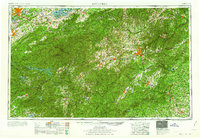 1960 Knoxville1960 Print · USGSThe Southern Appalachians come alive in the 1950s, showing the intersection of new national park tourism and deep-rooted mountain industry. Trace old rail lines like the Clinchfield RR and find high-altitude landmarks from Mt Le Conte to the Cherokee Indian Reservation.2 unique versions available
 - 1960 Map of Johnson City
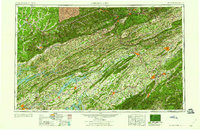 1960 Johnson City1960 Print · USGSUpper East Tennessee and the surrounding tri-state area are shown in the mid-fifties during the height of the TVA reservoir era. Trace the industrial rail lines of the Southern and Louisville and Nashville between Kingsport and Johnson City.
 - 1960 Map of Chattanooga
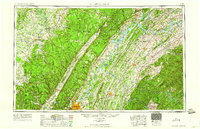 1960 Chattanooga1960 Print · USGSSoutheast Tennessee and the southern Appalachians are shown here at the height of the river-management era. You can trace the valley rail lines and locate Lookout Mountain and the expansive waters of Chickamauga Reservoir.
 - 1963 Map of Johnson City
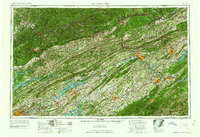 1963 Johnson City1963 Print · USGSThe Tri-Cities and the surrounding Appalachian ridges are shown in detail during the early sixties, highlighting the era's vital rail and river networks. Genealogists and historians can trace the routes of the Clinchfield RR and locate settlements from Rogersville to Elizabethton.
 - 1964 Map of Chattanooga
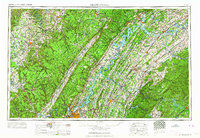 1964 Chattanooga1964 Print · USGSSoutheast Tennessee and the western Carolinas appear in the mid-sixties as a powerhouse of river-driven industry and mountain wilderness. Genealogists and historians can trace rail-town lineages along the Southern Ry or locate family landmarks near Watts Bar Lake and Tellico Plains.
 - 1964 Map of Knoxville
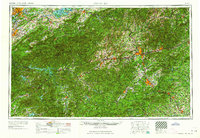 1964 Knoxville1964 Print · USGSThe Southern Appalachians and Great Smokies are captured here during the mid-sixties, showing the rugged borderlands of Tennessee and North Carolina. Researchers can trace historic mountain routes like U S 441, the expanse of Pisgah National Forest, and the growing footprints of Asheville and Knoxville.
 - 1966 Map of Knoxville, 1968 Print
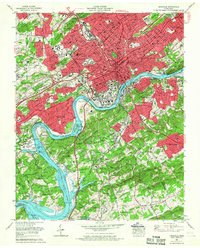 1966 Knoxville1968 Print · USGSKnoxville in the mid-sixties is a city in transition, as new interstate highways begin to cut through historic urban neighborhoods and older rail corridors. Researchers can trace the footprints of Knoxville College, Old Gray Cem, and the riverfront campus of the University of Tennessee.2 unique versions available
 - 1966 Map of Fountain City, 1968 Print
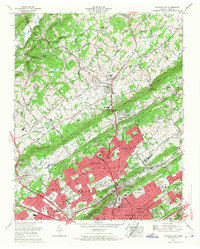 1966 Fountain City1968 Print · USGSKnoxville's northern suburbs were rapidly transforming in the 1960s as residential growth pushed past Blackoak Ridge. Researchers can find established family cemeteries like Holbert Cem alongside landmarks such as the Beverly Hills Sanatorium.
 - 1966 Map of Maryville, 1968 Print
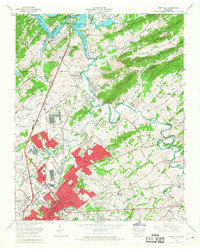 1966 Maryville1968 Print · USGSMid-century Maryville and Alcoa are captured during a period of significant growth and aviation expansion. Researchers can trace the footprints of Maryville College, the Mc Ghee Tyson Air Force Base, and old crossings like Brakebill Island.
 - 1966 Map of Mascot, 1968 Print
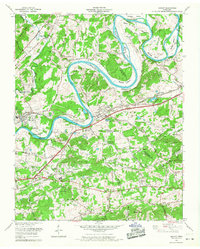 1966 Mascot1968 Print · USGSEast Tennessee's river bends and rail lines are captured here in the mid-1960s as industrial and rural life centered on the Holston River. Genealogists can trace family names through dozens of sites like Walker Cem, Wyricktown, and the Zinc Mine at Mascot.4 unique versions available
 - 1966 Map of Bearden, 1968 Print
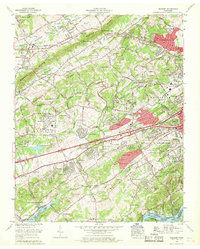 1966 Bearden1968 Print · USGSWestern Knoxville and the Beaver Valley are captured in the mid-sixties during a transformative era of suburban growth. Genealogists and historians can trace the transition from rural landmarks like Beaver Ridge Cem to rising neighborhoods such as West Hills and Rocky Hill.
 - 1966 Map of John Sevier, 1968 Print
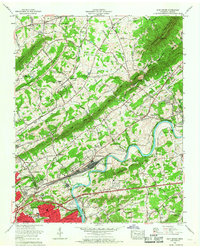 1966 John Sevier1968 Print · USGSNortheast of Knoxville in the mid-1960s, the Holston River valley served as a critical nexus for industrial rail and rural community life. Researchers can trace family sites like Maloneyville Cem, locate the old County farm, or explore the rail yards at John Sevier.
 - 1966 Map of Shooks Gap, 1968 Print
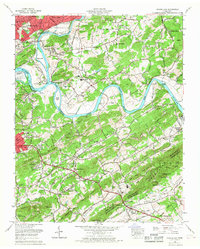 1966 Shooks Gap1968 Print · USGSSoutheast of Knoxville in the mid-sixties, the river valley landscape shows a mix of industrial quarrying and suburban growth. Genealogists can trace family connections at Hendron Chapel, Asbury Cem, and schools like Mountain View School.
 - 1968 Map of Powell, 1971 Print
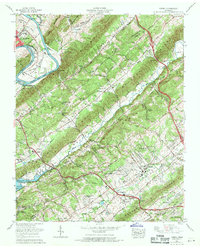 1968 Powell1971 Print · USGSThe Tennessee Valley north of Knoxville comes into focus during the late sixties as suburban growth meets established rural ridges. Researchers can trace family-named burial sites like Mabry Cem, visit the Powell Airfield, or locate the Slave cem near Wolf Valley Creek.
 - 1968 Map of Louisville, 1972 Print
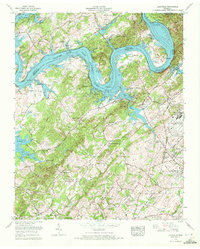 1968 Louisville1972 Print · USGSThe Blount and Knox county borderlands are captured here in the late sixties, where the rising waters of Fort Loudoun Lake met established rail and military hubs. Trace family history at Miser Station, Mahoney Mill, or the Louisville Cem.5 unique versions available
 - 1968 Map of Lovell, 1972 Print
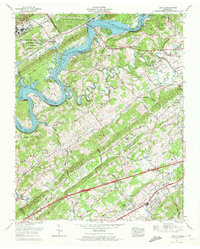 1968 Lovell1972 Print · USGSKnox County is captured in a period of significant growth in the late sixties as the interstate system began to reshape the Tennessee valley. Researchers can trace family history at Hardin Valley Sch & Ch or explore the geography of Palace Caverns and Melton Hill Lake.4 unique versions available
End of results
Showing maps 1-16 of 16
Top cities near Knoxville
- Maryville historical maps
- Farragut historical maps
- Powell historical maps
- Halls Crossroads historical maps
- Clinton historical maps
- Alcoa historical maps
See more
Top neighborhoods of Knoxville
- Montvue historical maps
- Amherst historical maps
- Landmark historical maps
- Pleasant Hills historical maps
- Pleasant Ridge historical maps
- Rothwood historical maps
See more
Frequently asked questions
- What are the different types of historical maps available for Knoxville?
- What is the oldest map of Knoxville?
- Where can I purchase historical maps of Knoxville for my home or office?
- Where can I download high-res historical maps of Knoxville?
- Are there historical topographic maps available for Knoxville?
- Is there historical aerial imagery available for Knoxville?
- Where are historical maps of Knoxville sourced from?