Old Maps of Powell, Tennessee for Hiking & Exploration
Hike through history with 35 historic maps of Powell. Explore old trails, ghost towns, and forgotten backroads — perfect for outdoor adventurers and local explorers.
- Rediscover forgotten places: Map out old mining camps, roads, and footpaths that no longer exist on modern maps.
- Layer with modern tools: Combine with LiDAR or satellite views to plan hikes through historical terrain.
- Made for exploration: Popular among hikers, overlanders, and local history lovers.
Use these maps to find adventure and explore the hidden past of Powell.
Powell, TN maps
(35)- 1893 Map of Briceville
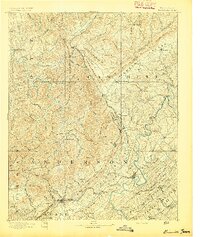 1893 Briceville1893 Print · USGSThe northern Tennessee coalfields and valleys come to life in the 1890s, when mining and rail were transforming the ridges of the Cumberland. Local historians can trace the paths of the Knoxville and Ohio R. R. and early settlements like Jacksboro, Coal Creek, and Oliver Springs.
 - 1895 Map of Briceville
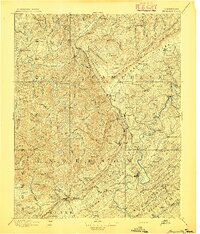 1895 Briceville1895 Print · USGSThe Cumberland Mountains and Powell Valley met a rapidly expanding railroad network in the late nineteenth century. Trace early industrial footprints and family-named hollows from Briceville and Clinton to the coal-rich slopes of Big Mountain.
 - 1896 Map of Briceville
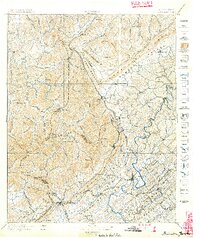 1896 Briceville1896 Print · USGSEast Tennessee's coal and rail corridors are captured here in the late nineteenth century as the industrial landscape of the Cumberland Plateau matured. Researchers can trace early family homesteads and transport hubs through Briceville, Clinton, and the Southern RR line.6 unique versions available
 - 1897 Map of Maynardville
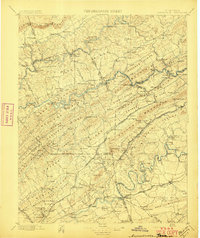 1897 Maynardville1897 Print · USGSEast Tennessee in the late nineteenth century was a landscape of high ridges and vital river fords. Genealogists and historians can trace old homesteads and transit hubs like Nances Ferry, the Lead Mine at New Prospect, and Massongills Mill.
 - 1900 Map of Maynardville
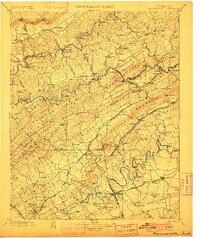 1900 Maynardville1900 Print · USGSEast Tennessee was a world of river fords and mountain gaps at the turn of the century, dominated by the winding Clinch and Powell rivers. Genealogists can trace family roots through specific landmarks like Massongills Mill, Church Grove, and Sharps Chapel.4 unique versions available
 - 1935 Map of Fountain City
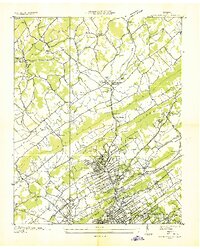 1935 Fountain City1935 Print · USGSKnox County north of Knoxville in the mid-1930s reveals a transition from traditional ridge-and-valley farming to suburban clusters. Genealogists can trace family names at Mynatt Cem, visit Halls Crossroads, or locate the Beverly Hills Sanitarium.
 - 1936 Map of Gorryton
 1936 Gorryton1936 Print · USGSNortheast of Knoxville in the mid-1930s, the landscape was being reshaped by the newly flooded Norris Reservoir. Genealogists and historians can trace numerous rural landmarks, including Welch Mill, Big Ridge Park Cemetery, and the Southern Railway corridor.
 - 1936 Map of Norris Dam
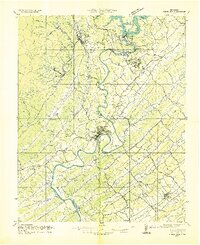 1936 Norris Dam1936 Print · USGSIn the mid-thirties, the Clinch River valley underwent a total transformation as the new Norris Reservoir reshaped the land. Genealogists can trace family homesteads near Clinton, old burial sites like Leach Cem, and coal towns including Briceville.
 - 1936 Map of Powell Station
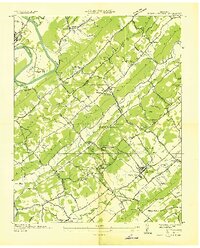 1936 Powell Station1936 Print · USGSThe Tennessee Valley during the mid-1930s shows a landscape of ridge-and-valley settlements and early federal infrastructure projects. Researchers can find many family landmarks and community hubs, including CCC Camp No 495, Bakers Mill, and Union Zion Ch.
 - 1941 Map of Fountain City
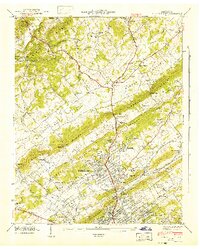 1941 Fountain City1941 Print · USGSKnox County is captured here just before the mid-century, showing the suburban expansion of Fountain City against the backdrop of the ridge-and-valley landscape. Researchers can locate family landmarks like Lynnhurst Cem, Fort Sumter Sch, and the Beverly Hills Sanitarium.
 - 1941 Map of Powell Station
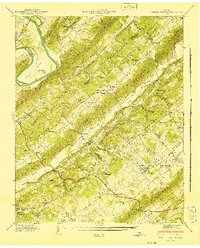 1941 Powell Station1941 Print · USGSKnox and Anderson counties are captured here just before the mid-century, defined by the parallel ridges of East Tennessee and the winding Clinch River. Researchers can trace old family landmarks like Bishopville Cem, early industry at Baker Mill, and rural hubs like Powell Station.2 unique versions available
 - 1952 Map of Powell, 1955 Print
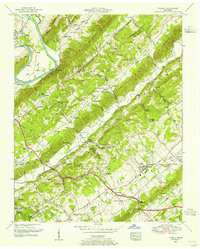 1952 Powell1955 Print · USGSMid-century Knox and Anderson counties are defined here by their parallel ridges and the deep-rooted communities settled between them. Genealogists and historians can trace family landmarks like Sartin Cemetery, Carpenter School, and the distinctive Lonesome Dove Church.2 unique versions available
 - 1953 Map of Fountain City, 1954 Print
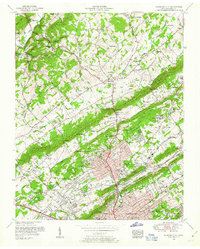 1953 Fountain City1954 Print · USGSNorth of Knoxville in the early fifties, the landscape was a mix of ridgeline farms and growing suburbs like Fountain City. Genealogists can locate family burial plots at Mayes Chapel Cemetery and landmarks like the Dante School or Beverly Hills Sanatorium.2 unique versions available
 - 1955 Map of Johnson City
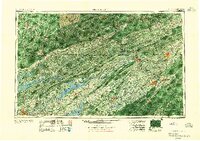 1955 Johnson City1955 Print · USGSEast Tennessee and the bordering highlands of Virginia and Kentucky appear here during the post-war industrial boom. You can trace the complex network of mountain ridges and new TVA lakes, from Johnson City to the coalfields near Middlesboro and Lynch.
 - 1956 Map of Corbin, 1966 Print
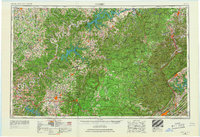 1956 Corbin1966 Print · USGSThe Kentucky and Tennessee borderlands are captured here in the mid-fifties, showing the region's shift toward modern interstate travel and reservoir development. Genealogists and historians can trace old community lines near Albany and Monticello or locate early rail junctions along the Southern and Tennessee Central lines.3 unique versions available
 - 1957 Map of Johnson City, 1966 Print
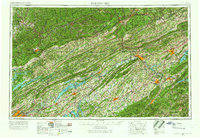 1957 Johnson City1966 Print · USGSUpper East Tennessee and Southwest Virginia are shown here during the mid-sixties transition of the Appalachians. Researchers can trace the industrial rail hubs of Kingsport, the sprawling waters of Cherokee Lake, and the historic Cumberland Gap.
 - 1958 Map of Corbin
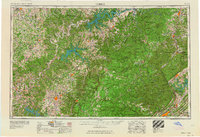 1958 Corbin1958 Print · USGSThe Upper Cumberland borderlands appear in the late 1950s as massive reservoirs and early atomic-era growth reshape the region. Trace family roots and vanished landmarks near Lake Cumberland, Oak Ridge, and the Cumberland National Forest.
 - 1960 Map of Johnson City
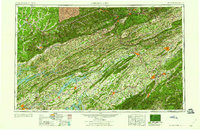 1960 Johnson City1960 Print · USGSUpper East Tennessee and the surrounding tri-state area are shown in the mid-fifties during the height of the TVA reservoir era. Trace the industrial rail lines of the Southern and Louisville and Nashville between Kingsport and Johnson City.
 - 1963 Map of Johnson City
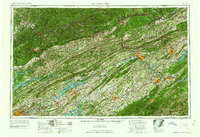 1963 Johnson City1963 Print · USGSThe Tri-Cities and the surrounding Appalachian ridges are shown in detail during the early sixties, highlighting the era's vital rail and river networks. Genealogists and historians can trace the routes of the Clinchfield RR and locate settlements from Rogersville to Elizabethton.
 - 1966 Map of Fountain City, 1968 Print
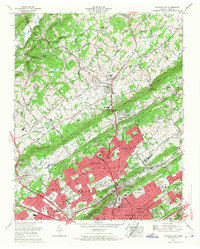 1966 Fountain City1968 Print · USGSKnoxville's northern suburbs were rapidly transforming in the 1960s as residential growth pushed past Blackoak Ridge. Researchers can find established family cemeteries like Holbert Cem alongside landmarks such as the Beverly Hills Sanatorium.
 - 1968 Map of Powell, 1971 Print
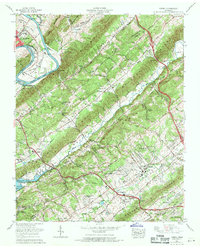 1968 Powell1971 Print · USGSThe Tennessee Valley north of Knoxville comes into focus during the late sixties as suburban growth meets established rural ridges. Researchers can trace family-named burial sites like Mabry Cem, visit the Powell Airfield, or locate the Slave cem near Wolf Valley Creek.
 - 1976 Map of Powell, 1977 Print
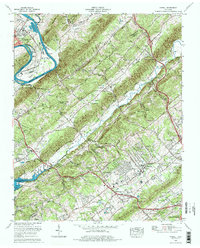 1976 Powell1977 Print · USGSKnox and Anderson counties show a landscape of ridgelines and growing communities in the mid-seventies as suburban developments began to flank the ridges. Genealogists can trace family names and local landmarks at Tennessee Valley Memory Gardens, Bishopville Cem, and the old Eagle Bend fish hatchery.2 unique versions available
 - 1978 Map of Fountain City, 1979 Print
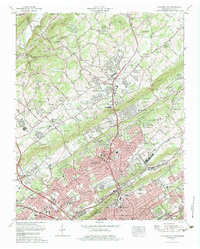 1978 Fountain City1979 Print · USGSNorthern Knox County in the late seventies reveals the steady growth of Fountain City and Inskip along the parallel ridges north of Knoxville. Genealogists can trace family connections through numerous local sites like Lynnhurst Cem, Sterchi Sch, and New Beverly Church.2 unique versions available
 - 1979 Map of Oakridge, 1980 Print
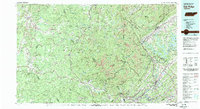 1979 Oakridge1980 Print · USGSThe eastern Tennessee highlands are captured here in the late 1970s, showcasing a landscape of coal mining and mountain conservation. Genealogists and researchers can locate family landmarks such as Potter Cem, Sunbright Sch, and the historic settlement of Rugby.
 - 1981 Map of Morristown
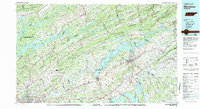 1981 Morristown1981 Print · USGSEast Tennessee's ridge-and-valley corridor is captured here in the early eighties, showing the region's transformation by TVA reservoirs. Genealogists and historians can trace family locations near Alpha Ch, follow the Southern Railway, or locate the Young Mine.
Showing maps 1-25 of 35
Top cities near Powell
- Knoxville historical maps
- Oak Ridge historical maps
- Farragut historical maps
- Halls Crossroads historical maps
- Clinton historical maps
- Alcoa historical maps
See more
Top neighborhoods of Powell
- Glenwood historical maps
- Idlewood Acres historical maps
- Mayview Heights historical maps
- Ponderosa Hills historical maps
- Lakewood historical maps
- Broadacres historical maps
See more
Frequently asked questions
- What are the different types of historical maps available for Powell?
- What is the oldest map of Powell?
- Where can I purchase historical maps of Powell for my home or office?
- Where can I download high-res historical maps of Powell?
- Are there historical topographic maps available for Powell?
- Is there historical aerial imagery available for Powell?
- Where are historical maps of Powell sourced from?