Old Maps of Mill Town, Tennessee for Academic Research
Study the evolution of Mill Town with 10 high-resolution historic maps. Whether you're teaching, researching, or modeling changes in land use, these maps provide essential visual documentation of urban, environmental, and geographic change.
- Analyze long-term change: Track patterns in development, transportation, and natural features.
- Ideal for environmental or urban studies: Support academic projects with primary historical map data.
- Use in the classroom or lab: Educators and researchers rely on these maps to bring historical context to life.
These maps are a powerful tool for teaching, research, and visualizing how Mill Town has changed over the decades.
Mill Town, TN maps
(10)- 1932 Map of Carthage
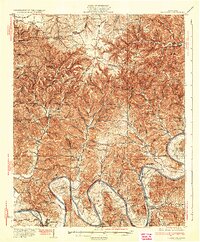 1932 Carthage1932 Print · USGSNorth Central Tennessee comes alive in the early 1930s as the Cumberland River winds past the county seat of Carthage. Genealogists and researchers can trace family roots through numerous country schools and landmarks like Holliman Ferry and Difficult.3 unique versions available
 - 1956 Map of Corbin, 1966 Print
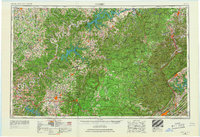 1956 Corbin1966 Print · USGSThe Kentucky and Tennessee borderlands are captured here in the mid-fifties, showing the region's shift toward modern interstate travel and reservoir development. Genealogists and historians can trace old community lines near Albany and Monticello or locate early rail junctions along the Southern and Tennessee Central lines.3 unique versions available
 - 1958 Map of Corbin
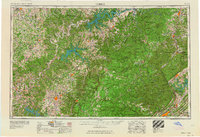 1958 Corbin1958 Print · USGSThe Upper Cumberland borderlands appear in the late 1950s as massive reservoirs and early atomic-era growth reshape the region. Trace family roots and vanished landmarks near Lake Cumberland, Oak Ridge, and the Cumberland National Forest.
 - 1968 Map of Pleasant Shade, 1970 Print
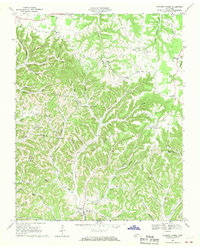 1968 Pleasant Shade1970 Print · USGSUpper Middle Tennessee in the late sixties reveals a landscape of family-run farms and ridge-top communities at the junction of Macon and Smith counties. Genealogists can trace family names through landmarks like Butler Cem, Ebenezer Ch, and the small settlement of Pleasant Shade.2 unique versions available
 - 1982 Map of Cookeville, 1983 Print
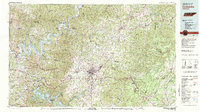 1982 Cookeville1983 Print · USGSThe Upper Cumberland region comes into focus during the early eighties as Cookeville and its surrounding counties adapt to new reservoirs and highways. Researchers can trace the Louisville and Nashville rail line and locate landmarks like Tennessee Technological University and Standing Stone State Forest.
 - 2010 Map of Pleasant Shade, 2010 Print
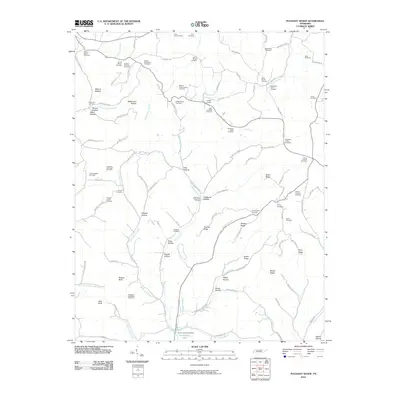 2010 Pleasant Shade2010 Print · USGSPleasant Shade and the surrounding Macon County countryside are captured here in the early twenty-first century as a landscape of family farms and deep hollows. Researchers can locate dozens of ancestral burial sites, including the Frogpond-Friendship Cemetery, Union Camp, and the John R Brooks Cemetery.
 - 2013 Map of Pleasant Shade, 2013 Print
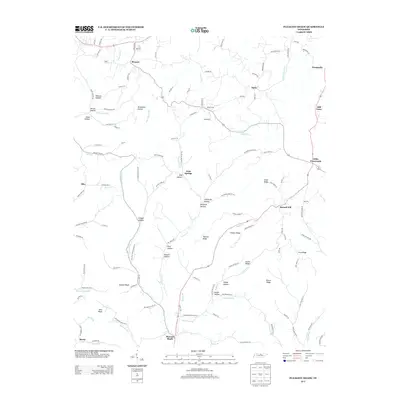 2013 Pleasant Shade2013 Print · USGSThis Tennessee countryside near the Macon and Smith county line shows a landscape defined by deep hollows and high ridges. Genealogists can trace family footprints across Pleasant Shade, Mill-Town, and the bluffs at Mutton Bluff or Alex Bluff.
 - 2016 Map of Pleasant Shade, 2016 Print
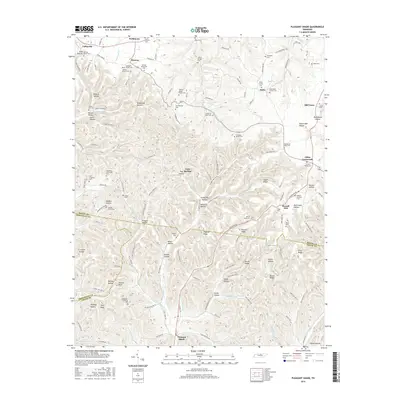 2016 Pleasant Shade2016 Print · USGSMacon County and the borderlands of Trousdale and Smith counties are captured here in the mid-2010s. Genealogists can trace dozens of family burial sites like Frogpond Friendship Cem, Patterson-Kelley Cem, and Wakefield Family Cem.
 - 2019 Map of Pleasant Shade, 2019 Print
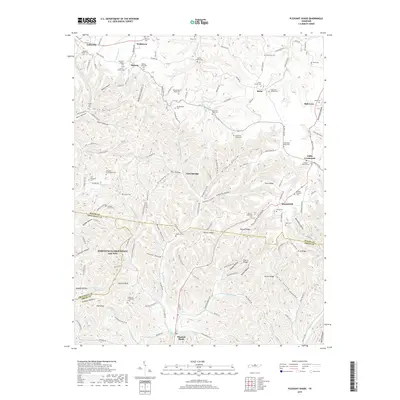 2019 Pleasant Shade2019 Print · USGSUpper Middle Tennessee is shown here in the late twenty-tens, where the ridges of Macon, Trousdale, and Smith counties meet. Researchers can trace ancestral lines through dozens of family burial sites like the Wakefield-Kirby Cem or explore the geography of Steam Mill Hollow and Pleasant Shade.
 - 2022 Map of Pleasant Shade, 2022 Print
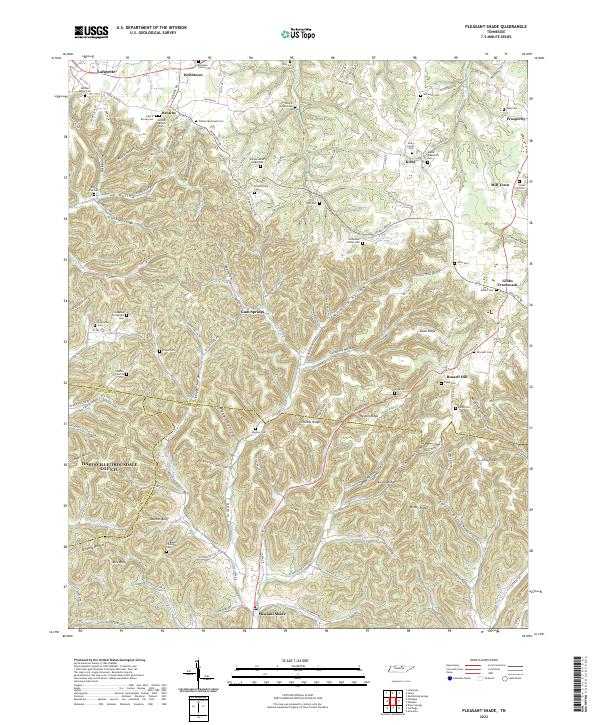 2022 Pleasant Shade2022 Print · USGSMacon and Smith counties are shown in detail during the early 2020s, revealing a landscape deeply rooted in family history. Researchers can locate numerous family burial sites like William Abner Hargis Cem and trace old routes through Wilmore Hollow and Gum Springs.
End of results
Showing maps 1-10 of 10
Top cities near Mill Town
- Lafayette historical maps
- Tompkinsville historical maps
- Carthage historical maps
- South Carthage historical maps
- Red Boiling Springs historical maps
- Gainesboro historical maps
See more
Frequently asked questions
- What are the different types of historical maps available for Mill Town?
- What is the oldest map of Mill Town?
- Where can I purchase historical maps of Mill Town for my home or office?
- Where can I download high-res historical maps of Mill Town?
- Are there historical topographic maps available for Mill Town?
- Is there historical aerial imagery available for Mill Town?
- Where are historical maps of Mill Town sourced from?