Old Maps of Montgomery County, Tennessee for Academic Research
Study the evolution of Montgomery County with 140 high-resolution historic maps. Whether you're teaching, researching, or modeling changes in land use, these maps provide essential visual documentation of urban, environmental, and geographic change.
- Analyze long-term change: Track patterns in development, transportation, and natural features.
- Ideal for environmental or urban studies: Support academic projects with primary historical map data.
- Use in the classroom or lab: Educators and researchers rely on these maps to bring historical context to life.
These maps are a powerful tool for teaching, research, and visualizing how Montgomery County has changed over the decades.
Montgomery County, TN maps
(140)- 1931 Map of Erin
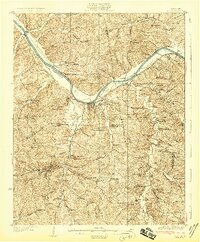 1931 Erin1931 Print · USGSThe Cumberland River corridor and the railroad hub of Erin define this landscape in the late 1920s. Genealogists can trace family footprints through dozens of rural schools and churches, from Blooming Grove Ch to the remote Cave Orchard Sch.
 - 1944 Map of Clarksville, 1946 Print
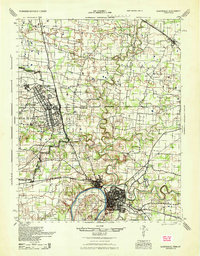 1944 Clarksville1946 Print · USGSThe Kentucky-Tennessee border during the mid-forties shows a landscape transformed by the massive expansion of Camp Campbell. Researchers can trace the early layout of the base and its Small Arms Ranges alongside historic sites like Dunbar Cave and the Sunnyside Church.
 - 1950 Map of Allensville, 1952 Print
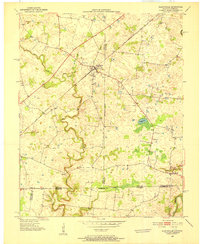 1950 Allensville1952 Print · USGSSpanning the Kentucky and Tennessee border in the early 1950s, this area centers on the vital Louisville and Nashville rail line. Researchers can trace the rural communities of Allensville and Keysburg or locate the Belmont Cem near the winding Red River.2 unique versions available
 - 1950 Map of Guthrie, 1952 Print
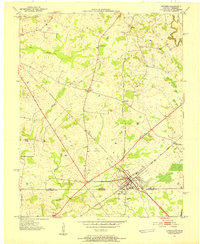 1950 Guthrie1952 Print · USGSGuthrie and the Kentucky-Tennessee borderlands are shown here at the mid-century, where the rail lines of the Louisville and Nashville meet. Researchers can trace rural life through landmarks like Warfield School, Lester Chapel, and the small settlement at Pinchem.3 unique versions available
 - 1951 Map of Roaring Spring, 1953 Print
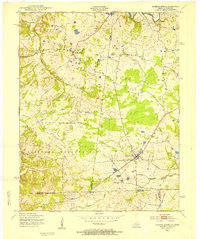 1951 Roaring Spring1953 Print · USGSThe Kentucky and Tennessee borderlands appear in the early fifties as the military presence transformed the landscape. Trace rural roots at Corinth Ch or find former homesites now marked as ruins inside the Fort Campbell Military Reservation.
 - 1951 Map of New Providence, 1953 Print
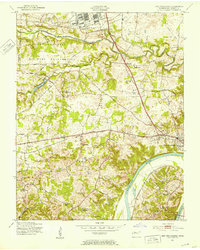 1951 New Providence1953 Print · USGSMontgomery County was undergoing a major transformation in the early fifties as military expansion met traditional river life. Genealogists can trace family footprints through several rural schoolhouses and churches like Woodlawn Sch and Macedonia Ch near the Cumberland River.
 - 1951 Map of Hammacksville, 1953 Print
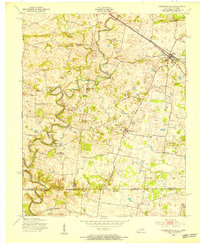 1951 Hammacksville1953 Print · USGSThe Kentucky-Tennessee borderlands in the early fifties show a landscape of winding river bends and railroad-aligned settlements. Genealogists can trace family roots through numerous local landmarks, from Rosenwald Sch to the rural Barkers Mill community.
 - 1951 Map of Clarksville, 1953 Print
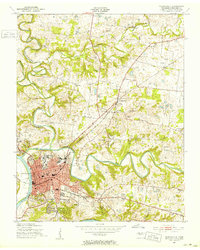 1951 Clarksville1953 Print · USGSMid-century Clarksville and the surrounding Montgomery County landscape are caught here during a period of steady post-war expansion. Local historians can trace the foundations of Austin Peay State College or locate vanished rural landmarks like Idaho Springs and the Needmore Sch.
 - 1951 Map of Indian Mound, 1953 Print
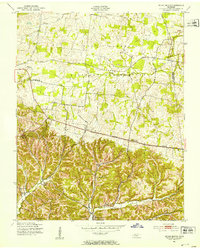 1951 Indian Mound1953 Print · USGSStewart County at the start of the fifties shows the transition between established rural communities and the expansion of the Fort Campbell Military Reservation. Genealogists can locate family landmarks like the Lineberry Cem, Rose Valley Ch, and the Atkins Sch.
 - 1951 Map of Herndon, 1953 Print
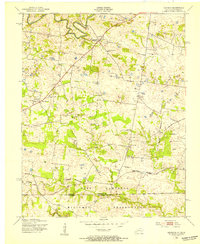 1951 Herndon1953 Print · USGSThe Kentucky and Tennessee borderlands are captured here in the early fifties during the expansion of the Fort Campbell Military Reservation. Local historians can trace old homesteads and landmarks like Flat Lick Ch, Bennettstown, and South Christian Sch.
 - 1951 Map of Oak Grove, 1953 Print
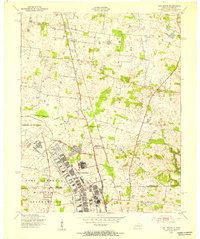 1951 Oak Grove1953 Print · USGSThe Kentucky and Tennessee borderlands are captured here in the early fifties as military expansion meets rural life. Researchers can trace the development of Fort Campbell alongside old community hubs like Fidelio, St Elmo, and the Tennessee Central Railroad.
 - 1951 Map of Woodlawn, 1953 Print
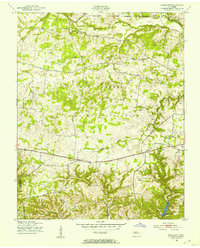 1951 Woodlawn1953 Print · USGSNorthwest Montgomery County appears here just as the post-war military footprint was firmly established in the early fifties. Genealogists and historians can trace family locations near Woodlawn and Oakwood or locate landmarks like Elizabeth Cem and the Griffey Sch.
 - 1956 Map of Nashville, 1971 Print
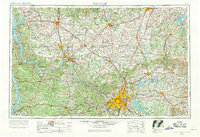 1956 Nashville1971 Print · USGSThe Tennessee-Kentucky borderlands come into focus in the mid-1960s as major reservoir projects transformed the Cumberland and Tennessee river valleys. Researchers can trace the rail networks of the Louisville and Nashville and visit sites like Fort Campbell and Fort Donelson National Military Park.2 unique versions available
 - 1957 Map of Adams, 1958 Print
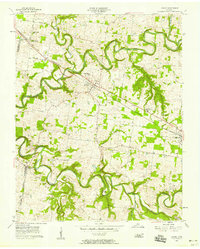 1957 Adams1958 Print · USGSUpper Middle Tennessee was a land of winding river valleys and rail-side hamlets during the mid-fifties. You can trace the historic Louisville and Nashville line through Adams or locate rural landmarks like Jo-Byrns High Sch and Harmony Ch.4 unique versions available
 - 1957 Map of Pleasant View, 1958 Print
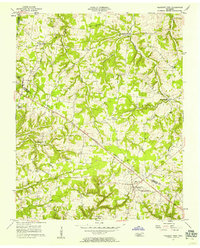 1957 Pleasant View1958 Print · USGSMid-century Middle Tennessee comes to life here, showing the rural landscapes of Cheatham and Robertson counties. Genealogists can locate family landmarks like Fox Cem or trace the development of crossroads hamlets such as Stroudville, Gause, and Pleasant View.3 unique versions available
 - 1957 Map of Henrietta, 1958 Print
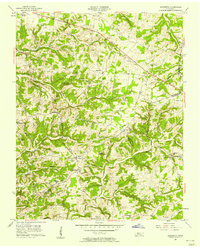 1957 Henrietta1958 Print · USGSThe rural Montgomery and Cheatham county line comes into focus during the late fifties, showing a landscape of family farms and small crossroads. Genealogists can trace family names at the Hollis-Nanny Cem or locate the County Home for the Indigent.3 unique versions available
 - 1957 Map of Sango, 1958 Print
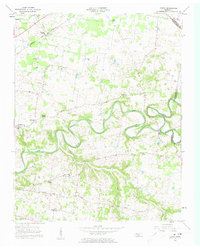 1957 Sango1958 Print · USGSThe Red River valley on the Montgomery and Robertson county line is captured here in the mid-fifties, showing a landscape of small farms and rural parishes. Researchers can locate family landmarks like Hampton Station, Durham Cave, and the historic crossroads at Port Royal.5 unique versions available
 - 1957 Map of New Providence, 1960 Print
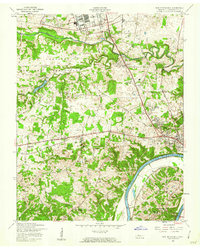 1957 New Providence1960 Print · USGSMontgomery County was undergoing a major transformation in the late fifties as the military expanded and river projects reshaped the land. Trace the early streets of New Providence, locate the site of Outlaw Airfield, or see the Cumberland River before the completion of Lake Barkley.4 unique versions available
 - 1957 Map of Oak Grove, 1960 Print
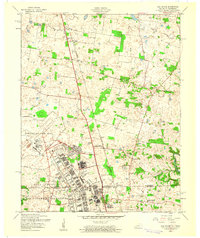 1957 Oak Grove1960 Print · USGSThe Kentucky-Tennessee borderlands are captured here in the late fifties as military expansion at Fort Campbell meets the rural farming country of Christian County. Genealogists and local historians can trace small settlements like Fidelio, visit country churches like Salem Ch, and locate the Drive-in Theater near Oak Grove.
 - 1957 Map of Hammacksville, 1960 Print
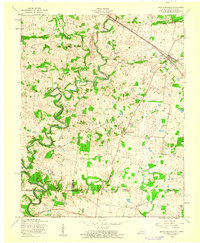 1957 Hammacksville1960 Print · USGSTodd County, Kentucky, and Montgomery County, Tennessee, meet here in the late fifties along the meandering river and rail lines. Genealogists can trace family roots at Rosenwald Sch, Edgewood Cem, and the riverside site of Barkers Mill.
 - 1957 Map of Herndon, 1960 Print
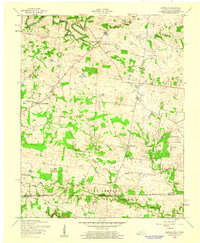 1957 Herndon1960 Print · USGSSouthern Christian County was undergoing a major shift in the late fifties as military expansion met traditional farming life. Researchers can trace family sites like Double Barn Cem and South Christian Sch alongside the growing Fort Campbell Military Reservation.
 - 1957 Map of Indian Mound, 1960 Print
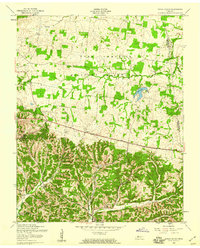 1957 Indian Mound1960 Print · USGSStewart and Montgomery counties are captured in the late fifties, just as the regional landscape was being reshaped. Genealogists can trace family landmarks like Lineberry Cem, the Atkins Sch, and the community of Indian Mound before the waters of Lake Barkley rose.4 unique versions available
 - 1957 Map of Clarksville, 1960 Print
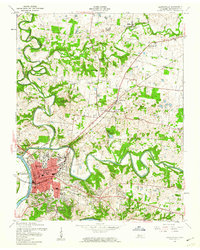 1957 Clarksville1960 Print · USGSMid-century Clarksville is captured here during the construction of the Barkley Dam, when the river valley was beginning to change forever. Researchers can trace the early footprint of Austin Peay State College or find vanished rural landmarks like Needmore Sch and Dunbar Cave.3 unique versions available
 - 1957 Map of Woodlawn, 1960 Print
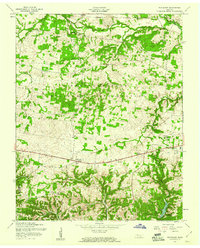 1957 Woodlawn1960 Print · USGSMid-century Montgomery County, Tennessee, is captured here as the military presence expands into the rural landscape. Researchers can locate the Griffey Ch, the community of Woodlawn, and various Cem sites near the Fort Campbell Military Reservation boundary.3 unique versions available
 - 1957 Map of Roaring Spring, 1960 Print
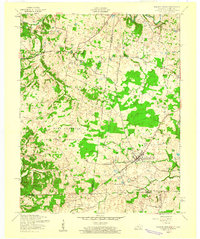 1957 Roaring Spring1960 Print · USGSThe Kentucky-Tennessee borderlands appear here in the mid-fifties as the military footprint expands. Trace family roots at Gary Cem or explore the settlement patterns around Roaring Spring and the Lafayette post office.3 unique versions available
Showing maps 1-25 of 140
Top cities of Montgomery County
Frequently asked questions
- What are the different types of historical maps available for Montgomery County?
- What is the oldest map of Montgomery County?
- Where can I purchase historical maps of Montgomery County for my home or office?
- Where can I download high-res historical maps of Montgomery County?
- Are there historical topographic maps available for Montgomery County?
- Is there historical aerial imagery available for Montgomery County?
- Where are historical maps of Montgomery County sourced from?