Old Maps of Clarksville, Tennessee for Metal Detecting
Plan your next treasure hunt with 61 historic maps of Clarksville. Find old homesites, ghost towns, trails, and gathering spots that may be lost to time — perfect for identifying promising metal detecting locations.
- Locate forgotten sites: Uncover places like long-lost settlements, abandoned rail lines, or gathering spots.
- Plan better hunts: Use map overlays combined with LiDAR or satellite views to narrow in on historically rich areas.
- Made for detectorists: Thousands of hobbyists use these maps to discover relics, coins, and hidden history.
Use these historic maps to boost your research and find new opportunities beneath the surface of Clarksville.
Clarksville, TN maps
(61)- 1944 Map of Clarksville, 1946 Print
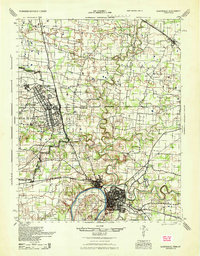 1944 Clarksville1946 Print · USGSThe Kentucky-Tennessee border during the mid-forties shows a landscape transformed by the massive expansion of Camp Campbell. Researchers can trace the early layout of the base and its Small Arms Ranges alongside historic sites like Dunbar Cave and the Sunnyside Church.
 - 1951 Map of New Providence, 1953 Print
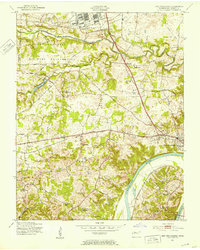 1951 New Providence1953 Print · USGSMontgomery County was undergoing a major transformation in the early fifties as military expansion met traditional river life. Genealogists can trace family footprints through several rural schoolhouses and churches like Woodlawn Sch and Macedonia Ch near the Cumberland River.
 - 1951 Map of Hammacksville, 1953 Print
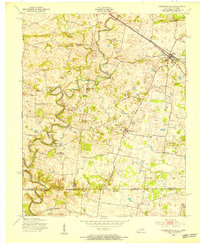 1951 Hammacksville1953 Print · USGSThe Kentucky-Tennessee borderlands in the early fifties show a landscape of winding river bends and railroad-aligned settlements. Genealogists can trace family roots through numerous local landmarks, from Rosenwald Sch to the rural Barkers Mill community.
 - 1951 Map of Clarksville, 1953 Print
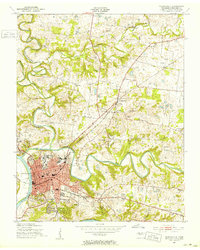 1951 Clarksville1953 Print · USGSMid-century Clarksville and the surrounding Montgomery County landscape are caught here during a period of steady post-war expansion. Local historians can trace the foundations of Austin Peay State College or locate vanished rural landmarks like Idaho Springs and the Needmore Sch.
 - 1951 Map of Oak Grove, 1953 Print
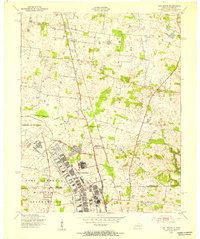 1951 Oak Grove1953 Print · USGSThe Kentucky and Tennessee borderlands are captured here in the early fifties as military expansion meets rural life. Researchers can trace the development of Fort Campbell alongside old community hubs like Fidelio, St Elmo, and the Tennessee Central Railroad.
 - 1956 Map of Nashville, 1971 Print
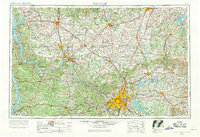 1956 Nashville1971 Print · USGSThe Tennessee-Kentucky borderlands come into focus in the mid-1960s as major reservoir projects transformed the Cumberland and Tennessee river valleys. Researchers can trace the rail networks of the Louisville and Nashville and visit sites like Fort Campbell and Fort Donelson National Military Park.2 unique versions available
 - 1957 Map of Henrietta, 1958 Print
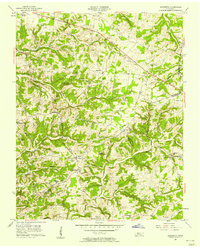 1957 Henrietta1958 Print · USGSThe rural Montgomery and Cheatham county line comes into focus during the late fifties, showing a landscape of family farms and small crossroads. Genealogists can trace family names at the Hollis-Nanny Cem or locate the County Home for the Indigent.3 unique versions available
 - 1957 Map of Sango, 1958 Print
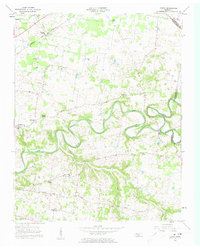 1957 Sango1958 Print · USGSThe Red River valley on the Montgomery and Robertson county line is captured here in the mid-fifties, showing a landscape of small farms and rural parishes. Researchers can locate family landmarks like Hampton Station, Durham Cave, and the historic crossroads at Port Royal.5 unique versions available
 - 1957 Map of New Providence, 1960 Print
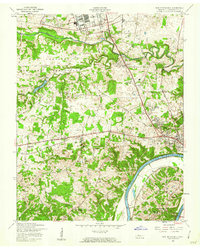 1957 New Providence1960 Print · USGSMontgomery County was undergoing a major transformation in the late fifties as the military expanded and river projects reshaped the land. Trace the early streets of New Providence, locate the site of Outlaw Airfield, or see the Cumberland River before the completion of Lake Barkley.4 unique versions available
 - 1957 Map of Oak Grove, 1960 Print
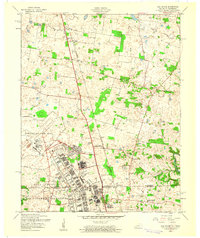 1957 Oak Grove1960 Print · USGSThe Kentucky-Tennessee borderlands are captured here in the late fifties as military expansion at Fort Campbell meets the rural farming country of Christian County. Genealogists and local historians can trace small settlements like Fidelio, visit country churches like Salem Ch, and locate the Drive-in Theater near Oak Grove.
 - 1957 Map of Hammacksville, 1960 Print
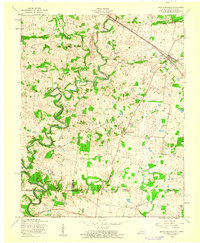 1957 Hammacksville1960 Print · USGSTodd County, Kentucky, and Montgomery County, Tennessee, meet here in the late fifties along the meandering river and rail lines. Genealogists can trace family roots at Rosenwald Sch, Edgewood Cem, and the riverside site of Barkers Mill.
 - 1957 Map of Clarksville, 1960 Print
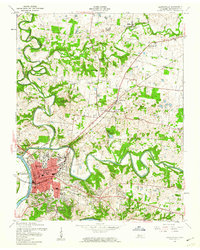 1957 Clarksville1960 Print · USGSMid-century Clarksville is captured here during the construction of the Barkley Dam, when the river valley was beginning to change forever. Researchers can trace the early footprint of Austin Peay State College or find vanished rural landmarks like Needmore Sch and Dunbar Cave.3 unique versions available
 - 1957 Map of Clarksville, 1963 Print
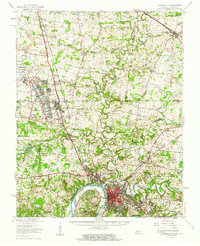 1957 Clarksville1963 Print · USGSThe Clarksville region and the Kentucky-Tennessee border are shown here during the mid-century expansion of Fort Campbell. Researchers can trace old family sites and rural landmarks like Barkers Mill, St Bethlehem, and the Tennessee Central railroad.
 - 1958 Map of Palmyra, 1959 Print
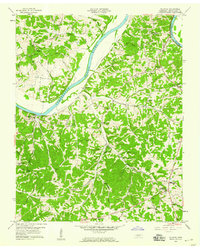 1958 Palmyra1959 Print · USGSMontgomery County in the late fifties shows a rural landscape defined by the winding Cumberland River and the Louisville and Nashville Railroad. Researchers can trace family history through sites like Lone Oak, Dotsonville Cem, and Haynes Chapel.4 unique versions available
 - 1958 Map of Excell, 1960 Print
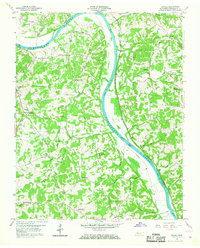 1958 Excell1960 Print · USGSThe Cumberland River valley in the late fifties was a landscape of crossroads hamlets and family farmsteads. Researchers can trace old family sites near Orgains Crossroads, locate the Indian Mounds, or find early churches like Marthas Chapel and Bethlehem Ch.3 unique versions available
 - 1959 Map of Nashville
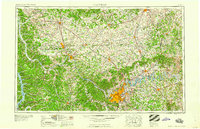 1959 Nashville1959 Print · USGSMiddle Tennessee and Southern Kentucky come into focus during the late fifties, showing the region's transition into a modern transportation and military hub. Researchers can trace the sprawling Fort Campbell Military Reservation or locate historic rail stops along the Tennessee Central Ry and Illinois Central RR.
 - 1974 Map of Trenton, 1976 Print
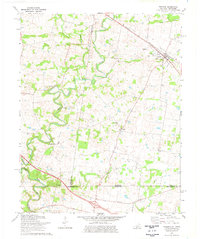 1974 Trenton1976 Print · USGSThe Kentucky-Tennessee borderlands in the mid-1970s reveal a landscape of river-bend farms and rail-dependent towns. Researchers can locate family landmarks such as Woodward Cem, the community of Barkers Mill, and rural sites like Pisgah Ch and Trenton.
 - 1979 Map of Oak Grove
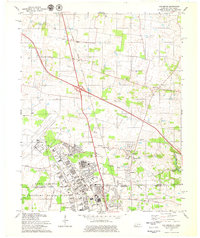 1979 Oak Grove1979 Print · USGSThe Kentucky-Tennessee state line divides this 1970s landscape, centered on the strategic presence of Fort Campbell. Researchers can trace the development of Oak Grove and Hensleytown near landmarks like Salem Ch and the Drive-in Theater.2 unique versions available
 - 1980 Map of Hopkinsville, 1983 Print
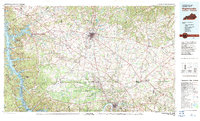 1980 Hopkinsville1983 Print · USGSThe Kentucky and Tennessee borderlands appear here at the start of the 1980s, centered on the massive Fort Campbell Military Reservation. Trace the impact of the Cumberland River impoundment at Lake Barkley or locate rail hubs like Guthrie and Elkton.
 - 1985 Map of Dickson
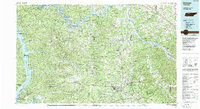 1985 Dickson1985 Print · USGSMid-Tennessee in the mid-1980s was defined by the intersection of the Cumberland and Tennessee rivers and a massive network of wildlife refuges. Researchers can trace the Seaboard System rail lines connecting Waverly, Dickson, and White Bluff, or locate old landmarks near Fort Donelson National Military Park.
 - 1997 Map of Clarksville, 2002 Print
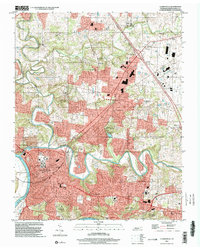 1997 Clarksville2002 Print · USGSThe Clarksville riverfront and its northern suburbs are captured in the late 1990s during a period of steady growth. Trace the expansion of New Providence and St Bethlehem or locate local landmarks like Austin Peay State University and the Dunbar Cave State Natural Area.
 - 2010 Map of Excell, 2010 Print
 2010 Excell2010 Print · USGSThe Cumberland River corridor south of Clarksville comes into sharp focus during the early twenty-first century, showing a landscape shaped by river navigation and rural commerce. Researchers can trace historic family landmarks such as Lyle Cemetery and Sheltons Landing, or locate the Southside Post Office.
 - 2010 Map of Henrietta, 2010 Print
 2010 Henrietta2010 Print · USGSRural Montgomery County comes into focus in the early twenty-first century, showing a landscape shaped by family lineage and historic creek valleys. Researchers can trace deep roots at the Montgomery County Home and dozens of family plots such as the Hobson Nicholson Cemetery or Albright Cemetery.
 - 2010 Map of Clarksville, 2010 Print
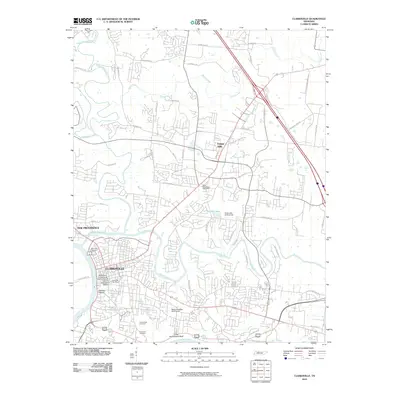 2010 Clarksville2010 Print · USGSClarksville sits at the historic meeting of the Cumberland and Red Rivers in the early twenty-first century. Genealogists and historians can trace the city's preserved heritage through the Dog Hill Architectural District and family sites like Greenwood Cemetery.
 - 2010 Map of Palmyra, 2010 Print
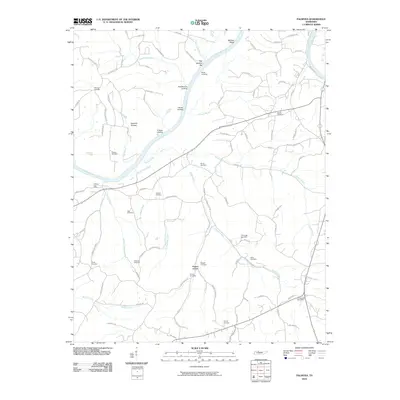 2010 Palmyra2010 Print · USGSNear the Cumberland River in the early twenty-first century, this Montgomery County landscape retains its deep family and river roots. Genealogists can locate numerous family burial sites like Wickham Cemetery or trace old river access at Bud Martins Landing and O'Neals Landing.
Showing maps 1-25 of 61
Top cities near Clarksville
- Hopkinsville historical maps
- Oak Grove historical maps
- Guthrie historical maps
- Pembroke historical maps
- Trenton historical maps
Top neighborhoods of Clarksville
- Green Acres historical maps
- Bethel historical maps
- Pembrook Place historical maps
- Glenstone historical maps
- Greenland Farms historical maps
- Kingsbury historical maps
See more
Frequently asked questions
- What are the different types of historical maps available for Clarksville?
- What is the oldest map of Clarksville?
- Where can I purchase historical maps of Clarksville for my home or office?
- Where can I download high-res historical maps of Clarksville?
- Are there historical topographic maps available for Clarksville?
- Is there historical aerial imagery available for Clarksville?
- Where are historical maps of Clarksville sourced from?