1900s (20th Century) Maps of Scott County, Tennessee
Explore 36 historic maps of Scott County from the 1900s (20th Century). These maps offer a rare glimpse into what life looked like during the 1900s — showing old roads, neighborhoods, homes, and landmarks that have changed or disappeared over time.
Whether you're researching your family's past, planning a metal detecting trip, or studying how Scott County's landscape evolved across the 1900s, these high-resolution maps are a powerful tool for exploring the history of this region.
- Focus on a specific era: All maps on this page are from the 1900s, giving you a focused view of this time period.
- See what’s changed: Compare century-old streets, trails, and buildings to today's modern landscape using overlays and satellite layers.
- Research with precision: Use these maps for genealogy, historical research, land use analysis, or educational projects.
- View, download, or print: Maps are fully viewable online in high resolution, and can be downloaded or printed for your own records.
Start exploring Scott County's history through authentic maps from the 1900s. This is your window into the past.
Scott County, TN maps
(36)- 1934 Map of Barthell
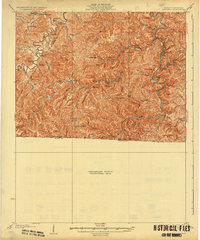 1934 Barthell1934 Print · USGSMcCreary County during the late 1920s reveals a landscape of industrial outposts and river-bound settlements at the edge of the Tennessee line. Researchers can trace the Kentucky and Tennessee Railway corridor or find family roots at Kidds Crossing, Cooperative, and Laurel Hill Ch.
 - 1934 Map of Pall Mall
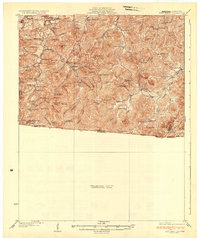 1934 Pall Mall1934 Print · USGSThe Kentucky-Tennessee borderlands appear in great detail during the late interwar period, showing a landscape of remote mountain hamlets and schools. Genealogists can locate family landmarks such as Edwards Chapel, Slickford, and the Parmley Sch among the cliffs and ridges.
 - 1935 Map of Gobey
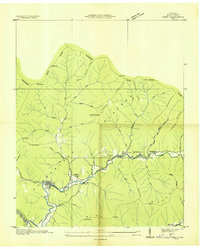 1935 Gobey1935 Print · USGSMorgan County is captured during the mid-1930s when logging and rail lines defined the life of the plateau. Trace the timber economy through the Lumber Company rail spurs and find family landmarks like Elizabeth Sch and Macedonia Ch.
 - 1936 Map of Hogbell Gap
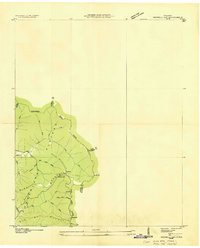 1936 Hogbell Gap1936 Print · USGSThe Tennessee Cumberland Mountains are captured during the mid-1930s, revealing a landscape of high ridges and critical mountain passes. Researchers can trace the rugged topography of Bird Mountain and locate early landmarks such as Hogbell Gap and The Garden Spot.
 - 1936 Map of Block
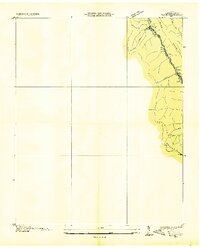 1936 Block1936 Print · USGSCoal and rail define this Campbell County landscape in the mid-thirties as mining operations carved into the ridges of Fork Mountain. Trace the steep industrial Incline paths and rail sidings serving Turley, Hickey, and Block.2 unique versions available
 - 1936 Map of Pioneer
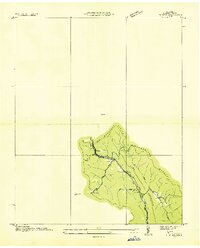 1936 Pioneer1936 Print · USGSCampbell County’s coal and rail corridor is captured here in the mid-1930s as federal agencies mapped the Tennessee Valley. Researchers can trace the Southern railroad through the mountains and locate sites like the Abandoned Mine and the village of Pioneer.
 - 1936 Map of Duncan Flats
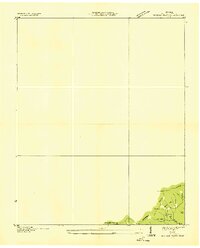 1936 Duncan Flats1936 Print · USGSUpland Anderson County life is recorded here during the mid-1930s as federal agencies mapped the high ridges. Genealogists can locate the Duncan Flats Sch and trace the proximity of family homes to Duncan Flats and the Incline.
 - 1946 Map of Gobey
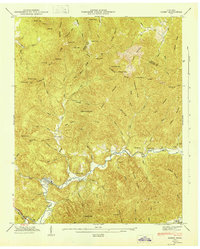 1946 Gobey1946 Print · USGSThe Morgan and Scott County border comes alive in the mid-1940s, showing a region defined by timber transport and mountain hollows. Genealogists can trace family names through Mc Cartt Cem, Elizabeth School, and the winding Emory River Railroad.
 - 1946 Map of Block, 1947 Print
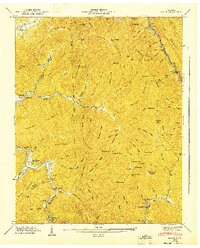 1946 Block1947 Print · USGSThe northern Tennessee coalfields are shown at their mid-century peak, where rail lines and steep inclines carve through the ridges. Genealogists and historians can trace the foundations of Smoky Junction, the Round Rock Sch, and family sites at Jerry Fields.2 unique versions available
 - 1946 Map of Fork Mountain, 1947 Print
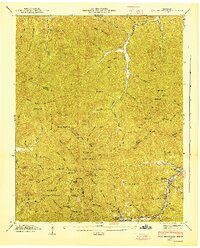 1946 Fork Mountain1947 Print · USGSThe rugged intersections of Scott, Morgan, and Anderson counties are captured here in the mid-1940s, highlighting a remote mountain landscape shaped by the timber and coal industries. Researchers can locate vanished infrastructure like the Lumber Railroad and trace family roots at the Beech Grove Cem and Mooretown.2 unique versions available
 - 1946 Map of Pioneer, 1947 Print
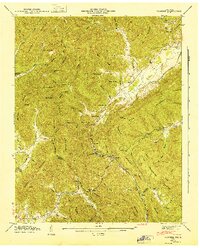 1946 Pioneer1947 Print · USGSThe Cumberland Plateau highlands near the Campbell and Scott county line appear here in the mid-1940s. Genealogists and historians can trace old mountain routes to Pioneer, Valley View Cem, and the industrial Incline.
 - 1947 Map of Duncan Flats
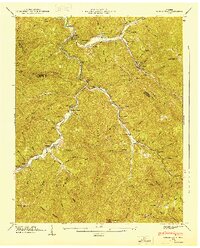 1947 Duncan Flats1947 Print · USGSThe high ridges of the Cumberland Mountains meet the Anderson and Campbell county lines in the late 1940s. Genealogists and hikers can trace remote family sites like Ben Phillips Cem, old mountain schools, and the riverside settlement at Rosedale.
 - 1952 Map of Helenwood, 1953 Print
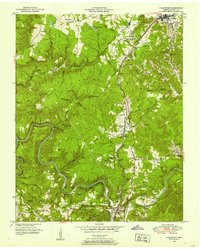 1952 Helenwood1953 Print · USGSThe Cumberland Plateau in the early fifties shows a rugged landscape shaped by the New River and the coal industry. Genealogists can trace family names through dozens of sites like the Pike Cem, Tunnel Hill Sch, and Mountain View.4 unique versions available
 - 1952 Map of Honey Creek, 1953 Print
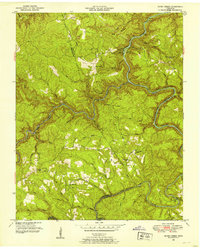 1952 Honey Creek1953 Print · USGSScott and Fentress counties are documented in the early 1950s, showing a landscape of river-carved ridges and remote homesteads. Genealogists can trace family connections at Blevins Cem or locate the sites of Honey Creek School and Zenith.6 unique versions available
 - 1952 Map of Rugby, 1953 Print
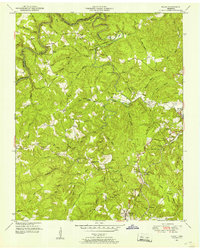 1952 Rugby1953 Print · USGSThe Morgan and Scott County borderlands appear here in the early fifties as a landscape of timbered hills and railway towns. Researchers can trace family history through numerous burial sites like Rugby Cem and Webb Cem or follow the Southern Railway through Sixteen Tunnel.4 unique versions available
 - 1952 Map of Robbins, 1953 Print
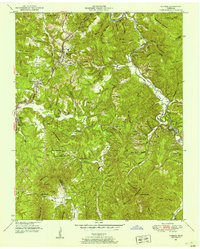 1952 Robbins1953 Print · USGSCoal and rail dominate this Scott County landscape in the early fifties, where mountain ridges are etched with Strip Mines. Researchers can trace rural life at Campground Sch and family roots at Shipard Cem or Black Creek Cem.3 unique versions available
 - 1952 Map of Fork Mountain, 1954 Print
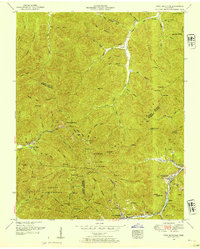 1952 Fork Mountain1954 Print · USGSThe Cumberland Plateau landscape at the start of the fifties reveals a coal-driven economy where mountain hamlets like Mahan Village and Moores Camp line the river valleys. Genealogists can trace family heritage through sites like Beech Grove Church and the Reeves-Daugherty Cemetery.5 unique versions available
 - 1952 Map of Pioneer, 1954 Print
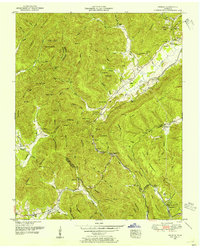 1952 Pioneer1954 Print · USGSUpper East Tennessee's coal and timber country is shown here in the early fifties as the Southern Railway linked mountain gaps and hollows. Genealogists can trace family roots through the Meredith Cemetery and sites like Rockhouse School or New Canaan Church.4 unique versions available
 - 1952 Map of Duncan Flats, 1954 Print
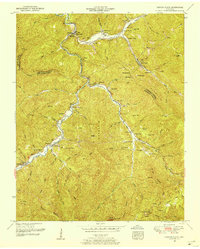 1952 Duncan Flats1954 Print · USGSCoal and timber settlements dot the Appalachian valleys of East Tennessee in the early fifties, following the path of the Tennessee RR. Genealogists can trace family histories through dozens of sites like the Lively Cemetery, Stony Fork School, and Clinchmore.5 unique versions available
 - 1952 Map of Gobey, 1954 Print
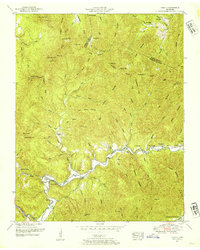 1952 Gobey1954 Print · USGSThe Cumberland Plateau landscape comes to life in the early fifties as the Emory River winds past small mountain communities. Genealogists can trace family footprints through the McCartt Cemetery, Elizabeth School, and the settlement of Gobey.3 unique versions available
 - 1952 Map of Block, 1973 Print
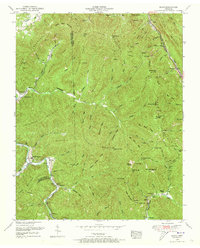 1952 Block1973 Print · USGSThe border of Scott and Campbell counties comes alive in the early fifties as the coal and rail industries navigate these deep Tennessee hollows. Researchers can trace the Southern rail line through Smoky Junction or locate the Upper Round Rock School and Antioch Church.5 unique versions available
 - 1953 Map of Winfield, 1954 Print
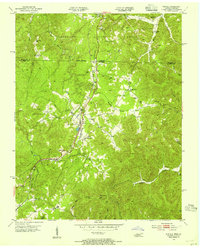 1953 Winfield1954 Print · USGSThe Tennessee-Kentucky border comes alive in the mid-1950s, centered on the railroad hub of Winfield and the surrounding timberlands. Genealogists can trace family landmarks like Chitwood Cem, Isham, and rural schoolhouses such as Upper Marsh Creek Sch.2 unique versions available
 - 1953 Map of Jellico West, 1954 Print
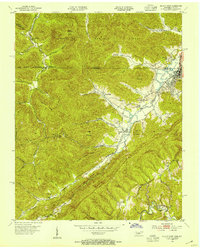 1953 Jellico West1954 Print · USGSThe Tennessee-Kentucky borderlands in the early fifties show a landscape shaped by coal and rail through the narrow valleys of the Cumberland. Trace the path of the Southern Railway past the Standard Mine and find family sites like the Black Oak Cem or the Zion Hill Sch & Ch.2 unique versions available
 - 1953 Map of Ketchen, 1955 Print
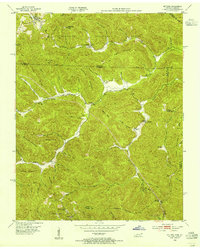 1953 Ketchen1955 Print · USGSThe Tennessee-Kentucky border comes alive in the early fifties, showing a remote landscape of ridge-top schools and creek-side settlements. Genealogists can trace family roots at Blankenship Cem, Hayes Creek Sch, or the small community of Ketchen.2 unique versions available
 - 1953 Map of Huntsville, 1955 Print
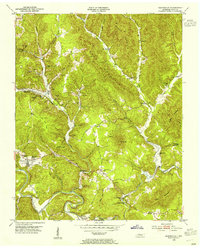 1953 Huntsville1955 Print · USGSScott County entered the mid-1950s as a landscape of deep valleys and coal mining between the New River and Privet Mountain. Researchers can trace the era's rural infrastructure through Huntsville High Sch, Capitol Hill Sch, and the winding Tennessee railroad line.4 unique versions available
Showing maps 1-25 of 36
Top cities of Scott County
Frequently asked questions
- What are the different types of historical maps available for Scott County?
- What is the oldest map of Scott County?
- Where can I purchase historical maps of Scott County for my home or office?
- Where can I download high-res historical maps of Scott County?
- Are there historical topographic maps available for Scott County?
- Is there historical aerial imagery available for Scott County?
- Where are historical maps of Scott County sourced from?