Old Maps of Warren County, Tennessee for Metal Detecting
Plan your next treasure hunt with 86 historic maps of Warren County. Find old homesites, ghost towns, trails, and gathering spots that may be lost to time — perfect for identifying promising metal detecting locations.
- Locate forgotten sites: Uncover places like long-lost settlements, abandoned rail lines, or gathering spots.
- Plan better hunts: Use map overlays combined with LiDAR or satellite views to narrow in on historically rich areas.
- Made for detectorists: Thousands of hobbyists use these maps to discover relics, coins, and hidden history.
Use these historic maps to boost your research and find new opportunities beneath the surface of Warren County.
Warren County, TN maps
(86)- 1893 Map of Mc Minnville
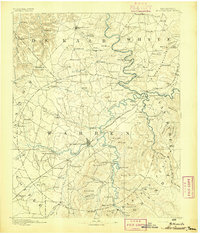 1893 Mc Minnville1893 Print · USGSThe river-and-rail economy of Warren and DeKalb counties is captured here in the 1890s. Researchers can trace old ferry crossings like Pin Hook Ferry and local industry at Daly Mill or Magness Mills.
 - 1895 Map of Mc Minnville
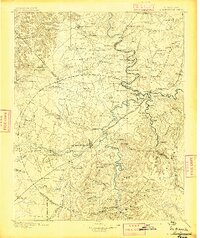 1895 Mc Minnville1895 Print · USGSWarren and DeKalb Counties in the 1890s are defined by the winding Collins River and the early rail lines connecting the Highland Rim. Genealogists can trace family footprints near Magness Mills, White Seminary, or old river crossings like Bailiff Old Ferry.5 unique versions available
 - 1936 Map of Morrison
 1936 Morrison1936 Print · USGSThe Barren Plateau in the mid-1930s shows a landscape of upland drainage and early utility expansion. Local researchers can trace the Tennessee River Basin Divide and early infrastructure like the T E P C O Trans Line and Grassy Pond.
 - 1942 Map of Statesville
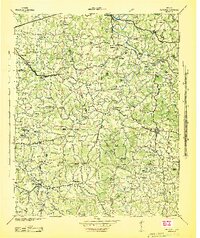 1942 Statesville1942 Print · USGSMid-century Tennessee comes alive in this survey of the river valleys and rail lines east of Nashville. Researchers can trace the path of the Tennessee Central Railway and locate historic points like Denny Seminary and Tuckers Crossroads.
 - 1943 Map of Cookeville
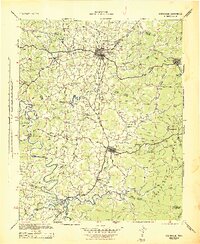 1943 Cookeville1943 Print · USGSMiddle Tennessee during the early 1940s reveals a landscape defined by the Tennessee Central Railroad and the ascent to the Cumberland Plateau. Trace local heritage through rural settlements like Silver Point and Bloomington Springs or the river crossing at Hodge Ferry.
 - 1943 Map of Mc Minnville, 1944 Print
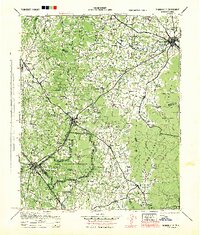 1943 Mc Minnville1944 Print · USGSMid-Tennessee is captured here during the mobilization of the early 1940s, showing the vast Camp Forrest Military Reservation and thriving rail towns. Trace the N C & ST L line through Mcminnville or locate smaller rural hubs like Morrison and Hickerson Station.
 - 1944 Map of Cookeville
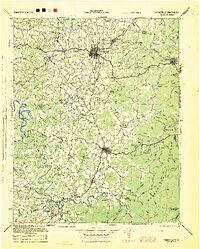 1944 Cookeville1944 Print · USGSUpper Tennessee during the war years shows a landscape shaped by deep river gorges and the rising Cumberland Plateau. Researchers can trace old mountain settlements like Bon Air or locate river landmarks such as Hodge Ferry and Burgess Falls Dam.
 - 1952 Map of Centertown, 1957 Print
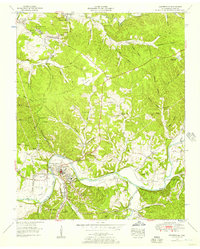 1952 Centertown1957 Print · USGSMid-century Hickman County is defined here by the winding Duck River and the industrial activity of the Nunnelly Mines. Researchers can trace the path of the Goodrich Railroad or locate local landmarks like Grinders Switch and Bell Branch Sch.2 unique versions available
 - 1953 Map of Chattanooga
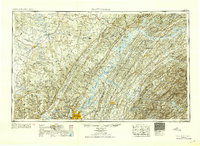 1953 Chattanooga1953 Print · USGSSoutheast Tennessee in the early fifties shows a landscape reshaped by river management and rail power. Trace the rail lines of the Southern Ry through riverside towns or locate the preserved grounds of the Chickamauga and Chattanooga National Military Park.
 - 1953 Map of Centertown, 1955 Print
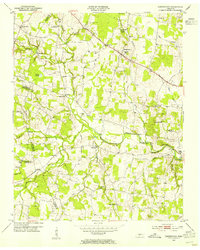 1953 Centertown1955 Print · USGSWarren and Cannon counties are captured in the early 1950s as rural agricultural life followed the N C & St L railroad and the Broadway of America. Researchers can locate numerous family-named landmarks, from the Poor House Cem to Grange Hall Chapel and Trousdale.4 unique versions available
 - 1953 Map of Mc Minnville, 1955 Print
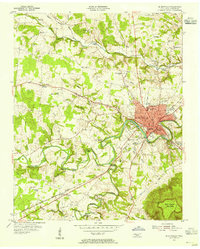 1953 Mc Minnville1955 Print · USGSWarren County in the mid-fifties centers on the riverside growth of Mc Minnville and the rugged heights of Ben Lomond Mountain. Genealogists can trace family names through landmarks like Faulkner Springs, Finger Chapel Ch, and Lawson Mill.4 unique versions available
 - 1955 Map of Viola, 1956 Print
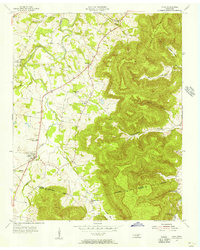 1955 Viola1956 Print · USGSViola and the surrounding valleys of the Highland Rim are captured here in the mid-fifties, showing the region's agricultural and social layout. Researchers can trace family sites at Vervilla, Rockcliff Ch, and Northeutts Cove Sch.2 unique versions available
 - 1956 Map of Morrison, 1958 Print
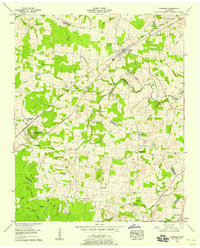 1956 Morrison1958 Print · USGSWarren and Coffee counties appear here in the mid-fifties as the railroad corridor through Morrison and Summitville shaped local commerce. Genealogists can trace family names through rural burial sites like Richard Cem and the industrial history at Bryan Mill.3 unique versions available
 - 1957 Map of Cardwell Mountain, 1961 Print
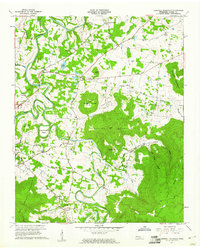 1957 Cardwell Mountain1961 Print · USGSWarren County in the late fifties was a landscape of dramatic river bends and prominent peaks like Cardwell Mountain. Genealogists and historians can trace family ties at Higgenbottom Cem, Mt Vernon Ch, and the old rail stop at Rowland Station.5 unique versions available
 - 1957 Map of Chattanooga, 1966 Print
 1957 Chattanooga1966 Print · USGSEast Tennessee in the mid-1960s shows a landscape of massive hydroelectric reservoirs and emerging industrial sites like the Atomic Energy Commission (Oak Ridge Area). Trace the rail networks of the Southern Ry through Chattanooga or locate family-named ridges across the Cumberland Plateau.3 unique versions available
 - 1959 Map of Chattanooga
 1959 Chattanooga1959 Print · USGSSoutheast Tennessee is shown here during a decade of industrial growth and hydroelectric development. Trace the regional rail networks of the Southern Ry and find landmark sites like Lookout Mountain, Fall Creek Falls State Park, and Chattanooga.
 - 1960 Map of Chattanooga
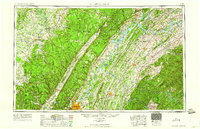 1960 Chattanooga1960 Print · USGSSoutheast Tennessee and the southern Appalachians are shown here at the height of the river-management era. You can trace the valley rail lines and locate Lookout Mountain and the expansive waters of Chickamauga Reservoir.
 - 1960 Map of Short Mountain, 1961 Print
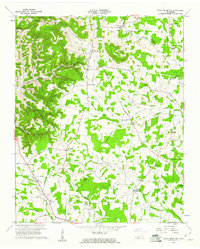 1960 Short Mountain1961 Print · USGSThe rural uplands of Middle Tennessee come alive in this mid-century survey of the Cannon County highlands. Genealogists and local researchers can trace family landmarks like Grizzly Gunter Cem, Bratchers Crossroads, and the remote Osment Chapel.2 unique versions available
 - 1960 Map of Welchland, 1961 Print
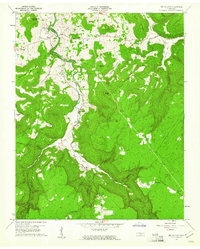 1960 Welchland1961 Print · USGSIn the early sixties, the Rocky River corridor defined the border and lifestyle of the Van Buren and Warren County line. Local historians can trace family roots at Drake Cem, find the site of Welchland School, or locate the Quarry near White Hill.2 unique versions available
 - 1960 Map of Dibrell, 1961 Print
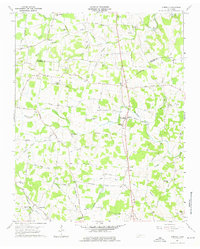 1960 Dibrell1961 Print · USGSWarren and De Kalb counties are captured here in the early sixties, showing a rural landscape of family farms and creek-side settlements. Genealogists can locate legacy sites like Bildad Ch, Woods Cem, and the communities of Dibrell and Earleyville.3 unique versions available
 - 1960 Map of Curtistown, 1961 Print
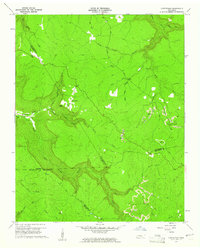 1960 Curtistown1961 Print · USGSThe Tennessee Plateau at the start of the 1960s reveals a landscape defined by isolated settlements and a rugged river-carved geography. Researchers can trace rural lineages at Pleasant Hill Cem or explore the mid-century industrial footprint of Strip Mines and the Old Target Area.3 unique versions available
 - 1960 Map of Doyle, 1961 Print
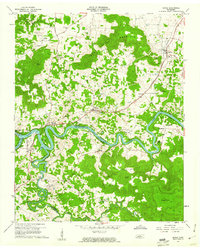 1960 Doyle1961 Print · USGSWhite and Van Buren counties are captured here in the early sixties, as the Caney Fork and Rocky River meet at the headwaters of the reservoir. Genealogists can locate family landmarks like Simrell Cem, O'Neal Cem, and the rural community at Bone Cave.4 unique versions available
 - 1960 Map of Campaign, 1961 Print
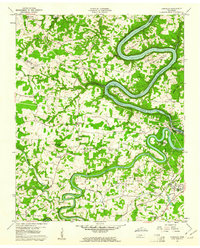 1960 Campaign1961 Print · USGSThe rural crossing at the junction of the Caney Fork and Collins River is captured here in the early sixties as the reservoir system shaped the landscape. Genealogists can locate family landmarks like Friendship Cem and rural centers such as Campaign and Keltonburg.4 unique versions available
 - 1960 Map of Irving College, 1962 Print
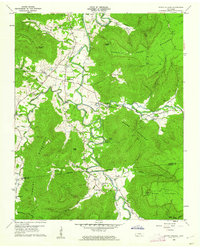 1960 Irving College1962 Print · USGSThe Collins River valley in Warren County comes to life in the early 1960s, showing a landscape defined by riverside settlements and high timbered ridges. Researchers can locate remote landmarks like Badger Mine, Camp Woodlee, and rural churches such as Philadelphia Ch.4 unique versions available
 - 1964 Map of Chattanooga
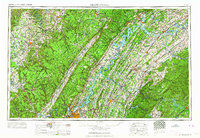 1964 Chattanooga1964 Print · USGSSoutheast Tennessee and the western Carolinas appear in the mid-sixties as a powerhouse of river-driven industry and mountain wilderness. Genealogists and historians can trace rail-town lineages along the Southern Ry or locate family landmarks near Watts Bar Lake and Tellico Plains.
Showing maps 1-25 of 86
Top cities of Warren County
Frequently asked questions
- What are the different types of historical maps available for Warren County?
- What is the oldest map of Warren County?
- Where can I purchase historical maps of Warren County for my home or office?
- Where can I download high-res historical maps of Warren County?
- Are there historical topographic maps available for Warren County?
- Is there historical aerial imagery available for Warren County?
- Where are historical maps of Warren County sourced from?