1900s (20th Century) Maps of Washington County, Tennessee
Explore 41 historic maps of Washington County from the 1900s (20th Century). These maps offer a rare glimpse into what life looked like during the 1900s — showing old roads, neighborhoods, homes, and landmarks that have changed or disappeared over time.
Whether you're researching your family's past, planning a metal detecting trip, or studying how Washington County's landscape evolved across the 1900s, these high-resolution maps are a powerful tool for exploring the history of this region.
- Focus on a specific era: All maps on this page are from the 1900s, giving you a focused view of this time period.
- See what’s changed: Compare century-old streets, trails, and buildings to today's modern landscape using overlays and satellite layers.
- Research with precision: Use these maps for genealogy, historical research, land use analysis, or educational projects.
- View, download, or print: Maps are fully viewable online in high resolution, and can be downloaded or printed for your own records.
Start exploring Washington County's history through authentic maps from the 1900s. This is your window into the past.
Washington County, TN maps
(41)- 1904 Map of Roan Mountain
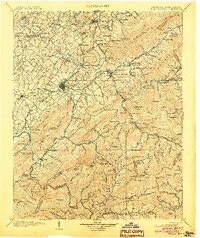 1904 Roan Mountain1904 Print · USGSUpper East Tennessee and Western North Carolina are documented here at a time when river fords and narrow-gauge railroads still connected mountain hollows. Trace the paths to Hodge Ore Bank, find old Poplar Ridge Church, or locate river crossings like Yoakley Ferry.4 unique versions available
 - 1904 Map of Greeneville
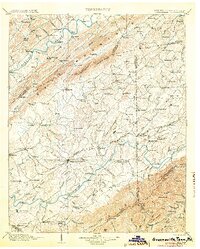 1904 Greeneville1904 Print · USGSEast Tennessee at the turn of the century reveals a land of ridge-valley farms and early educational centers. Genealogists can trace family roots through historic settlements like Surgoinsville, early institutions like Washington College, and landmarks such as Bashors Mill.4 unique versions available
 - 1935 Map of Lovelace
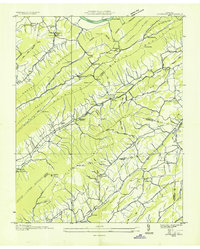 1935 Lovelace1935 Print · USGSHawkins and Sullivan counties are captured here in the mid-thirties, showing a landscape of ridge-top beacons and creek-side mills. Researchers can trace rural family life through landmarks like Dykes Mill, Mountain View Sch, and the Airway Beacon atop the peaks.
 - 1935 Map of Sullivan Gardens
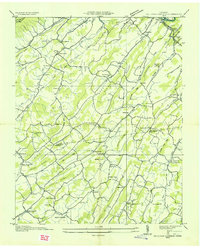 1935 Sullivan Gardens1935 Print · USGSSullivan County in the mid-1930s shows a landscape of ridge-top schools and creek-side mills before the expansion of modern highways. Researchers can locate the Kincheloe Mill, trace the Clinchfield RR through Kendricks Tunnel, and find family sites at Harmony Cem.
 - 1935 Map of Leesburg
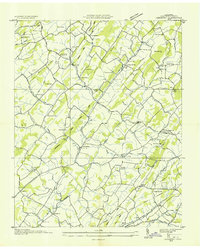 1935 Leesburg1935 Print · USGSWashington County in the mid-1930s shows a landscape of small farming communities and ridge-top settlements before modern development. Genealogists and researchers can trace family landmarks like the Keebler Institute, Hartmantown, and Dunkard Ch.
 - 1935 Map of Erwin
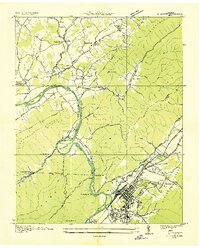 1935 Erwin1935 Print · USGSUnicoi County during the mid-1930s shows a landscape shaped by the Clinchfield railroad and the winding Nolichucky River. Genealogists and local historians can trace family-named sites like Jobes Cem, Lamar Sch, and the community of Embreeville.
 - 1935 Map of Spurgeon
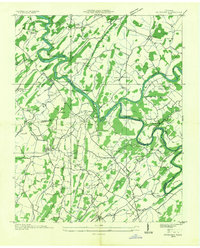 1935 Spurgeon1935 Print · USGSNortheast Tennessee's river valleys come alive in the mid-1930s, showing the intricate landscape where the Holston and Watauga rivers meet. Genealogists and local historians can trace family locations near the Ladies Academy, Boone Creek Mill, and the Clinchfield RR line.
 - 1935 Map of Unicoi
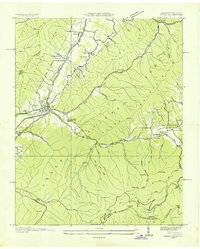 1935 Unicoi1935 Print · USGSThe Unicoi area in the mid-1930s reveals a mountain landscape of tight-knit valley settlements and extensive national forest trails. Researchers can trace the legacy of the Clinchfield and Ohio RR, the CCC Camp Cordell Hull, and family-named sites like Jones Chapel and Swingle Cem.
 - 1935 Map of Bluff City
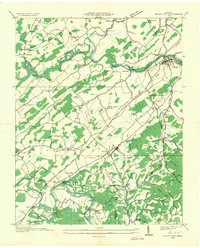 1935 Bluff City1935 Print · USGSBluff City and Piney Flats thrive during the mid-1930s along the rail-and-river corridors of Upper East Tennessee. Genealogists can trace family landmarks like Allison Mill, Poplar Ridge Ch, and the many islands along the Watauga River.2 unique versions available
 - 1935 Map of Fall Branch
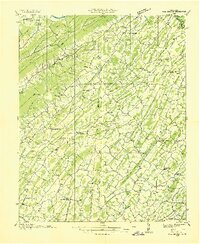 1935 Fall Branch1935 Print · USGSNortheast Tennessee in the mid-thirties shows a rural landscape of ridges and crossroads at the junction of four counties. Trace family history through dozens of local landmarks like Kincheloe Mill, Evening Star Sch, and Cedar Chapel.
 - 1935 Map of Jonesboro
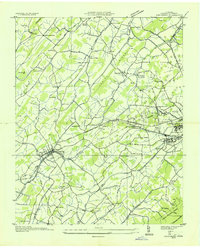 1935 Jonesboro1935 Print · USGSEastern Tennessee valley life comes into focus during the mid-thirties, centered on the settlement of Jonesboro. Genealogists can trace family footprints at Knob Creek Mill, Columbia Institute, and many small churches like Antioch Ch.
 - 1935 Map of Johnson City
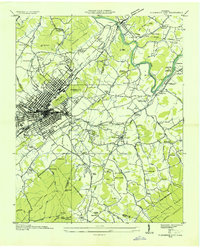 1935 Johnson City1935 Print · USGSJohnson City and the Watauga River valley thrive as a railroad and collegiate center in the years before the second world war. Genealogists and researchers can trace family landmarks like Simmons Cem, old schoolhouses such as Range Sch, and the early St John Landing Field.
 - 1935 Map of Jearoldstown
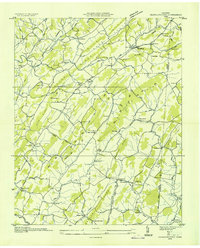 1935 Jearoldstown1935 Print · USGSGreene County settlement and Tennessee Valley utility expansion are captured here in the mid-1930s. Genealogists can trace family names at Dixon Chapel, Union Temple Ch, and the rural community of Milburton.
 - 1936 Map of Chuckey
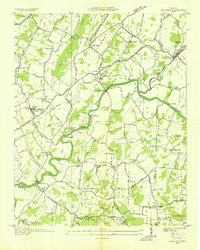 1936 Chuckey1936 Print · USGSGreene County is shown here in the mid-thirties, when the Nolichucky River shaped local life from Rheatown to Limestone. Genealogists can trace family footprints at Quaker Knobs Ch, Stone Dam Ch, and the Chestnut Ridge Sch.
 - 1936 Map of Flag Pond
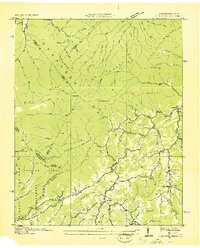 1936 Flag Pond1936 Print · USGSThe Tennessee and North Carolina borderlands come alive in the mid-1930s, showing a landscape of high ridges and secluded valley settlements. Researchers can trace the original path of the Appalachian Trail past family landmarks like Harris Mill and the Clearbranch Post Office.
 - 1936 Map of Telford
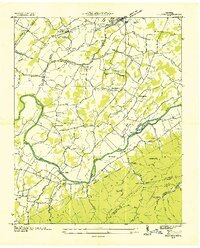 1936 Telford1936 Print · USGSIn the mid-1930s, the Nolichucky River valley supported a landscape of water-powered industry and mountain mining. Genealogists can trace family names through landmarks like Washington College, Broylesville Mill, and the Peach Orchard Mine.
 - 1939 Map of Erwin
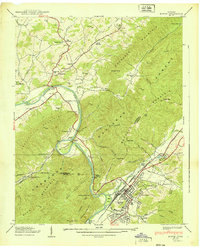 1939 Erwin1939 Print · USGSBefore the onset of the 1940s, this Unicoi County landscape was defined by the Clinchfield railroad and the Embree Iron Co mining works. Genealogists can trace family names at Jobs Cem or Bumpass Cove Cem and locate rural landmarks like Bethel Ch and Lamar Sch.5 unique versions available
 - 1939 Map of Jonesboro
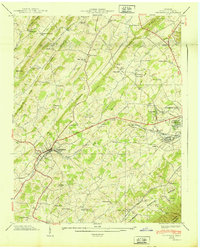 1939 Jonesboro1939 Print · USGSBefore the rapid post-war expansion, this area of Washington County centered on the rails and ridges around Jonesboro and Johnson City. Genealogists and historians can trace family landmarks like the Miller Cem, the Columbia Institute, and the Knob Creek Mill.2 unique versions available
 - 1939 Map of Telford
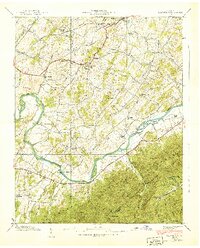 1939 Telford1939 Print · USGSThe Nolichucky River valley in the late 1930s reveals a landscape of established colleges and river-bend farms before modern development. Genealogists can trace family landmarks and rural centers like Washington College, Telford, and the Peach Orchard Mine.4 unique versions available
 - 1939 Map of Unicoi
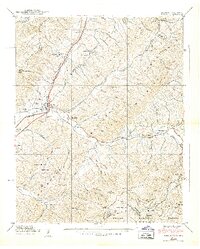 1939 Unicoi1939 Print · USGSThe Unicoi area at the start of the 1940s is a rugged landscape of rail-connected valleys and high mountain gaps. Genealogists and hikers can trace the original Appalachian Trail through Low Gap or locate family sites like Peterson Cem and CCC Camp Cordell Hull.4 unique versions available
 - 1939 Map of Chuckey
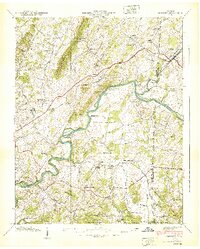 1939 Chuckey1939 Print · USGSEast Tennessee life near the end of the Depression era is detailed here along the border of Greene and Washington Counties. Genealogists can trace family roots through numerous rural landmarks like Davy Crockett Sch, FOX CEM, and the old rail stop at Chuckey.3 unique versions available
 - 1939 Map of Jearoldstown
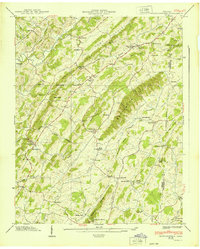 1939 Jearoldstown1939 Print · USGSGreene County, Tennessee, is captured here in the late 1930s, showing a rural landscape of ridges and hollows before the mid-century. You can trace early family homesites near Jearoldstown, locate old mills like Eagle Mill, and find vanished country schools such as Milburton Sch.3 unique versions available
 - 1939 Map of Leesburg
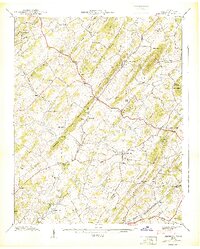 1939 Leesburg1939 Print · USGSWashington County at the end of the 1930s shows a dense network of upland farms and community centers. Genealogists can locate family landmarks like the Keebler Institute, McCarty Chapel, and early mills including Taylor Mill and Keys Mill.5 unique versions available
 - 1939 Map of Flag Pond
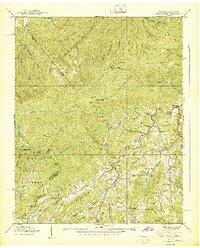 1939 Flag Pond1939 Print · USGSThe Unicoi County mountains at the end of the 1930s reveal a landscape of high-altitude settlements and family-named ridges. Researchers can trace the early Appalachian Trail route past Flag Pond, Harris Mill, and rural sites like Sams Cem.3 unique versions available
 - 1939 Map of Lovelace
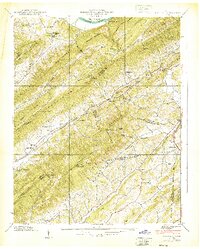 1939 Lovelace1939 Print · USGSNortheast Tennessee in the late thirties is captured here at the intersection of Hawkins and Sullivan counties. Genealogists and historians can trace family locations through sites like Dykes Mill, Yankee Cem, and schools such as Solomon Temple Sch.4 unique versions available
Showing maps 1-25 of 41
Top cities of Washington County
- Johnson City historical maps
- Jonesborough historical maps
- Oak Grove historical maps
- Gray historical maps
Frequently asked questions
- What are the different types of historical maps available for Washington County?
- What is the oldest map of Washington County?
- Where can I purchase historical maps of Washington County for my home or office?
- Where can I download high-res historical maps of Washington County?
- Are there historical topographic maps available for Washington County?
- Is there historical aerial imagery available for Washington County?
- Where are historical maps of Washington County sourced from?