Old Maps of Bee County, Texas
Explore 158 old maps of Bee County, spanning from 1927 to today. These high-resolution historic maps reveal how streets, neighborhoods, landmarks, and natural features evolved over time — perfect for genealogy, metal detecting, research, and local history exploration.
What you can do with these maps:
- See how Bee County changed over time: Compare historical maps to modern-day views to trace roads, homesites, rail lines & more.
- View detailed metadata: Each map includes creators, publishers, year, scale, and archive source.
- Overlay maps with satellite & LiDAR: Visualize the past alongside modern tools to explore terrain & human change.
- Trusted historical sources: Maps sourced from the USGS, Library of Congress, and other archives.
- Access maps your way: View online, download high-res files, or order prints for personal or research use.
Start exploring old maps of Bee County to uncover forgotten places, hidden landmarks, and the deep history beneath your feet.
Bee County, TX maps
(158)- 1927 Map of Mathis
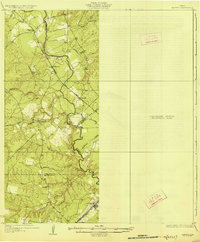 1927 Mathis1927 Print · USGSSouth Texas at the height of the railroad era reveals a landscape of cattle-ranching hubs and river crossings. Genealogists can trace family connections to rural settlements like Lagarto and Sandia, or follow the path of the old Alice and Beeville Road.2 unique versions available
 - 1936 Map of Pettus
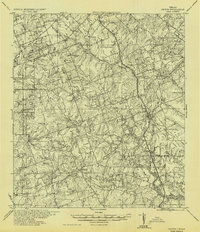 1936 Pettus1936 Print · USGSCoastal plains ranching meets the 1930s oil boom in this detailed survey of Bee and Karnes counties. Genealogists can locate family-named landmarks and rural hubs such as Zunkerville, Salt Branch Church, and the Pettus Oil Field.
 - 1953 Map of Crystal City
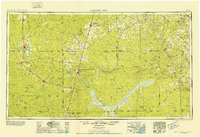 1953 Crystal City1953 Print · USGSSouth Texas in the early fifties was a landscape of expanding oil fields and vital rail connections. Genealogists and researchers can trace family lands along the Nueces River or locate heritage sites in Asherton, Big Wells, and Batesville.
 - 1953 Map of Beeville
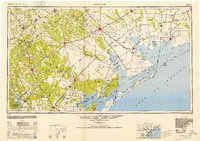 1953 Beeville1953 Print · USGSThe Texas Coastal Bend in the early fifties shows a landscape of growing regional hubs and vital maritime corridors. Trace the rail-and-river economy through Goliad, locate the Matagorda Lighthouse, and explore the sprawling Aransas National Wildlife Refuge.
 - 1954 Map of Skidmore, 1956 Print
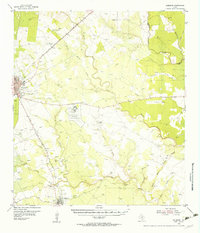 1954 Skidmore1956 Print · USGSBee County and Goliad County are captured here in the mid-fifties, showing a landscape defined by ranching and naval aviation. Genealogists can locate family burial sites at St Joseph and Glenwood Cem and Evergreen Cem or trace old rural schoolhouses like Poesta Sch.2 unique versions available
 - 1954 Map of Fleming, 1956 Print
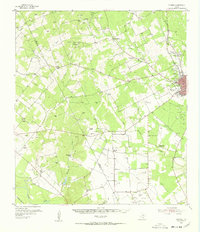 1954 Fleming1956 Print · USGSBee County is shown here at the peak of its mid-century petroleum and ranching era. Local researchers can trace family landmarks and rural hubs like Friendship Ch, Lebanon Cem, and the specialized Fleming Oil Field infrastructure.2 unique versions available
 - 1954 Map of Woodsboro, 1956 Print
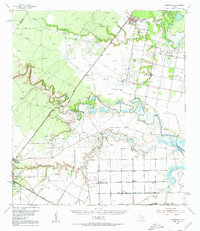 1954 Woodsboro1956 Print · USGSCoastal Texas in the mid-fifties reveals a landscape defined by the booming oil industry and traditional cotton farming. Researchers can trace the layout of Woodsboro and Sinton, or locate rural landmarks like St Bernard Cem, the Baldwin Cotton Gin, and Roche Ranch.
 - 1954 Map of Mathis, 1956 Print
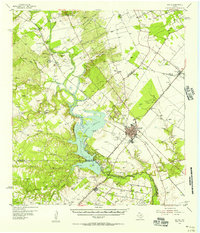 1954 Mathis1956 Print · USGSThe Mathis area in the mid-1950s shows a landscape defined by the Nueces River and an expanding petroleum industry. Researchers can trace family-named sites like Wade Ranch and the lost siding at Swinney Switch or locate the old Drive-in Theater.2 unique versions available
 - 1954 Map of Sinton, 1956 Print
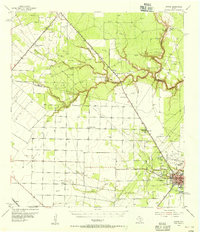 1954 Sinton1956 Print · USGSSan Patricio County at the height of the mid-century oil boom is centered on the rail junction at Sinton. You can trace energy and transport history through the Plymouth Oil Camp, Papalote Cem, and the Sinton Oil Field.2 unique versions available
 - 1954 Map of Refugio, 1956 Print
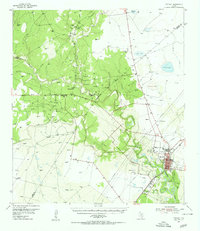 1954 Refugio1956 Print · USGSIn the mid-1950s, this portion of the Texas Coastal Bend was a landscape defined by the growing energy sector and deep-rooted ranching traditions. Researchers can trace family landmarks and rural infrastructure including Blanconia, the Refugio Oil Field, and McQuill Cem.
 - 1955 Map of Crystal City, 1976 Print
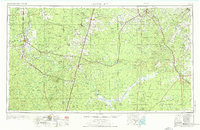 1955 Crystal City1976 Print · USGSSouth Texas ranching and oil country come into focus in the mid-fifties as the rail lines and rivers connect growing hubs. Researchers can trace the development of energy fields like Washburn Oil Field or locate historic settlements from Asherton to Three Rivers.
 - 1956 Map of Suniland
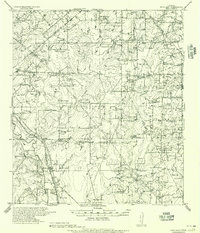 1956 Suniland1956 Print · USGSLive Oak County ranching culture and rural infrastructure are captured here in the mid-fifties, just as the region’s landscape was maturing. Genealogists can trace family legacies through properties like the Poe Ranch and find defunct community hubs like North School and the Whitsett Pump Station.
 - 1956 Map of Beeville
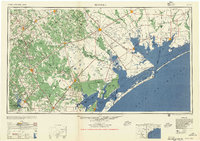 1956 Beeville1956 Print · USGSCoastal Texas and the brush country interior are shown in the mid-fifties, from the coastal bays to the inland oil fields. Trace the old rail lines of the Southern Pacific RR or locate the historic Matagorda Lighthouse and the Aransas National Wildlife Refuge.2 unique versions available
 - 1956 Map of Pettus
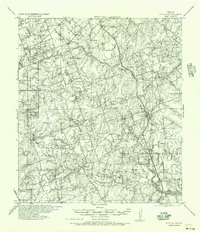 1956 Pettus1956 Print · USGSBee and Karnes counties are shown during the mid-century oil boom, when petroleum production and rail transport defined the landscape. Researchers can trace family homesteads and vanished schools such as Richland School, the North Pettus Oil Field, and the Salt Branch Church.
 - 1960 Map of Beeville
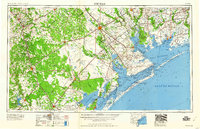 1960 Beeville1960 Print · USGSCoastal Texas in the mid-fifties reveals a landscape of growing towns and vital military outposts like Foster AFB. Researchers can trace old rail lines including the Missouri Pacific and explore the vast Aransas National Wildlife Refuge.
 - 1961 Map of Crystal City
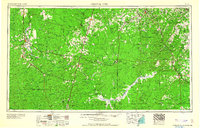 1961 Crystal City1961 Print · USGSSouth Texas in the early sixties reveals a landscape of massive cattle ranches and emerging oil fields. Genealogists and historians can trace the Missouri Pacific rail lines through Crystal City, or locate water features like Espantosa Lake and Boynton Reservoir.
 - 1963 Map of Monteola, 1965 Print
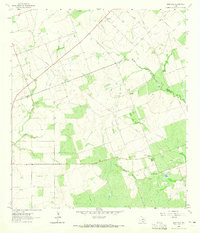 1963 Monteola1965 Print · USGSThe Bee and Karnes County line comes alive in the early sixties as the oil industry shapes the rural landscape. Researchers can locate family landmarks like Pullin Livingston Cem and Elim Ch or trace the early footprint of the Caesar Oil Field.3 unique versions available
 - 1963 Map of Tuleta, 1965 Print
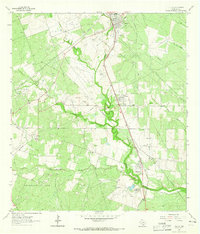 1963 Tuleta1965 Print · USGSThe Bee County landscape in the early sixties is a study in oil and rail development. Genealogists and historians can trace the Southern Pacific line through Pettus, find family landmarks like Hall Ranch, or locate the Normanna Cem.2 unique versions available
 - 1963 Map of Tulsita, 1965 Print
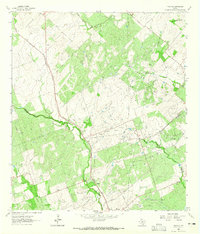 1963 Tulsita1965 Print · USGSThe Texas oil fields and cattle country come alive in the early sixties as industrial development meets rural settlement. Trace the legacy of petroleum at Burnell Oil Field, locate family roots at Refugio Cem, or follow the Southern Pacific tracks.2 unique versions available
 - 1963 Map of Mineral, 1965 Print
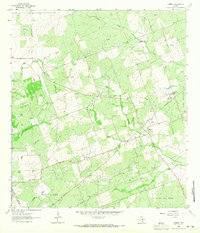 1963 Mineral1965 Print · USGSThe energy-rich ranchlands of Bee and Live Oak counties are captured here in the early sixties as the regional oil industry reached its height. Researchers can trace family history at Mineral Cemetery or explore the footprints of the Plummer Oil Field and South Texas Childrens Home.2 unique versions available
 - 1963 Map of Lazy F Ranch, 1965 Print
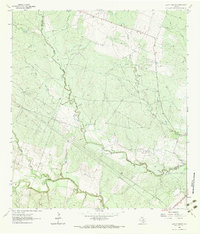 1963 Lazy F Ranch1965 Print · USGSRanching and early energy extraction define this Bee and Goliad county borderland in the early sixties. Researchers can trace the Southern Pacific rail line, the Dallas Husky Gas Field, and local landmarks like Colony Ch.3 unique versions available
 - 1963 Map of Berclair NW, 1965 Print
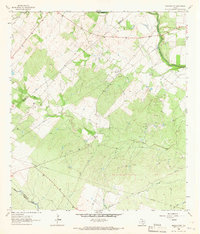 1963 Berclair NW1965 Print · USGSThe borderlands of Bee, Goliad, and Karnes Counties are captured in the early sixties as the regional energy economy expanded. Genealogists and researchers can trace local landmarks like Charco Cem, the San Antonio River, and the Pettus North Oil Field.2 unique versions available
 - 1963 Map of Berclair, 1965 Print
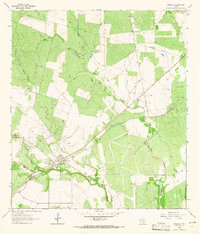 1963 Berclair1965 Print · USGSGoliad County's brush country comes into focus in the early sixties as the Southern Pacific tracks bisected the village of Berclair. Researchers can trace old property boundaries at the Bee Co Goliad Co line or locate the Myers Cem near the banks of Blanco Creek.2 unique versions available
 - 1965 Map of Pawnee, 1968 Print
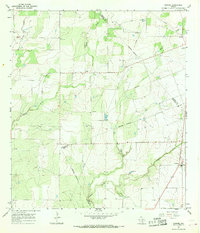 1965 Pawnee1968 Print · USGSPawnee and the surrounding ranch lands of Bee and Karnes counties are captured here in the mid-1960s. Family historians and researchers can trace the rural communities of Nell and El Oso or locate burials at the Nell Cem and Pawnee Cem.2 unique versions available
 - 1965 Map of Ray Point, 1969 Print
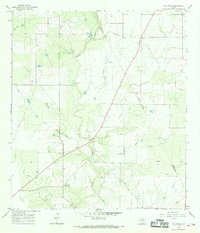 1965 Ray Point1969 Print · USGSSouth Texas ranching and oil country come into focus during the mid-sixties, centered on the Bee and Live Oak County line. Genealogists and researchers can locate Ray Point, Wernli Cem, and scattered Oil Wells across the landscape.2 unique versions available
Showing maps 1-25 of 158
Top cities of Bee County
Frequently asked questions
- What are the different types of historical maps available for Bee County?
- What is the oldest map of Bee County?
- Where can I purchase historical maps of Bee County for my home or office?
- Where can I download high-res historical maps of Bee County?
- Are there historical topographic maps available for Bee County?
- Is there historical aerial imagery available for Bee County?
- Where are historical maps of Bee County sourced from?