Old Maps of Freemound, Texas for Metal Detecting
Plan your next treasure hunt with 12 historic maps of Freemound. Find old homesites, ghost towns, trails, and gathering spots that may be lost to time — perfect for identifying promising metal detecting locations.
- Locate forgotten sites: Uncover places like long-lost settlements, abandoned rail lines, or gathering spots.
- Plan better hunts: Use map overlays combined with LiDAR or satellite views to narrow in on historically rich areas.
- Made for detectorists: Thousands of hobbyists use these maps to discover relics, coins, and hidden history.
Use these historic maps to boost your research and find new opportunities beneath the surface of Freemound.
Freemound, TX maps
(12)- 1902 Map of Gainesville
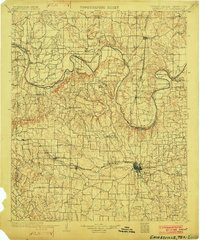 1902 Gainesville1902 Print · USGSThe Red River frontier comes alive in the years before Oklahoma statehood, showing the border between Texas and the Chickasaw Nation. Trace early river travel through Rock Bluff Ferry and Freemans Ferry or locate old schoolhouses like Wolf Ridge Schoolhouse.5 unique versions available
 - 1943 Map of Gainesville
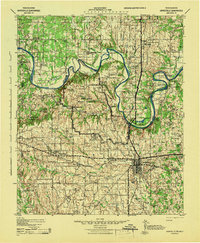 1943 Gainesville1943 Print · USGSTexas and Oklahoma borders meet along the winding Red River during the height of the Second World War. Genealogists can trace family names through dozens of rural landmarks like Whaley Chapel School, Spring Valley Church, and the sprawling Camp Howze Military Reservation.
 - 1954 Map of Sherman, 1964 Print
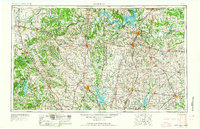 1954 Sherman1964 Print · USGSThe Red River valley and North Texas plains are captured here in the mid-fifties, showing the region as new reservoirs like Lake Texoma and Lavon Reservoir reshaped the land. Genealogists can trace family roots through specific local landmarks like Courtney P O, Pilot Grove Sch, and New Hope Ch.2 unique versions available
 - 1958 Map of Sherman, 1959 Print
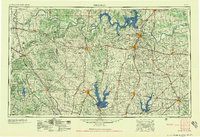 1958 Sherman1959 Print · USGSNorth Texas and Southern Oklahoma were undergoing significant development in the late fifties as the Red River Valley transit networks matured. Researchers can trace historic family-named locations such as Saddler Bend, the grounds of Perrin AFB, and early shoreline developments at Lake Texoma.
 - 1961 Map of Freemound, 1963 Print
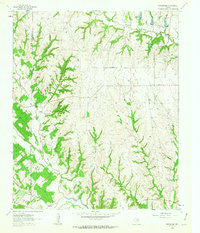 1961 Freemound1963 Print · USGSNorth Texas ranch land and the rising petroleum industry meet in the early sixties along the Cooke County line. Researchers can trace rural life and energy development through local landmarks like Freemound, the Gatewood oil field, and Bingham Creek.
 - 1985 Map of Gainesville
 1985 Gainesville1985 Print · USGSThe Red River valley in the mid-1980s reveals a landscape defined by the petroleum industry and a complex rail network. Researchers can trace the legacy of regional energy at the Bowers Field or locate community roots near Spanish Fort and Lakeview Cemetery.
 - 1991 Map of Gainesville
 1991 Gainesville1991 Print · USGSThe Red River borderlands of Texas and Oklahoma are captured here in the early nineties, showing a region defined by cattle history and oil production. Researchers can trace the layout of historic settlements like Spanish Fort and Belcherville or locate family landmarks near Queens Peak and Moss Lake.
 - 2010 Map of Freemound, 2010 Print
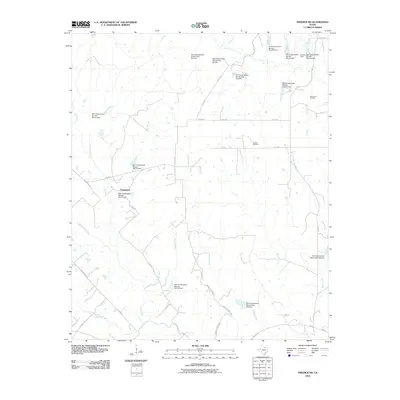 2010 Freemound2010 Print · USGSFreemound and the surrounding Cooke County ranch lands are shown here at the turn of the twenty-first century. Researchers can trace the extensive network of watershed dams and find local energy landmarks like the Dangel Oil Field and Gatewood Oil Field.
 - 2013 Map of Freemound, 2013 Print
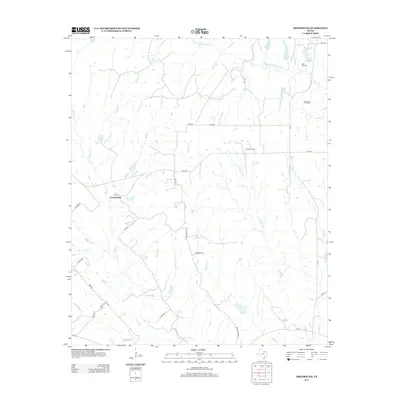 2013 Freemound2013 Print · USGSFreemound and the surrounding Cooke County ranch lands are shown here as they appeared in the early twenty-first century. Researchers can trace the drainage of the Elm Fork Trinity River and locate energy infrastructure like the Voth Oil Field and Gatewood Oil Field.
 - 2016 Map of Freemound, 2016 Print
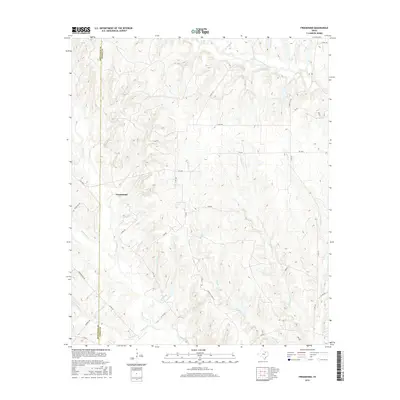 2016 Freemound2016 Print · USGSThis rural portion of Cooke and Montague Counties shows the cattle and creek country of North Texas in the mid-2010s. Researchers can trace land boundaries near Freemound and explore the winding courses of Elm Fork Trinity River and Clear Cr.
 - 2019 Map of Freemound, 2019 Print
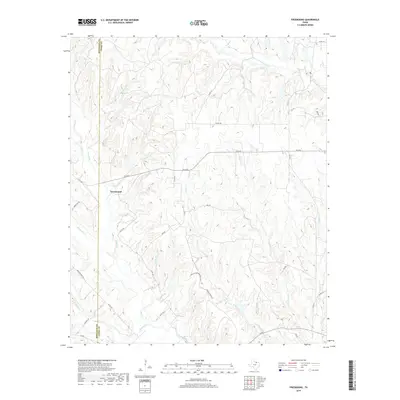 2019 Freemound2019 Print · USGSThis rural portion of North Texas along the Montague and Cooke county line shows a landscape shaped by the Elm Fork Trinity River system. Researchers can trace the drainage of Freemound through local landmarks like Clear Cr, Willawalla Cr, and Pitman Br.
 - 2022 Map of Freemound, 2022 Print
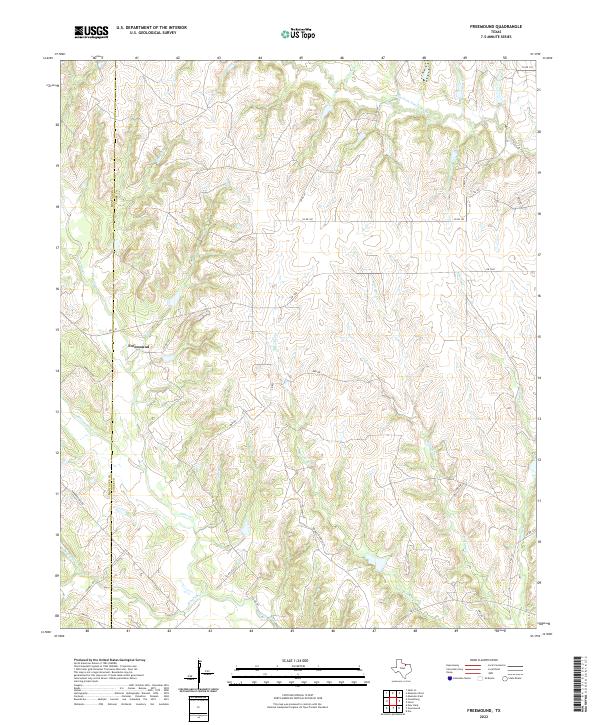 2022 Freemound2022 Print · USGSThe rural border between Cooke and Montague counties comes into focus in this contemporary survey. Historians can trace the winding paths of Clear Creek and Williams Cr or locate the small community of Freemound nestled among the local ranch lands.
End of results
Showing maps 1-12 of 12
Top cities near Freemound
Frequently asked questions
- What are the different types of historical maps available for Freemound?
- What is the oldest map of Freemound?
- Where can I purchase historical maps of Freemound for my home or office?
- Where can I download high-res historical maps of Freemound?
- Are there historical topographic maps available for Freemound?
- Is there historical aerial imagery available for Freemound?
- Where are historical maps of Freemound sourced from?