1900s (20th Century) Maps of Agua Dulce Number 5 Colonia, Texas
Explore 10 historic maps of Agua Dulce Number 5 Colonia from the 1900s (20th Century). These maps offer a rare glimpse into what life looked like during the 1900s — showing old roads, neighborhoods, homes, and landmarks that have changed or disappeared over time.
Whether you're researching your family's past, planning a metal detecting trip, or studying how Agua Dulce Number 5 Colonia's landscape evolved across the 1900s, these high-resolution maps are a powerful tool for exploring the history of this region.
- Focus on a specific era: All maps on this page are from the 1900s, giving you a focused view of this time period.
- See what’s changed: Compare century-old streets, trails, and buildings to today's modern landscape using overlays and satellite layers.
- Research with precision: Use these maps for genealogy, historical research, land use analysis, or educational projects.
- View, download, or print: Maps are fully viewable online in high resolution, and can be downloaded or printed for your own records.
Start exploring Agua Dulce Number 5 Colonia's history through authentic maps from the 1900s. This is your window into the past.
Agua Dulce Number 5 Colonia, TX maps
(10)- 1908 Map of El Paso
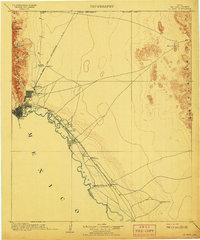 1908 El Paso1908 Print · USGSEl Paso and the lower Rio Grande valley are seen here in the first decade of the century as the railroad and military presence transformed the borderlands. Genealogists can trace family footprints in historic river towns like San Elizario, Ysleta, and Socorro, or find early ranch sites like Newman's Ranch.2 unique versions available
 - 1941 Map of Clint
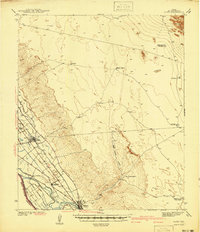 1941 Clint1941 Print · USGSThe Rio Grande valley southeast of El Paso comes alive in the early 1940s, showing a landscape defined by irrigation and iron rails. Researchers can trace the development of Clint, Fabens, and Cuadrilla along the Texas and Pacific railroad.
 - 1945 Map of Clint
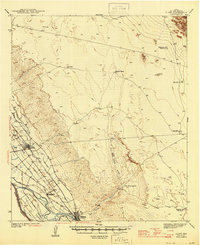 1945 Clint1945 Print · USGSThe irrigated valley of the Rio Grande near El Paso comes alive in this mid-century survey of the West Texas borderlands. Genealogists and historians can trace the rail lines through Clint and Fabens or locate remote outposts like Roberts Ranch and the San Felipe Ranch.
 - 1953 Map of El Paso
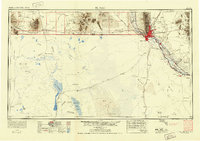 1953 El Paso1953 Print · USGSEl Paso and the border region are shown here in the early fifties, documenting a landscape of shared river life and rising military presence. Genealogists and historians can trace rail-tied communities like Smeltertown, San Elizario, and the grounds of Fort Bliss.
 - 1955 Map of Clint NW, 1959 Print
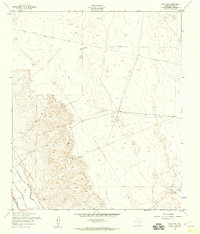 1955 Clint NW1959 Print · USGSThe arid El Paso County desert meets early irrigation infrastructure in the mid-fifties. Researchers can trace the ranching life of the era through isolated landmarks like Joint Well and the Ysleta Lateral.3 unique versions available
 - 1959 Map of El Paso, 1968 Print
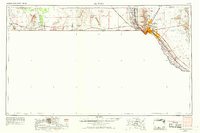 1959 El Paso1968 Print · USGSEl Paso and the international borderlands come alive in this mid-century survey of the Chihuahuan Desert. Genealogists and historians can trace rail-side settlements like Columbus and Fabens, locate the sprawling Fort Bliss, and explore the geologically unique Kilbourne Hole.2 unique versions available
 - 1964 Map of El Paso
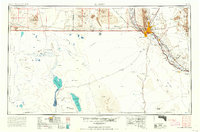 1964 El Paso1964 Print · USGSThe El Paso and Juarez borderlands are shown in detail during the mid-sixties, from the urban center to the remote volcanic craters of the West Potrillo Mountains. Trace the rail-and-river network through Asarco Smeltertown, the Fort Bliss Military Reservation, and Columbus.
 - 1965 Map of El Paso
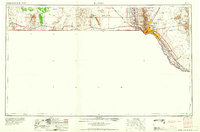 1965 El Paso1965 Print · USGSEl Paso and the Mesilla Valley are shown in the mid-1960s as the region's military and transport infrastructure expanded. Researchers can trace the irrigation network along the Rio Grande, find old border stations like Columbus, and locate Hueco Tanks.
 - 1983 Map of El Paso
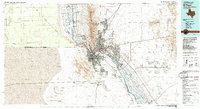 1983 El Paso1983 Print · USGSThe Chihuahuan Desert borderlands come into sharp focus in the early eighties as the binational metro area of El Paso and Ciudad Juarez expands. Genealogists and historians can trace rail lines like the Santa Fe, military grounds at Fort Bliss, and rural valley settlements including Canutillo and Zaragoza.2 unique versions available
 - 1995 Map of Clint NW
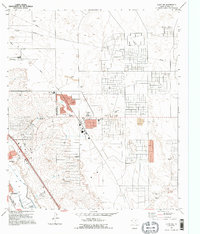 1995 Clint NW1995 Print · USGSEl Paso County's desert periphery underwent significant transformation during the mid-nineties as residential communities like Horizon City expanded. Researchers can trace local infrastructure and landmarks such as West Texas Airport, Desert Hills Sch, and the Ysleta Lateral.
End of results
Showing maps 1-10 of 10
Top cities near Agua Dulce Number 5 Colonia
- El Paso historical maps
- Socorro historical maps
- Horizon City historical maps
- San Elizario historical maps
- Fabens historical maps
- Tornillo historical maps
See more
Frequently asked questions
- What are the different types of historical maps available for Agua Dulce Number 5 Colonia?
- What is the oldest map of Agua Dulce Number 5 Colonia?
- Where can I purchase historical maps of Agua Dulce Number 5 Colonia for my home or office?
- Where can I download high-res historical maps of Agua Dulce Number 5 Colonia?
- Are there historical topographic maps available for Agua Dulce Number 5 Colonia?
- Is there historical aerial imagery available for Agua Dulce Number 5 Colonia?
- Where are historical maps of Agua Dulce Number 5 Colonia sourced from?