Old Maps of Joye Subdivision, Seguin
Explore 13 old maps of Joye Subdivision, spanning from 1911 to today. These high-resolution historic maps reveal how streets, neighborhoods, landmarks, and natural features evolved over time — perfect for genealogy, metal detecting, research, and local history exploration.
What you can do with these maps:
- See how Joye Subdivision changed over time: Compare historical maps to modern-day views to trace roads, homesites, rail lines & more.
- View detailed metadata: Each map includes creators, publishers, year, scale, and archive source.
- Overlay maps with satellite & LiDAR: Visualize the past alongside modern tools to explore terrain & human change.
- Trusted historical sources: Maps sourced from the USGS, Library of Congress, and other archives.
- Access maps your way: View online, download high-res files, or order prints for personal or research use.
Start exploring old maps of Joye Subdivision to uncover forgotten places, hidden landmarks, and the deep history beneath your feet.
Joye Subdivision, Seguin maps
(13)- 1911 Map of San Marcos
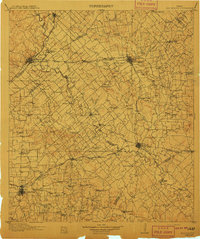 1911 San Marcos1911 Print · USGSCentral Texas at the peak of the railroad era shows a landscape of small farming communities and country schools. Genealogists can trace family footprints across Comanche Flat or locate long-gone sites like Highpoint School and Bethany Church.2 unique versions available
 - 1919 Map of San Marcos
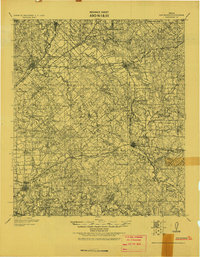 1919 San Marcos1919 Print · USGSTexas at the close of the Great War was a landscape of river-fed farms and emerging rail corridors between San Marcos and Lockhart. Genealogists can trace family footprints through numerous rural landmarks like Clark Chapel, High Prairie School, and Larremore.
 - 1924 Map of San Marcos 3-c
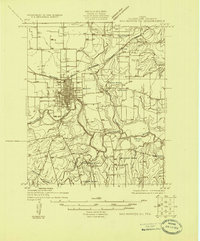 1924 San Marcos 3-c1924 Print · USGSGuadalupe County in the mid-1920s centers on the bustling rail-and-river town of Seguin. Researchers can trace the legacy of early schools and industry, from Ilka School to the Faust Gin, across a landscape shaped by the Guadalupe River.
 - 1930 Map of Seguin
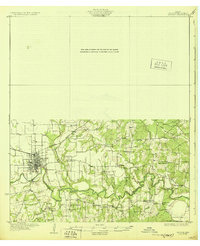 1930 Seguin1930 Print · USGSGuadalupe County at the height of the mid-twenties reflects a thriving rural economy centered on the Southern Pacific rail line. Researchers can locate numerous local landmarks including Walter Nixon Sch, the Faust Gin, and Mill Creek Salt.2 unique versions available
 - 1953 Map of Seguin, 1965 Print
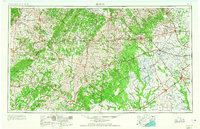 1953 Seguin1965 Print · USGSSouth Texas in the early fifties shows a thriving river-and-rail economy across the Guadalupe and Colorado basins. Genealogists and historians can trace rail routes like the Southern Pacific through Seguin, locate oil wells, or find the Gary AAF near San Marcos.4 unique versions available
 - 1958 Map of Seguin
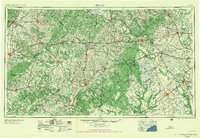 1958 Seguin1958 Print · USGSSouth Texas in the late fifties was a network of river-valley settlements and active oilfields tied together by major rail lines. Genealogists and historians can trace family-named sites across Rabb Prairie, locate the Behring Store, or follow the Southern Pacific through Schulenburg.
 - 1964 Map of Seguin, 1966 Print
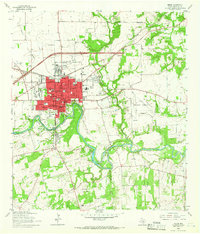 1964 Seguin1966 Print · USGSSeguin during the mid-sixties shows a thriving community centered on the Guadalupe River and the Southern Pacific rail line. Genealogists and local historians can locate early landmarks such as Riverview Cemetery, the Courthouse, and Texas Lutheran College.3 unique versions available
 - 1985 Map of Seguin, 1986 Print
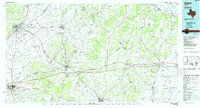 1985 Seguin1986 Print · USGSCentral Texas in the mid-1980s is defined by its vital oil industry and the crossroads of major interstate and rail networks. Genealogists and historians can trace the development of Luling Oil Field, identify the site of Old Flatonia, or locate family landmarks near St James and Palmetto State Park.2 unique versions available
 - 2010 Map of Seguin, 2010 Print
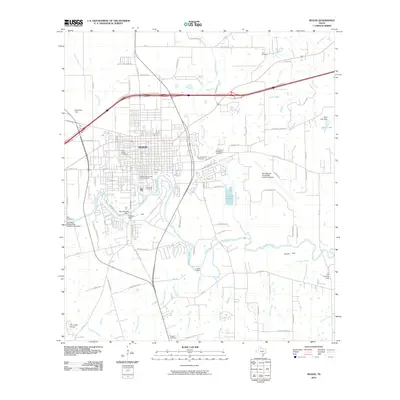 2010 Seguin2010 Print · USGSSeguin and the Guadalupe River valley are captured here in the early twenty-first century, showing the intersection of historic town planning and modern infrastructure. Researchers can locate numerous burial grounds like Riverview Cemetery and aviation landmarks such as the Randolph Air Force Base Auxiliary Airport.
 - 2013 Map of Seguin, 2013 Print
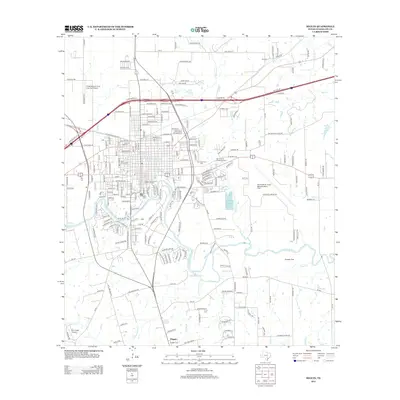 2013 Seguin2013 Print · USGSSeguin and the surrounding Guadalupe County countryside are captured here in the early twenty-first century, showing the town's modern footprint along the river. Genealogists and historians can trace family locations near Riverside Cem, the settlement of Dugger, or the Randolph Air Force Base Auxiliary Field.
 - 2016 Map of Seguin, 2016 Print
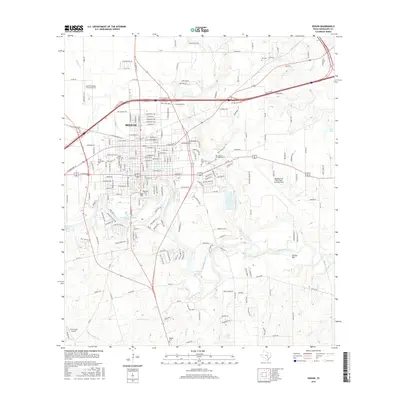 2016 Seguin2016 Print · USGSSeguin and its surrounding river reaches are captured here at the height of the mid-2010s. Local researchers can trace family plots at Riverside Cem, locate the campus of Texas Lutheran Univ, or survey the grounds of Randolph Air Force Base Auxiliary Field.
 - 2019 Map of Seguin, 2019 Print
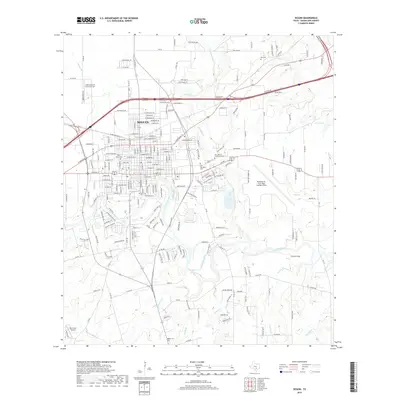 2019 Seguin2019 Print · USGSSeguin and the Guadalupe River valley are captured here in the late twenty-teens, showing a mix of urban growth and aviation history. Researchers can locate family heritage at Riverside Cem or trace the military footprint of the Randolph Air Force Base Auxiliary Field.
 - 2022 Map of Seguin, 2022 Print
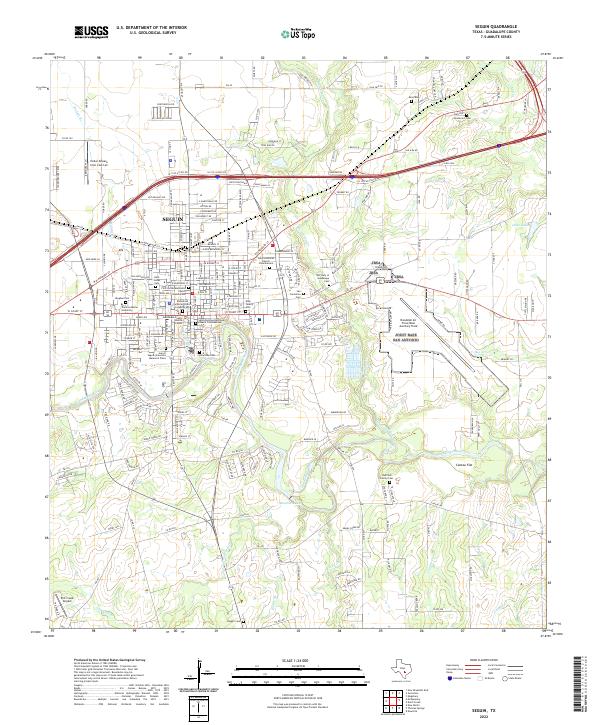 2022 Seguin2022 Print · USGSSeguin and its surrounding Guadalupe County prairies are captured in this modern survey during a period of sustained growth. Genealogists and local historians can trace the locations of numerous burial sites such as Dugger Cem and Vaughan Cem, or locate landmarks like Texas Lutheran University.
End of results
Showing maps 1-13 of 13
Frequently asked questions
- What are the different types of historical maps available for Joye Subdivision?
- What is the oldest map of Joye Subdivision?
- Where can I purchase historical maps of Joye Subdivision for my home or office?
- Where can I download high-res historical maps of Joye Subdivision?
- Are there historical topographic maps available for Joye Subdivision?
- Is there historical aerial imagery available for Joye Subdivision?
- Where are historical maps of Joye Subdivision sourced from?