1900s (20th Century) Maps of Lumberton, Texas
Explore 11 historic maps of Lumberton from the 1900s (20th Century). These maps offer a rare glimpse into what life looked like during the 1900s — showing old roads, neighborhoods, homes, and landmarks that have changed or disappeared over time.
Whether you're researching your family's past, planning a metal detecting trip, or studying how Lumberton's landscape evolved across the 1900s, these high-resolution maps are a powerful tool for exploring the history of this region.
- Focus on a specific era: All maps on this page are from the 1900s, giving you a focused view of this time period.
- See what’s changed: Compare century-old streets, trails, and buildings to today's modern landscape using overlays and satellite layers.
- Research with precision: Use these maps for genealogy, historical research, land use analysis, or educational projects.
- View, download, or print: Maps are fully viewable online in high resolution, and can be downloaded or printed for your own records.
Start exploring Lumberton's history through authentic maps from the 1900s. This is your window into the past.
Lumberton, TX maps
(11)- 1932 Map of Beaumont
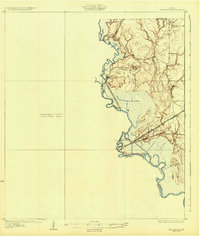 1932 Beaumont1932 Print · USGSThe Neches River lowlands and the growing settlement of Vidor are captured here during the early thirties. Genealogists can locate family landmarks like Magnolia Grove Sch, Williamson Ch, and the river crossing at Colliers Ferry.2 unique versions available
 - 1954 Map of Beaumont, 1964 Print
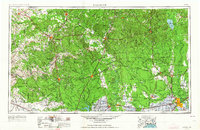 1954 Beaumont1964 Print · USGSSoutheast Texas in the mid-fifties reveals a landscape of massive national forests, emerging reservoirs, and a booming oil economy. Genealogists and researchers can trace rural settlements like Dallardsville and Village Mills or locate early drilling sites at Sour Lake Oil Field.3 unique versions available
 - 1955 Map of Silsbee, 1956 Print
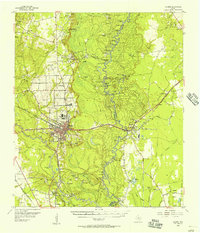 1955 Silsbee1956 Print · USGSSoutheast Texas in the mid-fifties is captured here as a landscape of timber and oil, where the Neches River meanders through the piney woods. Genealogists and historians can trace community roots through Peaceful Rest Cem, Good Shepherd Ch, and the rail stops at Lumberton and Fletcher.3 unique versions available
 - 1955 Map of Sour Lake, 1956 Print
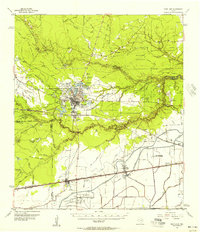 1955 Sour Lake1956 Print · USGSCoastal Texas prairies and oil fields are captured here in the mid-1950s as petroleum production shaped the local economy. Genealogists can locate family landmarks like Pine Ridge Ch, Henderson Sch, and the Grayburg Cem along the old rail lines.2 unique versions available
 - 1957 Map of Beaumont
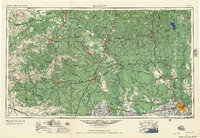 1957 Beaumont1957 Print · USGSSoutheast Texas in the mid-fifties is defined by the timber-rich lands between the Trinity River and Beaumont. Trace the history of the Alabama and Coushatti Indian Reservation or locate early campus sites like Prairie View College.
 - 1960 Map of Voth, 1962 Print
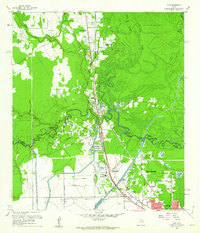 1960 Voth1962 Print · USGSThe Hardin and Jefferson county line comes alive in the early sixties as the suburbs of Beaumont meet the oil fields and bayous. Researchers can trace family roots through the Voth-Rosedale Sch, the Ariola Oil Field, and the Mt Sinai Ch.3 unique versions available
 - 1984 Map of Beaumont
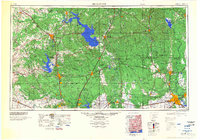 1984 Beaumont1984 Print · USGSSoutheast Texas in the late seventies and early eighties shows a landscape of expanding reservoirs and deep timber industry. Researchers can trace the development of the Sam Houston National Forest or locate regional landmarks like Grabbs Prairie and the Wynne State Prison Farm.3 unique versions available
 - 1984 Map of Bevil Oaks, 1985 Print
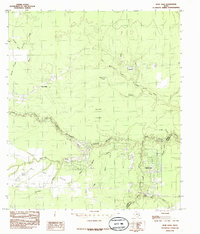 1984 Bevil Oaks1985 Print · USGSSoutheast Texas in the mid-eighties was a landscape where suburban growth at Bevil Oaks met the dense woodlands of the Big Thicket National Preserve. You can trace family-named sites and water features like Pine Ridge, Bonwell, and Fertitta Lake.2 unique versions available
 - 1984 Map of Silsbee, 1985 Print
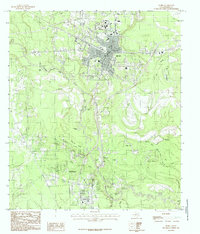 1984 Silsbee1985 Print · USGSHardin County during the mid-eighties shows a period of residential expansion between the rail hub at Silsbee and the growing community of Lumberton. Genealogists and researchers can trace local landmarks like Coeffield Ridge, the Atchison Topeka and Santa Fe line, and family-named features like Patterson Lake.2 unique versions available
 - 1986 Map of Beaumont
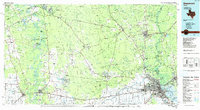 1986 Beaumont1986 Print · USGSThe East Texas piney woods and coastal prairies are captured here in the mid-eighties, a period of established energy production and conservation. Researchers can trace the industrial footprint of the Oil and Gas Field near Daisetta and Batson, or locate family sites at Graveyard Hill Cem.
 - 1993 Map of Voth
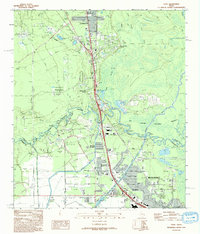 1993 Voth1993 Print · USGSCoastal Texas wetlands and suburban growth meet in the early nineties as the Beaumont area expands northward. Researchers can trace historical footprints through the Arriola Oil Field, the Rosedale Sch, and the winding Neches River.
End of results
Showing maps 1-11 of 11
Top cities near Lumberton
- Beaumont historical maps
- Port Arthur historical maps
- Vidor historical maps
- Silsbee historical maps
- Kountze historical maps
- Sour Lake historical maps
See more
Top neighborhoods of Lumberton
Frequently asked questions
- What are the different types of historical maps available for Lumberton?
- What is the oldest map of Lumberton?
- Where can I purchase historical maps of Lumberton for my home or office?
- Where can I download high-res historical maps of Lumberton?
- Are there historical topographic maps available for Lumberton?
- Is there historical aerial imagery available for Lumberton?
- Where are historical maps of Lumberton sourced from?