1900s (20th Century) Maps of Section 6, Longwood Village
Explore 9 historic maps of Section 6 from the 1900s (20th Century). These maps offer a rare glimpse into what life looked like during the 1900s — showing old roads, neighborhoods, homes, and landmarks that have changed or disappeared over time.
Whether you're researching your family's past, planning a metal detecting trip, or studying how Section 6's landscape evolved across the 1900s, these high-resolution maps are a powerful tool for exploring the history of this region.
- Focus on a specific era: All maps on this page are from the 1900s, giving you a focused view of this time period.
- See what’s changed: Compare century-old streets, trails, and buildings to today's modern landscape using overlays and satellite layers.
- Research with precision: Use these maps for genealogy, historical research, land use analysis, or educational projects.
- View, download, or print: Maps are fully viewable online in high resolution, and can be downloaded or printed for your own records.
Start exploring Section 6's history through authentic maps from the 1900s. This is your window into the past.
Section 6, Longwood Village maps
(9)- 1915 Map of Cypress
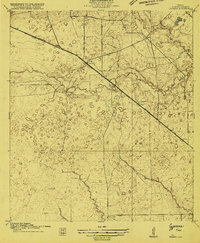 1915 Cypress1915 Print · USGSCoastal prairie and creek-side settlements define this Harris County area during the early twentieth century. Researchers can trace historic landholdings like Bains Ranch or find early educational sites including Big Cypress School and Brink School.3 unique versions available
 - 1918 Map of Cypress
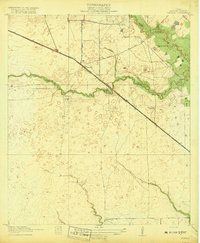 1918 Cypress1918 Print · USGSCypress and its surrounding prairie are documented here in the early 1900s, showing a rural Harris County landscape of ranching and creek-side schools. Genealogists and historians can trace family locations near Houston Hot Wells, Rams Ranch, or the Big Cypress School.2 unique versions available
 - 1950 Map of Houston, 1953 Print
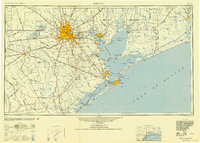 1950 Houston1953 Print · USGSCoastal Texas in the early fifties reveals a landscape of massive civil engineering and industrial transit. Genealogists and researchers can trace the growth of the Houston suburbs and the maritime infrastructure of Galveston Bay, including the Gulf Freeway and the Texas City Dike.
 - 1955 Map of Addicks, 1957 Print
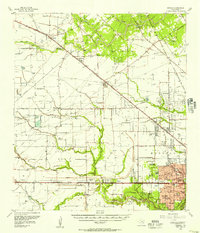 1955 Addicks1957 Print · USGSHarris County undergoes rapid transformation in the mid-fifties as Houston's city boundary pushes west. Trace family history and early industry through the Satsuma Oil Field, Addicks Dam, and Roeder Cem.
 - 1956 Map of Houston, 1963 Print
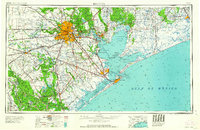 1956 Houston1963 Print · USGSSoutheast Texas in the mid-fifties is captured here as a powerhouse of oil and maritime trade. Genealogists and historians can trace the foundations of Houston and its ports, alongside landmarks like the Rice Institute and the Spindletop Oil Field.2 unique versions available
 - 1970 Map of Cypress, 1972 Print
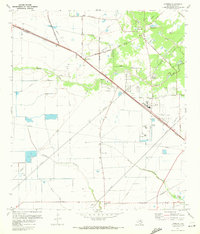 1970 Cypress1972 Print · USGSCypress and its surrounding prairie are shown here during the early 1970s as suburban growth began to reach into rural Harris County. Researchers can trace family history through sites like Graves Cem and Muller Cem, or follow the Southern Pacific rail line through Hot Wells.3 unique versions available
 - 1975 Map of Houston, 1977 Print
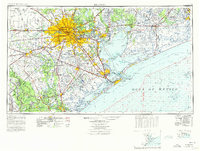 1975 Houston1977 Print · USGSThe Texas Gulf Coast in the mid-seventies shows a sprawling Houston metropolis linked to the sea by the massive Houston Ship Channel. Researchers can trace the mid-century industrial landscape from the Astrodome to the Lyndon B. Johnson Space Center.2 unique versions available
 - 1992 Map of Houston
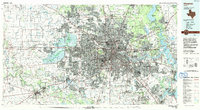 1992 Houston1992 Print · USGSThe Houston metropolitan area reached its modern sprawl in the early nineties, centered on the Buffalo Bayou and a massive regional rail network. Genealogists and historians can trace the development of satellite cities like Sugar Land and Pasadena, or locate legacy sites like the Humble Oil Field and the NASA Lyndon B Johnson Space Center.
 - 1995 Map of Cypress, 1999 Print
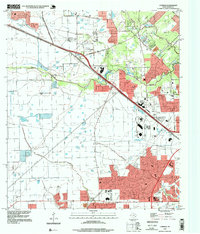 1995 Cypress1999 Print · USGSNorthwest Harris County undergoes rapid suburbanization in the mid-nineties as neighborhood grids expand toward the Cypress community. Genealogists and local historians can trace family burial sites like Knigge Cem alongside landmarks like Weiser Air Park and Hot Wells.
End of results
Showing maps 1-9 of 9
Frequently asked questions
- What are the different types of historical maps available for Section 6?
- What is the oldest map of Section 6?
- Where can I purchase historical maps of Section 6 for my home or office?
- Where can I download high-res historical maps of Section 6?
- Are there historical topographic maps available for Section 6?
- Is there historical aerial imagery available for Section 6?
- Where are historical maps of Section 6 sourced from?