1900s (20th Century) Maps of Nocona, Texas
Explore 6 historic maps of Nocona from the 1900s (20th Century). These maps offer a rare glimpse into what life looked like during the 1900s — showing old roads, neighborhoods, homes, and landmarks that have changed or disappeared over time.
Whether you're researching your family's past, planning a metal detecting trip, or studying how Nocona's landscape evolved across the 1900s, these high-resolution maps are a powerful tool for exploring the history of this region.
- Focus on a specific era: All maps on this page are from the 1900s, giving you a focused view of this time period.
- See what’s changed: Compare century-old streets, trails, and buildings to today's modern landscape using overlays and satellite layers.
- Research with precision: Use these maps for genealogy, historical research, land use analysis, or educational projects.
- View, download, or print: Maps are fully viewable online in high resolution, and can be downloaded or printed for your own records.
Start exploring Nocona's history through authentic maps from the 1900s. This is your window into the past.
Nocona, TX maps
(6)- 1905 Map of Montague
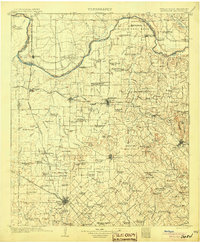 1905 Montague1905 Print · USGSMontague County and the bordering Chickasaw Nation are captured here in the early twentieth century as the frontier transitioned into a settled rail corridor. Genealogists and local researchers can locate numerous rural schools like Eagle Pt. School and trace river crossings such as Owings Ferry.3 unique versions available
 - 1954 Map of Sherman, 1964 Print
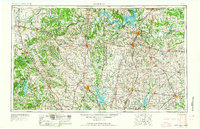 1954 Sherman1964 Print · USGSThe Red River valley and North Texas plains are captured here in the mid-fifties, showing the region as new reservoirs like Lake Texoma and Lavon Reservoir reshaped the land. Genealogists can trace family roots through specific local landmarks like Courtney P O, Pilot Grove Sch, and New Hope Ch.2 unique versions available
 - 1958 Map of Sherman, 1959 Print
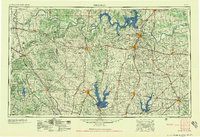 1958 Sherman1959 Print · USGSNorth Texas and Southern Oklahoma were undergoing significant development in the late fifties as the Red River Valley transit networks matured. Researchers can trace historic family-named locations such as Saddler Bend, the grounds of Perrin AFB, and early shoreline developments at Lake Texoma.
 - 1968 Map of Nocona, 1971 Print
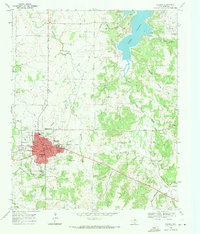 1968 Nocona1971 Print · USGSMontague County in the late sixties shows the town of Nocona expanding alongside the waters of Lake Nocona. Local historians can trace family plots at Molsbee Cem or Robinson Cem and locate vanished cultural landmarks like the Drive-in Theatre and the Rodeo Ground.2 unique versions available
 - 1985 Map of Gainesville
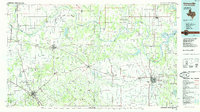 1985 Gainesville1985 Print · USGSThe Red River valley in the mid-1980s reveals a landscape defined by the petroleum industry and a complex rail network. Researchers can trace the legacy of regional energy at the Bowers Field or locate community roots near Spanish Fort and Lakeview Cemetery.
 - 1991 Map of Gainesville
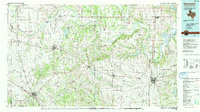 1991 Gainesville1991 Print · USGSThe Red River borderlands of Texas and Oklahoma are captured here in the early nineties, showing a region defined by cattle history and oil production. Researchers can trace the layout of historic settlements like Spanish Fort and Belcherville or locate family landmarks near Queens Peak and Moss Lake.
End of results
Showing maps 1-6 of 6
Top cities near Nocona
Frequently asked questions
- What are the different types of historical maps available for Nocona?
- What is the oldest map of Nocona?
- Where can I purchase historical maps of Nocona for my home or office?
- Where can I download high-res historical maps of Nocona?
- Are there historical topographic maps available for Nocona?
- Is there historical aerial imagery available for Nocona?
- Where are historical maps of Nocona sourced from?