1900s (20th Century) Maps of Chireno, Texas
Explore 11 historic maps of Chireno from the 1900s (20th Century). These maps offer a rare glimpse into what life looked like during the 1900s — showing old roads, neighborhoods, homes, and landmarks that have changed or disappeared over time.
Whether you're researching your family's past, planning a metal detecting trip, or studying how Chireno's landscape evolved across the 1900s, these high-resolution maps are a powerful tool for exploring the history of this region.
- Focus on a specific era: All maps on this page are from the 1900s, giving you a focused view of this time period.
- See what’s changed: Compare century-old streets, trails, and buildings to today's modern landscape using overlays and satellite layers.
- Research with precision: Use these maps for genealogy, historical research, land use analysis, or educational projects.
- View, download, or print: Maps are fully viewable online in high resolution, and can be downloaded or printed for your own records.
Start exploring Chireno's history through authentic maps from the 1900s. This is your window into the past.
Chireno, TX maps
(11)- 1953 Map of Palestine, 1964 Print
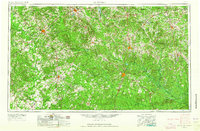 1953 Palestine1964 Print · USGSEast Texas was defined by its deep pine forests and burgeoning energy sector in the mid-1950s. Genealogists and historians can trace the rail-and-river economy through settlements like Tennessee Colony and Pollok or explore the early footprints of the Cayuga Oil Field and Davy Crockett National Forest.2 unique versions available
 - 1957 Map of Palestine
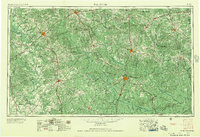 1957 Palestine1957 Print · USGSEast Texas in the mid-fifties reveals a landscape of deep pine forests and winding river valleys before the era of massive reservoir construction. Researchers can trace the legacy of the timber and rail industries through labels for the Missouri Pacific RR, Davy Crockett National Forest, and Nacogdoches.
 - 1958 Map of Broaddus, 1959 Print
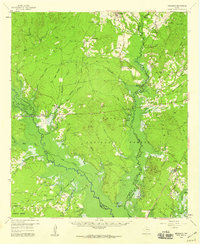 1958 Broaddus1959 Print · USGSEast Texas was on the cusp of a permanent change in the late fifties as the McGee Bend Reservoir project began. Local historians can trace family cemeteries like Cochran Cem and Baron Cem near settlements such as Etoile and Broaddus.3 unique versions available
 - 1958 Map of Martinsville, 1959 Print
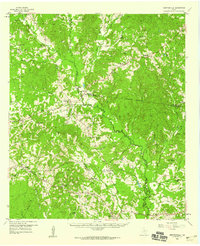 1958 Martinsville1959 Print · USGSNacogdoches County in the late 1950s is defined by the historic path of El Camino Real and the winding Attoyac Bayou. Researchers can trace old family sites at Sacred Heart Ch, Libby Cem, and the rural community of Martinsville.2 unique versions available
 - 1984 Map of Chireno South
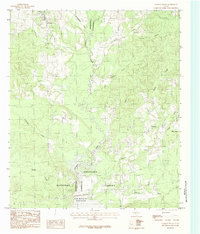 1984 Chireno South1984 Print · USGSSan Augustine and Nacogdoches counties are captured here in the early eighties, where the Attoyac River meets the Sam Rayburn Reservoir. Genealogists and local historians can trace family-named areas like Goodwin, Peterson, and Johnson near the Angelina National Forest.
 - 1984 Map of Palestine
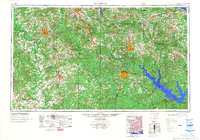 1984 Palestine1984 Print · USGSEast Texas in the mid-eighties reveals a landscape of massive reservoirs and protected timberlands between Palestine and Nacogdoches. Researchers can trace old routes like the Missouri Pacific RR and locate rural communities such as Tennessee Colony, Latexo, and Etoile.3 unique versions available
 - 1984 Map of Chireno North, 1985 Print
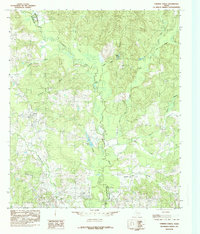 1984 Chireno North1985 Print · USGSThe Attoyac River valley at the Nacogdoches and San Augustine county line is shown here in the early eighties. Researchers can trace the rural settlement near Chireno, local landmarks like a Cemetery, and the winding reaches of Tupelo Slough.
 - 1986 Map of Lufkin
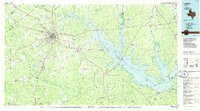 1986 Lufkin1986 Print · USGSDeep in the Piney Woods during the mid-eighties, this map documents a landscape shaped by vast national forests and the waters of the Sam Rayburn Reservoir. Researchers can trace the legacy of timber and rail through settlements like Diboll, Herty, and Ewing alongside the St Louis Southwestern railroad.
 - 1986 Map of Nacogdoches
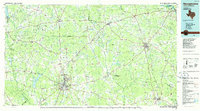 1986 Nacogdoches1986 Print · USGSDeep in the East Texas Piney Woods during the mid-eighties, this landscape centers on Nacogdoches and the sprawling Toledo Bend Reservoir. Genealogists can trace family footprints at Sulphur Springs Cem, Oak Grove Ch, and the many small settlements like Reklaw and Sacul.
 - 1992 Map of Nacogdoches
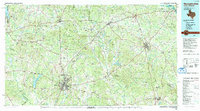 1992 Nacogdoches1992 Print · USGSEast Texas timberlands and river valleys are captured here in the early nineties, centered on the historic regional hub of Nacogdoches. Trace family roots and old rail lines through Cushing, San Augustine, and Logansport along the Southern Pacific RR.
 - 1992 Map of Lufkin
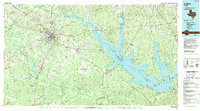 1992 Lufkin1992 Print · USGSThe Piney Woods of East Texas are captured here in the early nineties, centered on the growing industrial hub of Lufkin. Local researchers can trace the rail networks of the Angelina & Neches River RR and locate rural landmarks like Shady Grove Ch and Manning.
End of results
Showing maps 1-11 of 11
Top cities near Chireno
Frequently asked questions
- What are the different types of historical maps available for Chireno?
- What is the oldest map of Chireno?
- Where can I purchase historical maps of Chireno for my home or office?
- Where can I download high-res historical maps of Chireno?
- Are there historical topographic maps available for Chireno?
- Is there historical aerial imagery available for Chireno?
- Where are historical maps of Chireno sourced from?