1900s (20th Century) Maps of Longfellow, Texas
Explore 6 historic maps of Longfellow from the 1900s (20th Century). These maps offer a rare glimpse into what life looked like during the 1900s — showing old roads, neighborhoods, homes, and landmarks that have changed or disappeared over time.
Whether you're researching your family's past, planning a metal detecting trip, or studying how Longfellow's landscape evolved across the 1900s, these high-resolution maps are a powerful tool for exploring the history of this region.
- Focus on a specific era: All maps on this page are from the 1900s, giving you a focused view of this time period.
- See what’s changed: Compare century-old streets, trails, and buildings to today's modern landscape using overlays and satellite layers.
- Research with precision: Use these maps for genealogy, historical research, land use analysis, or educational projects.
- View, download, or print: Maps are fully viewable online in high resolution, and can be downloaded or printed for your own records.
Start exploring Longfellow's history through authentic maps from the 1900s. This is your window into the past.
Longfellow, TX maps
(6)- 1920 Map of Longfellow
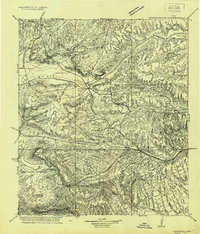 1920 Longfellow1920 Print · USGSRailroad outposts and high desert terrain define this West Texas survey from the early twentieth century. Genealogists and historians can trace the Southern Pacific line through stops like Purrington, Tesnus, and Rosenfeld, along with landmarks like the Pittsburg Boring.
 - 1954 Map of Fort Stockton, 1965 Print
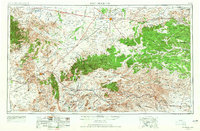 1954 Fort Stockton1965 Print · USGSWest Texas ranching and the early energy industry converge in this mid-century survey of the Trans-Pecos. Genealogists and historians can locate specific family lands like Graef Brothers Ranch and trace the paths of the Old Spanish Trail and the Southern Pacific railroad.3 unique versions available
 - 1958 Map of Fort Stockton
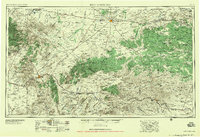 1958 Fort Stockton1958 Print · USGSThe Trans-Pecos region of West Texas in the late fifties is a landscape of vast mesas and isolated ranching hubs. Genealogists and historians can trace the paths of the Texas and New Orleans RR through Alpine or locate early settlements like Bakersfield and Sanderson.
 - 1968 Map of Longfellow, 1971 Print
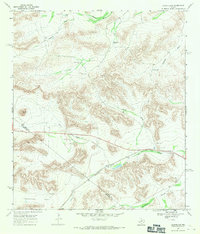 1968 Longfellow1971 Print · USGSThe high desert of Pecos and Brewster County is captured in the late sixties as the railroad era meets modern ranching. Trace the Southern Pacific line past Longfellow and locate family-named landmarks like Steer Wells and Panther Peak.
 - 1973 Map of Fort Stockton, 1974 Print
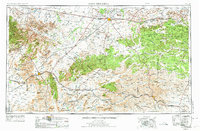 1973 Fort Stockton1974 Print · USGSThe Trans-Pecos region of West Texas comes alive in the early seventies, from the desert flats of the Stockton Plateau to the heights of the Davis Mountains. Researchers can trace the legacy of frontier outposts and rail lines through Fort Davis Nat Hist Site, Alpine, and the Southern Pacific RR.
 - 1985 Map of Sanderson
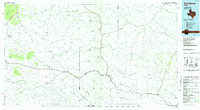 1985 Sanderson1985 Print · USGSWest Texas ranching and railroading are captured here in the mid-eighties as the Southern Pacific traverses the Trans-Pecos. Researchers can trace the layout of Sanderson and find isolated sites like Dryden, Tesnus, and the Glass Mountains.2 unique versions available
End of results
Showing maps 1-6 of 6
Frequently asked questions
- What are the different types of historical maps available for Longfellow?
- What is the oldest map of Longfellow?
- Where can I purchase historical maps of Longfellow for my home or office?
- Where can I download high-res historical maps of Longfellow?
- Are there historical topographic maps available for Longfellow?
- Is there historical aerial imagery available for Longfellow?
- Where are historical maps of Longfellow sourced from?