1900s (20th Century) Maps of Greensboro, Vermont
Explore 15 historic maps of Greensboro from the 1900s (20th Century). These maps offer a rare glimpse into what life looked like during the 1900s — showing old roads, neighborhoods, homes, and landmarks that have changed or disappeared over time.
Whether you're researching your family's past, planning a metal detecting trip, or studying how Greensboro's landscape evolved across the 1900s, these high-resolution maps are a powerful tool for exploring the history of this region.
- Focus on a specific era: All maps on this page are from the 1900s, giving you a focused view of this time period.
- See what’s changed: Compare century-old streets, trails, and buildings to today's modern landscape using overlays and satellite layers.
- Research with precision: Use these maps for genealogy, historical research, land use analysis, or educational projects.
- View, download, or print: Maps are fully viewable online in high resolution, and can be downloaded or printed for your own records.
Start exploring Greensboro's history through authentic maps from the 1900s. This is your window into the past.
Greensboro, VT maps
(15)- 1928 Map of Hardwick, 1938 Print
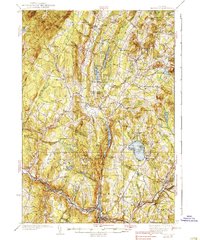 1928 Hardwick1938 Print · USGSUpper Vermont at the end of the 1920s is seen here through its network of district schools and valley rail lines. Genealogists can trace family landmarks like Jackson Bridge or locate vanished schoolhouses such as Beeler Sch and Speir Sch.
 - 1934 Map of Hardwick
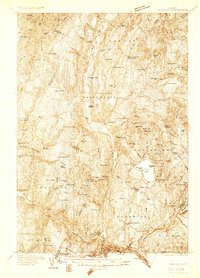 1934 Hardwick1934 Print · USGSUpper Vermont's hill towns and river valleys are captured here in the mid-1930s, showing a landscape tied to the Lamoille River and small-town industry. Researchers can trace dozens of rural schoolhouses like Collinsville Sch and landmarks such as Jackson Bridge.
 - 1935 Map of Lyndonville
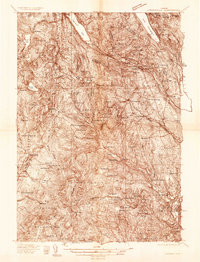 1935 Lyndonville1935 Print · USGSThe Northeast Kingdom's rail-and-timber era comes to life in this survey of Caledonia County in the mid-1930s. Genealogists and historians can trace the Military Road, identify family plots at the Samuel Drown Burying Ground, and locate vanished rural schoolhouses like Squabble Hollow Sch.
 - 1938 Map of Hardwick
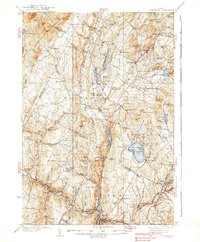 1938 Hardwick1938 Print · USGSVermont’s northern hills and the Lamoille River valley are shown in the late 1930s, documenting a time when rural schools and the railroad connected the highlands. Trace family roots through sites like Hazen Road Sch, Greensboro Bend, and the ST JOHNSBURY AND LAKE CHAMPLAIN RR.2 unique versions available
 - 1939 Map of Lyndonville
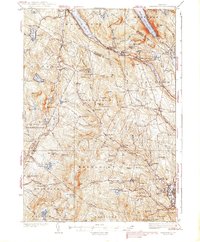 1939 Lyndonville1939 Print · USGSUpper Caledonia and Orleans Counties are shown in high detail during the late thirties, when the Canadian Pacific railroad still defined the local economy. Genealogists can trace family roots through dozens of rural landmarks, including Glover Cem, South Wheelock Ch, and several dozen local schoolhouses like Old Red Sch.3 unique versions available
 - 1950 Map of Lake Champlain
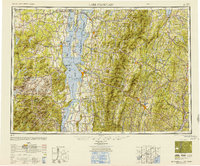 1950 Lake Champlain1950 Print · USGSThe Lake Champlain valley and its surrounding peaks are captured in detail during the late 1940s, showing the vital rail and road connections between New York and Vermont. Researchers can trace the routes of the Central Vermont Railway or locate old industrial centers like Mineville and Witherbee.2 unique versions available
 - 1951 Map of Lyndonville
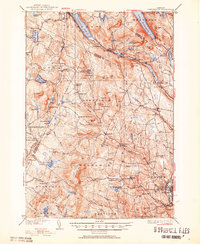 1951 Lyndonville1951 Print · USGSCaledonia and Orleans counties are shown here in the mid-twentieth century, featuring the deep glacial waters of the Northeast Kingdom. Genealogists and historians can trace local landmarks like Lyndon Teachers College, the Canadian Pacific line through Sutton Sta, and the West Look Cem.5 unique versions available
 - 1951 Map of Hardwick, 1952 Print
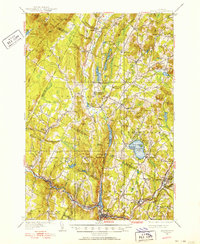 1951 Hardwick1952 Print · USGSThe Northeast Kingdom's rugged highlands and river valleys are captured here in the early fifties, centering on the granite and rail hub of Hardwick. Researchers can trace old family schoolhouses like Wright Sch and Stan Sch or follow the route of the St Johnsbury and Lake Champlain Railroad.4 unique versions available
 - 1958 Map of Lake Champlain
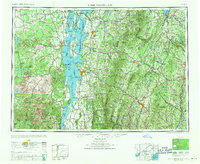 1958 Lake Champlain1958 Print · USGSThe Champlain Valley and surrounding high peaks are captured here in the late fifties, showcasing the cross-border region from the Adirondacks to the Green Mountains. Researchers can trace historic rail routes like the Rutland Railway or locate old valley settlements such as Keeseville and Vergennes.2 unique versions available
 - 1962 Map of Lake Champlain, 1975 Print
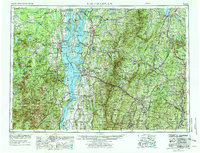 1962 Lake Champlain1975 Print · USGSLake Champlain and the high peaks of the Adirondacks and Green Mountains are captured here during the mid-twentieth century. Researchers can trace the industrial legacy of the Lyon Mountain Mine and the rail corridors of the Central Vermont RR and Delaware & Hudson RR.3 unique versions available
 - 1986 Map of Crystal Lake, 1987 Print
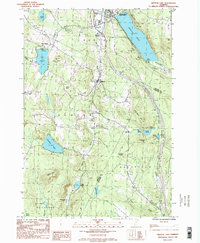 1986 Crystal Lake1987 Print · USGSOrleans County is captured in the mid-1980s during a period of steady rural life among the hills and glacial ponds. Genealogists can trace the settlements of Barton, Glover, and West Glover while locating landmarks like Lake Parker, Shadow Lake, and Simpson Hill.2 unique versions available
 - 1986 Map of Caspian Lake, 1987 Print
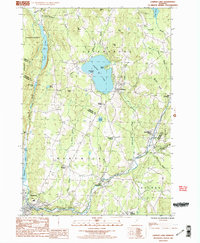 1986 Caspian Lake1987 Print · USGSThe upland villages of Orleans and Caledonia counties are captured here in the mid-1980s, centered on the clear waters of Caspian Lake. Genealogists and historians can trace the local road networks connecting Hardwick Street, Greensboro Bend, and East Hardwick.2 unique versions available
 - 1986 Map of Stannard, 1987 Print
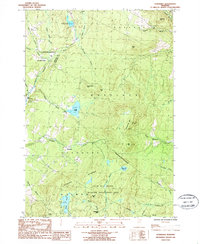 1986 Stannard1987 Print · USGSNortheast Vermont at the mid-eighties shows a landscape of upland forests and scattered hamlets between the Lamoille River and Stannard Mountain. Trace the rural developments of Stannard and East Greensboro, or find old industrial sites at Fairbanks Mills on Mill Brook.
 - 1986 Map of Craftsbury, 1987 Print
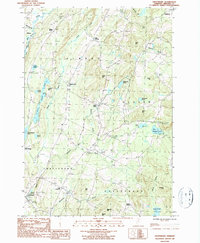 1986 Craftsbury1987 Print · USGSOrleans County, Vermont, maintains its rural character in the mid-1980s as a landscape of small hamlets and glacial lakes. Genealogists and local historians can trace family-named sites like Merrill Corner and Gebbie Corner alongside the waters of Great Hosmer Pond.2 unique versions available
 - 1989 Map of Mount Mansfield
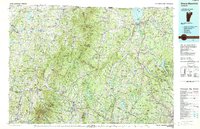 1989 Mount Mansfield1989 Print · USGSNorthern Vermont in the late eighties remains a landscape of deep forests and isolated mountain villages. Genealogists and hikers can trace the old rail lines of the Canadian Pacific RR or locate family sites near Lake Willoughby and Brownington Village.
End of results
Showing maps 1-15 of 15
Top cities near Greensboro
- Saint Johnsbury historical maps
- Hyde Park historical maps
- Hardwick historical maps
- Barton historical maps
- Danville historical maps
- Wolcott historical maps
See more
Top neighborhoods of Greensboro
- Campbells Corner historical maps
- Tolman Corner historical maps
- Gebbie Corner historical maps
- The Four Corners historical maps
- Greensboro Bend historical maps
- East Greensboro historical maps
Frequently asked questions
- What are the different types of historical maps available for Greensboro?
- What is the oldest map of Greensboro?
- Where can I purchase historical maps of Greensboro for my home or office?
- Where can I download high-res historical maps of Greensboro?
- Are there historical topographic maps available for Greensboro?
- Is there historical aerial imagery available for Greensboro?
- Where are historical maps of Greensboro sourced from?