1900s (20th Century) Maps of North Duxbury, Duxbury
Explore 9 historic maps of North Duxbury from the 1900s (20th Century). These maps offer a rare glimpse into what life looked like during the 1900s — showing old roads, neighborhoods, homes, and landmarks that have changed or disappeared over time.
Whether you're researching your family's past, planning a metal detecting trip, or studying how North Duxbury's landscape evolved across the 1900s, these high-resolution maps are a powerful tool for exploring the history of this region.
- Focus on a specific era: All maps on this page are from the 1900s, giving you a focused view of this time period.
- See what’s changed: Compare century-old streets, trails, and buildings to today's modern landscape using overlays and satellite layers.
- Research with precision: Use these maps for genealogy, historical research, land use analysis, or educational projects.
- View, download, or print: Maps are fully viewable online in high resolution, and can be downloaded or printed for your own records.
Start exploring North Duxbury's history through authentic maps from the 1900s. This is your window into the past.
North Duxbury, Duxbury maps
(9)- 1921 Map of Richmond
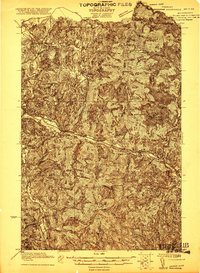 1921 Richmond1921 Print · USGSThe Green Mountains in the early twenties were defined by the deep valleys of the Winooski River and the high peaks of the northern range. Genealogists and hikers can trace the original footprints of Underhill Center, the Duxbury School, and the Central Vermont rail line.
 - 1924 Map of Camels Hump
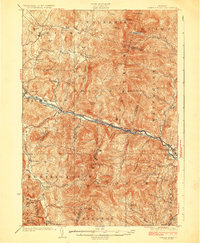 1924 Camels Hump1924 Print · USGSThe Green Mountains in the early 1920s are centered on the iconic peak of Camels Hump and the busy Winooski River corridor. Genealogists and historians can trace the foundations of local life through the State Hospital for the Insane in Waterbury, small mountain schools like Piddock School, and the path of the Central Vermont railroad.5 unique versions available
 - 1944 Map of Camels Hump
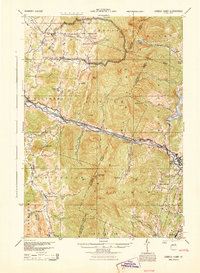 1944 Camels Hump1944 Print · USGSThe Green Mountains at the height of the war era show a landscape defined by valley settlements and military expansion. You can trace the Central Vermont rail line through Bolton or find vanished rural schoolhouses like Ricker Sch and Phillips Sch.
 - 1948 Map of Waterbury, 1953 Print
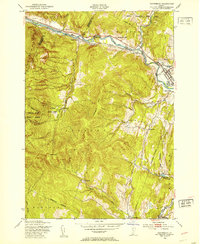 1948 Waterbury1953 Print · USGSWashington County enters the post-war era as a landscape of deep river valleys and high forest ridges. Genealogists can trace family footprints near Waterbury, find the State Hospital, or locate remote mountain schools like Phillips Sch and Durkee Sch.4 unique versions available
 - 1948 Map of Camels Hump, 1954 Print
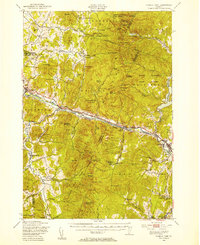 1948 Camels Hump1954 Print · USGSThe Green Mountains of the late 1940s are defined by the Winooski River corridor and the high peaks of the range. Genealogists and local historians can trace the foundations of mountain life through Old Round Ch, the Machine Gun Sch, and the rail stops of the Central Vermont line.5 unique versions available
 - 1950 Map of Lake Champlain
 1950 Lake Champlain1950 Print · USGSThe Lake Champlain valley and its surrounding peaks are captured in detail during the late 1940s, showing the vital rail and road connections between New York and Vermont. Researchers can trace the routes of the Central Vermont Railway or locate old industrial centers like Mineville and Witherbee.2 unique versions available
 - 1958 Map of Lake Champlain
 1958 Lake Champlain1958 Print · USGSThe Champlain Valley and surrounding high peaks are captured here in the late fifties, showcasing the cross-border region from the Adirondacks to the Green Mountains. Researchers can trace historic rail routes like the Rutland Railway or locate old valley settlements such as Keeseville and Vergennes.2 unique versions available
 - 1962 Map of Lake Champlain, 1975 Print
 1962 Lake Champlain1975 Print · USGSLake Champlain and the high peaks of the Adirondacks and Green Mountains are captured here during the mid-twentieth century. Researchers can trace the industrial legacy of the Lyon Mountain Mine and the rail corridors of the Central Vermont RR and Delaware & Hudson RR.3 unique versions available
 - 1988 Map of Montpelier
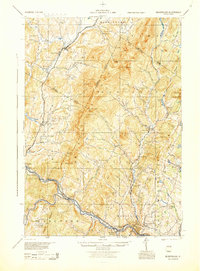 1988 Montpelier1988 Print · USGSThe area surrounding Vermont’s capital city appears here during the early 1940s, showing the vital rail-and-river network. Genealogists can trace family names across a dozen district schools and rural sites like Middlesex Center and the Talc Mine.2 unique versions available
End of results
Showing maps 1-9 of 9
Top cities near North Duxbury
- Essex historical maps
- Williston historical maps
- Montpelier historical maps
- Northfield historical maps
- Waterbury historical maps
- Stowe historical maps
See more
Frequently asked questions
- What are the different types of historical maps available for North Duxbury?
- What is the oldest map of North Duxbury?
- Where can I purchase historical maps of North Duxbury for my home or office?
- Where can I download high-res historical maps of North Duxbury?
- Are there historical topographic maps available for North Duxbury?
- Is there historical aerial imagery available for North Duxbury?
- Where are historical maps of North Duxbury sourced from?