Old Maps of Waterbury, Vermont for Metal Detecting
Plan your next treasure hunt with 35 historic maps of Waterbury. Find old homesites, ghost towns, trails, and gathering spots that may be lost to time — perfect for identifying promising metal detecting locations.
- Locate forgotten sites: Uncover places like long-lost settlements, abandoned rail lines, or gathering spots.
- Plan better hunts: Use map overlays combined with LiDAR or satellite views to narrow in on historically rich areas.
- Made for detectorists: Thousands of hobbyists use these maps to discover relics, coins, and hidden history.
Use these historic maps to boost your research and find new opportunities beneath the surface of Waterbury.
Waterbury, VT maps
(35)- 1919 Map of Montpelier, 1958 Print
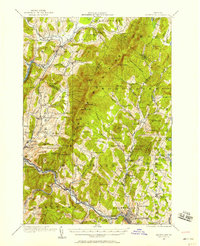 1919 Montpelier1958 Print · USGSMontpelier and the Winooski River valley are shown here just after the Great War, when rail lines and early highways connected a landscape of small hill farms and mines. Genealogists can locate dozens of rural landmarks, including the Talc Mine, the Sodom PO, and the Green Mountain Cemetery.2 unique versions available
 - 1921 Map of Richmond
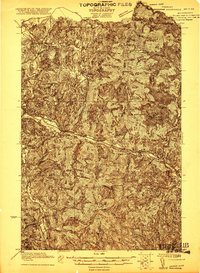 1921 Richmond1921 Print · USGSThe Green Mountains in the early twenties were defined by the deep valleys of the Winooski River and the high peaks of the northern range. Genealogists and hikers can trace the original footprints of Underhill Center, the Duxbury School, and the Central Vermont rail line.
 - 1921 Map of Montpelier
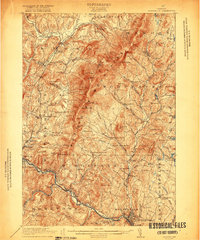 1921 Montpelier1921 Print · USGSMontpelier and the Winooski valley are seen here in the early twenties, framed by the peaks of the Worcester Mountains. Genealogists and local historians can locate dozens of district schools and unique landmarks like the Talc Mine, Sodom PO, and the Central Vermont Ry.6 unique versions available
 - 1924 Map of Camels Hump
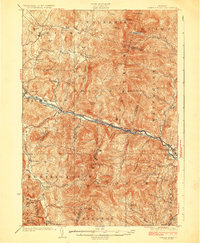 1924 Camels Hump1924 Print · USGSThe Green Mountains in the early 1920s are centered on the iconic peak of Camels Hump and the busy Winooski River corridor. Genealogists and historians can trace the foundations of local life through the State Hospital for the Insane in Waterbury, small mountain schools like Piddock School, and the path of the Central Vermont railroad.5 unique versions available
 - 1944 Map of Montpelier
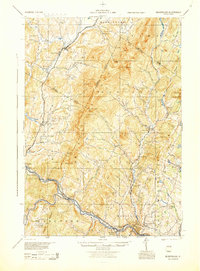 1944 Montpelier1944 Print · USGSCentral Vermont in the mid-1940s is mapped here with a focus on its mountain settlements and river valley corridors. Genealogists can trace family roots through numerous district schools like Loomis Hill Sch and the location of the Talc Mine.
 - 1944 Map of Camels Hump
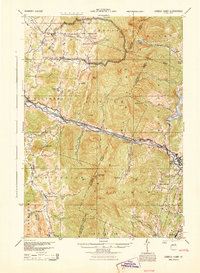 1944 Camels Hump1944 Print · USGSThe Green Mountains at the height of the war era show a landscape defined by valley settlements and military expansion. You can trace the Central Vermont rail line through Bolton or find vanished rural schoolhouses like Ricker Sch and Phillips Sch.
 - 1948 Map of Bolton Mountain, 1953 Print
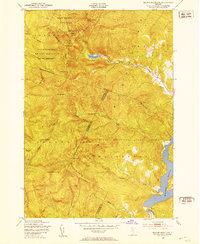 1948 Bolton Mountain1953 Print · USGSThe Green Mountains in the late 1940s served as both a recreational escape and a training ground for the military. You can trace the trails to high-altitude shelters like Taylor Lodge or locate the extensive Artillery Target Range within the Fort Ethan Allen Military Reservation.5 unique versions available
 - 1948 Map of Waterbury, 1953 Print
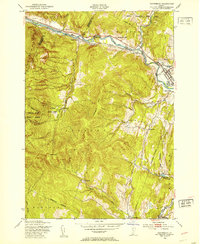 1948 Waterbury1953 Print · USGSWashington County enters the post-war era as a landscape of deep river valleys and high forest ridges. Genealogists can trace family footprints near Waterbury, find the State Hospital, or locate remote mountain schools like Phillips Sch and Durkee Sch.4 unique versions available
 - 1948 Map of Camels Hump, 1954 Print
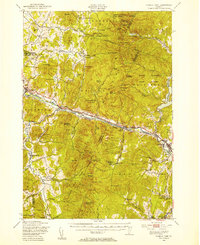 1948 Camels Hump1954 Print · USGSThe Green Mountains of the late 1940s are defined by the Winooski River corridor and the high peaks of the range. Genealogists and local historians can trace the foundations of mountain life through Old Round Ch, the Machine Gun Sch, and the rail stops of the Central Vermont line.5 unique versions available
 - 1950 Map of Lake Champlain
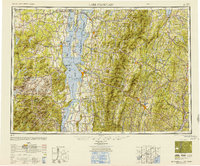 1950 Lake Champlain1950 Print · USGSThe Lake Champlain valley and its surrounding peaks are captured in detail during the late 1940s, showing the vital rail and road connections between New York and Vermont. Researchers can trace the routes of the Central Vermont Railway or locate old industrial centers like Mineville and Witherbee.2 unique versions available
 - 1958 Map of Lake Champlain
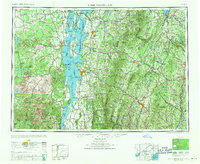 1958 Lake Champlain1958 Print · USGSThe Champlain Valley and surrounding high peaks are captured here in the late fifties, showcasing the cross-border region from the Adirondacks to the Green Mountains. Researchers can trace historic rail routes like the Rutland Railway or locate old valley settlements such as Keeseville and Vergennes.2 unique versions available
 - 1962 Map of Lake Champlain, 1975 Print
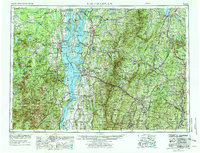 1962 Lake Champlain1975 Print · USGSLake Champlain and the high peaks of the Adirondacks and Green Mountains are captured here during the mid-twentieth century. Researchers can trace the industrial legacy of the Lyon Mountain Mine and the rail corridors of the Central Vermont RR and Delaware & Hudson RR.3 unique versions available
 - 1968 Map of Middlesex, 1972 Print
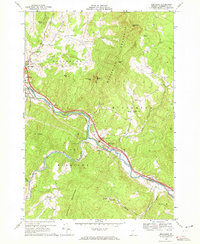 1968 Middlesex1972 Print · USGSThe Winooski River valley in the late sixties shows a landscape of traditional Vermont hamlets adapting to the arrival of the interstate. Researchers can trace historic family burial sites at Fairmount Cem or explore the rural layout of Kneeland Flat and Middlesex Center.2 unique versions available
 - 1968 Map of Stowe, 1972 Print
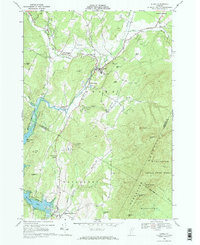 1968 Stowe1972 Print · USGSLamoille County is shown in the late 1960s as a region of mountain valleys and riverside villages. Genealogists and local historians can trace family locations near Moscow, the Riverbank Cem, and the historic Covered Bridge along Gold Brook.
 - 1988 Map of Montpelier
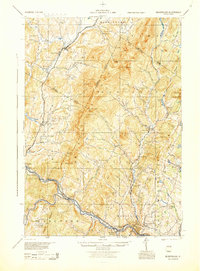 1988 Montpelier1988 Print · USGSThe area surrounding Vermont’s capital city appears here during the early 1940s, showing the vital rail-and-river network. Genealogists can trace family names across a dozen district schools and rural sites like Middlesex Center and the Talc Mine.2 unique versions available
 - 2012 Map of Bolton Mountain, 2012 Print
 2012 Bolton Mountain2012 Print · USGSThe Green Mountain high country is captured here just over a decade ago, showcasing a landscape of high summits and hidden valley industry. You can trace the footprint of the Waterbury Last Block Sawmill or locate remote waypoints like Taylor Lodge and Goose Pond.
 - 2012 Map of Middlesex, 2012 Print
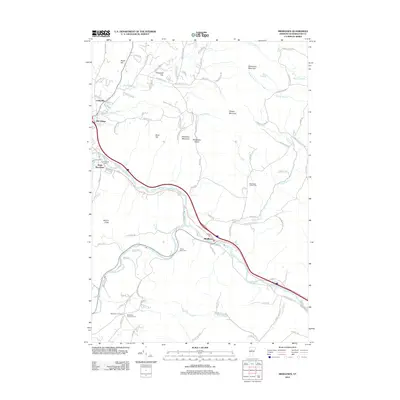 2012 Middlesex2012 Print · USGSCentral Vermont in the early 2010s reveals a landscape of river-valley hamlets and mountain gaps between the Winooski and Mad Rivers. Researchers can locate burial sites like Fairmount Cem and trace old routes through Middlesex Notch and Kneeland Flat.
 - 2012 Map of Waterbury, 2012 Print
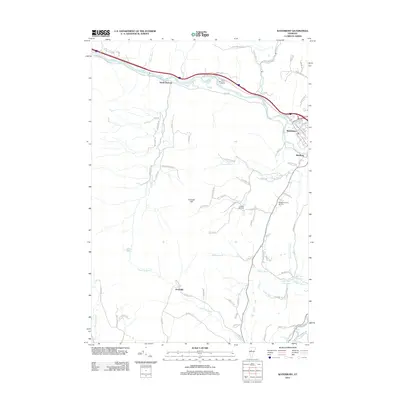 2012 Waterbury2012 Print · USGSWaterbury and the surrounding river valleys are captured here in the early twenty-first century as the area continued its role as a regional transport corridor. Genealogists can locate family sites near Crossett Hill Cem or trace the rural roads connecting North Duxbury and Dousville.
 - 2012 Map of Stowe, 2012 Print
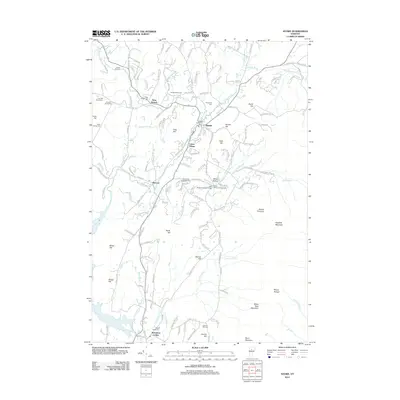 2012 Stowe2012 Print · USGSThe Lamoille Valley of Vermont comes to life in the early 2010s, showcasing a network of upland hamlets and mountain ridges. Researchers can trace family history at the Trapp Family Cem or locate the historic Gold Brook Covered Bridge.
 - 2015 Map of Waterbury, 2015 Print
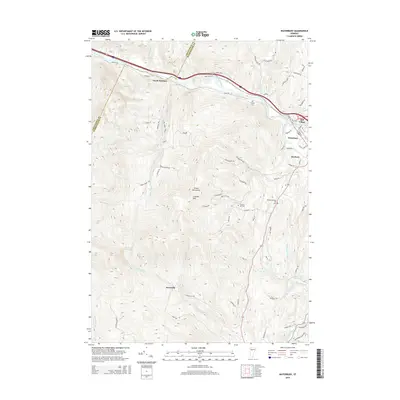 2015 Waterbury2015 Print · USGSWaterbury and the Winooski River valley are shown here in the mid-2010s, illustrating the enduring settlement patterns of the Green Mountains. Genealogists can locate family sites near Crossett Hill Cem or trace the old roads connecting Mill Village and Duxville.
 - 2015 Map of Stowe, 2015 Print
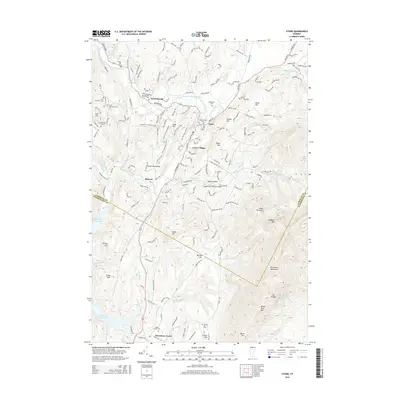 2015 Stowe2015 Print · USGSStowe and the surrounding Green Mountains appear in this mid-2010s survey, showing a landscape of high peaks and valley settlements. Researchers can trace historic family burial sites like the Trapp Family Cem or visit the Gold Brook Covered Bridge.
 - 2015 Map of Middlesex, 2015 Print
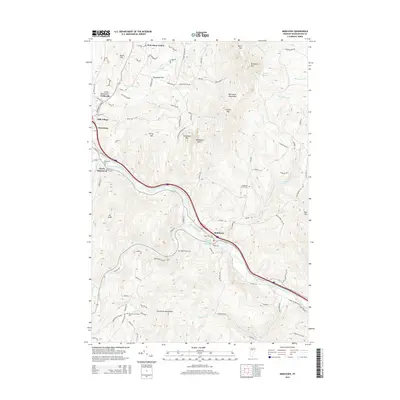 2015 Middlesex2015 Print · USGSThe Winooski River valley in central Vermont appears here in the mid-2010s, showing the settled corridors between the Worcester and Northfield Mountains. Local historians can trace family sites at Fairmount Cem, Kneeland Flat, and the hamlet of Colbyville.
 - 2015 Map of Bolton Mountain, 2015 Print
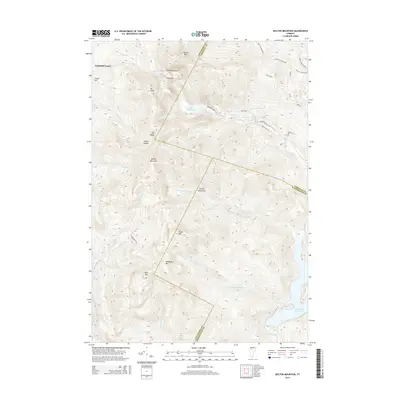 2015 Bolton Mountain2015 Print · USGSThe Green Mountains reach their heights in the mid-2010s at the junction of three Vermont counties. Local history researchers can trace high-country drainage basins and recreation trails near Lake Mansfield, Nebraska Notch, and the banks of Waterbury Reservoir.
 - 2018 Map of Waterbury, 2018 Print
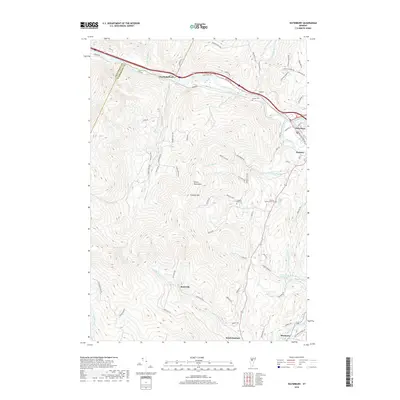 2018 Waterbury2018 Print · USGSThe Winooski River valley and the slopes of the Green Mountains define this Vermont landscape in the late twenty-teens. Researchers can trace the rugged local geography from the village of Waterbury to quiet upland sites like Dowsville and Crossett Hill Cem.
 - 2018 Map of Stowe, 2018 Print
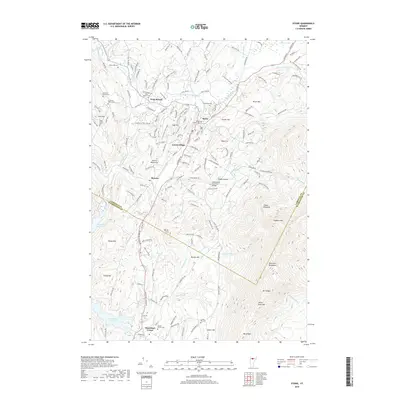 2018 Stowe2018 Print · USGSThe Green Mountains surround Stowe and Waterbury Center in this 2018 survey of north-central Vermont. Genealogists can locate several family burial grounds, such as the Trapp Family Cem, and local landmarks like the Gold Brook Covered Bridge.
Showing maps 1-25 of 35
Top cities near Waterbury
- Essex historical maps
- Barre historical maps
- Montpelier historical maps
- Northfield historical maps
- Stowe historical maps
- Jericho historical maps
See more
Top neighborhoods of Waterbury
- Mill Village historical maps
- Waterbury Center historical maps
- Colbyville historical maps
- Waterbury Village Historic District historical maps
Frequently asked questions
- What are the different types of historical maps available for Waterbury?
- What is the oldest map of Waterbury?
- Where can I purchase historical maps of Waterbury for my home or office?
- Where can I download high-res historical maps of Waterbury?
- Are there historical topographic maps available for Waterbury?
- Is there historical aerial imagery available for Waterbury?
- Where are historical maps of Waterbury sourced from?