Old Maps of Woodbury, Vermont for Academic Research
Study the evolution of Woodbury with 31 high-resolution historic maps. Whether you're teaching, researching, or modeling changes in land use, these maps provide essential visual documentation of urban, environmental, and geographic change.
- Analyze long-term change: Track patterns in development, transportation, and natural features.
- Ideal for environmental or urban studies: Support academic projects with primary historical map data.
- Use in the classroom or lab: Educators and researchers rely on these maps to bring historical context to life.
These maps are a powerful tool for teaching, research, and visualizing how Woodbury has changed over the decades.
Woodbury, VT maps
(31)- 1928 Map of Hardwick, 1938 Print
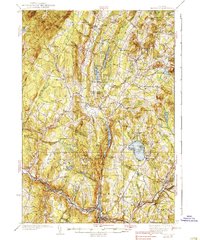 1928 Hardwick1938 Print · USGSUpper Vermont at the end of the 1920s is seen here through its network of district schools and valley rail lines. Genealogists can trace family landmarks like Jackson Bridge or locate vanished schoolhouses such as Beeler Sch and Speir Sch.
 - 1934 Map of Hardwick
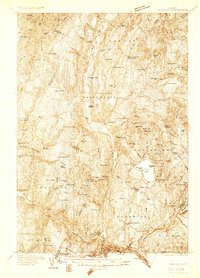 1934 Hardwick1934 Print · USGSUpper Vermont's hill towns and river valleys are captured here in the mid-1930s, showing a landscape tied to the Lamoille River and small-town industry. Researchers can trace dozens of rural schoolhouses like Collinsville Sch and landmarks such as Jackson Bridge.
 - 1938 Map of Hardwick
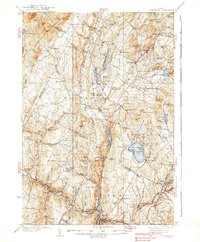 1938 Hardwick1938 Print · USGSVermont’s northern hills and the Lamoille River valley are shown in the late 1930s, documenting a time when rural schools and the railroad connected the highlands. Trace family roots through sites like Hazen Road Sch, Greensboro Bend, and the ST JOHNSBURY AND LAKE CHAMPLAIN RR.2 unique versions available
 - 1939 Map of Plainfield
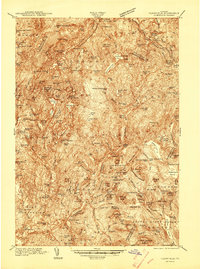 1939 Plainfield1939 Print · USGSVermont's granite-and-timber country is captured here on the eve of the 1940s, when remote rail lines still connected upland villages. Genealogists can trace family names at the Old West Ch, Hollister Hill Sch, and the isolated Lanesboro rail stop.
 - 1940 Map of Plainfield, 1953 Print
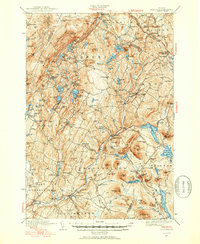 1940 Plainfield1953 Print · USGSVermont's hill country is captured here just before the war, showing a landscape defined by small farms and upland schools. Genealogists can locate family landmarks at Maple Cors Calais PO, Old West Ch, and the St Johnsbury and Lake Champlain RR.2 unique versions available
 - 1943 Map of Plainfield
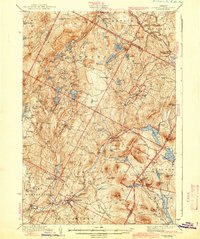 1943 Plainfield1943 Print · USGSVermont's highland farming and rail communities are captured here in the 1940s as the state's rural landscape remained densely settled. Genealogists can locate family-named landmarks like Hollister Hill Sch, trace the Montpelier and Wells River RR, or find the Old West Ch near Kent Cors.2 unique versions available
 - 1950 Map of Lake Champlain
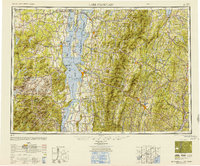 1950 Lake Champlain1950 Print · USGSThe Lake Champlain valley and its surrounding peaks are captured in detail during the late 1940s, showing the vital rail and road connections between New York and Vermont. Researchers can trace the routes of the Central Vermont Railway or locate old industrial centers like Mineville and Witherbee.2 unique versions available
 - 1951 Map of Hardwick, 1952 Print
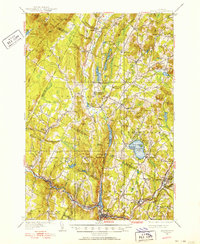 1951 Hardwick1952 Print · USGSThe Northeast Kingdom's rugged highlands and river valleys are captured here in the early fifties, centering on the granite and rail hub of Hardwick. Researchers can trace old family schoolhouses like Wright Sch and Stan Sch or follow the route of the St Johnsbury and Lake Champlain Railroad.4 unique versions available
 - 1953 Map of Plainfield, 1954 Print
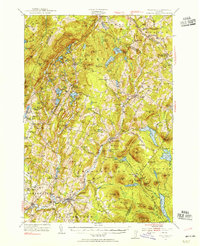 1953 Plainfield1954 Print · USGSThe hills of Washington and Caledonia counties are captured here in the early fifties, showing the region's transition from old upland farming to a wood-and-water economy. Researchers can locate vanished landmarks like Maple Cor Calais PO, the Dwinell Sch, and the St Johnsbury and Lake Champlain RR.4 unique versions available
 - 1958 Map of Lake Champlain
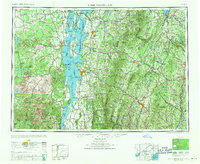 1958 Lake Champlain1958 Print · USGSThe Champlain Valley and surrounding high peaks are captured here in the late fifties, showcasing the cross-border region from the Adirondacks to the Green Mountains. Researchers can trace historic rail routes like the Rutland Railway or locate old valley settlements such as Keeseville and Vergennes.2 unique versions available
 - 1962 Map of Lake Champlain, 1975 Print
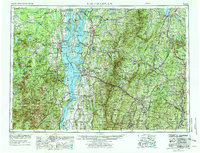 1962 Lake Champlain1975 Print · USGSLake Champlain and the high peaks of the Adirondacks and Green Mountains are captured here during the mid-twentieth century. Researchers can trace the industrial legacy of the Lyon Mountain Mine and the rail corridors of the Central Vermont RR and Delaware & Hudson RR.3 unique versions available
 - 1986 Map of Wolcott, 1987 Print
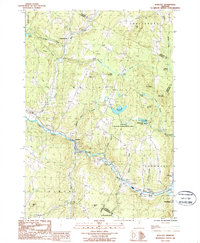 1986 Wolcott1987 Print · USGSVermont's Lamoille River valley and the surrounding uplands are captured here in the mid-1980s as the region maintained its rural and recreational character. Trace the layout of riverside settlements like Wolcott and Pottersville or locate family landmarks near Scribner Hill and North Wolcott.2 unique versions available
 - 1986 Map of Woodbury, 1987 Print
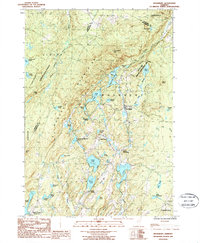 1986 Woodbury1987 Print · USGSCentral Vermont in the mid-1980s was characterized by a dense network of glacial lakes and small mountain settlements. Genealogists and local historians can trace the community structures of South Woodbury and North Calais or locate old Quarries and Cem markers.2 unique versions available
 - 1986 Map of Cabot, 1987 Print
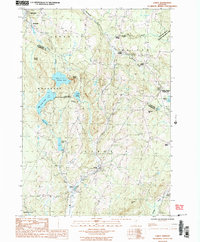 1986 Cabot1987 Print · USGSCentral Vermont in the mid-eighties was a landscape of river-valley hamlets and upland ponds. Genealogists and local historians can trace the settlement footprints of Cabot, South Walden, and the rail-linked Walden Heights.2 unique versions available
 - 1988 Map of Montpelier
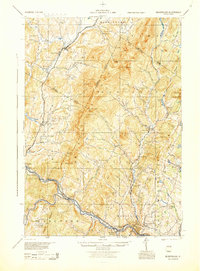 1988 Montpelier1988 Print · USGSThe area surrounding Vermont’s capital city appears here during the early 1940s, showing the vital rail-and-river network. Genealogists can trace family names across a dozen district schools and rural sites like Middlesex Center and the Talc Mine.2 unique versions available
 - 1989 Map of Mount Mansfield
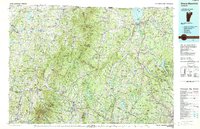 1989 Mount Mansfield1989 Print · USGSNorthern Vermont in the late eighties remains a landscape of deep forests and isolated mountain villages. Genealogists and hikers can trace the old rail lines of the Canadian Pacific RR or locate family sites near Lake Willoughby and Brownington Village.
 - 2012 Map of Woodbury, 2012 Print
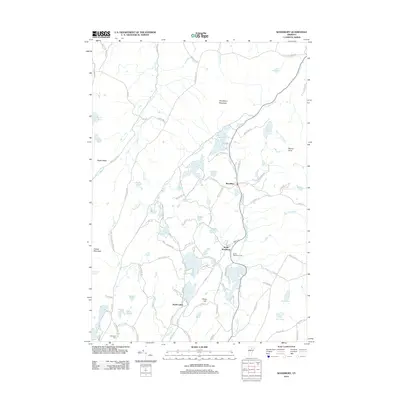 2012 Woodbury2012 Print · USGSVermont's granite-veined highlands are documented in this 2012 survey during a period of modern rural continuity. Genealogists and local historians can trace family roots through landmarks like South Woodbury Cem, Robinson Cem, and the historic village of Woodbury.
 - 2012 Map of Cabot, 2012 Print
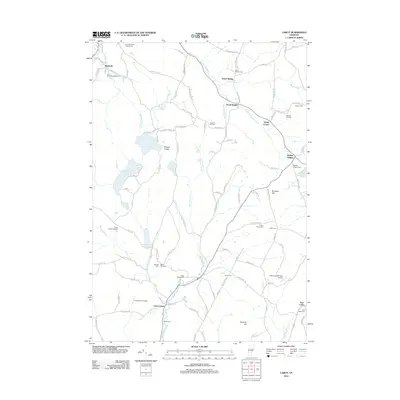 2012 Cabot2012 Print · USGSUpper Vermont hill country at the start of the 2010s shows a landscape of deep valleys and highland ponds centered on the Winooski River. Genealogists can locate numerous family and town burying grounds like Stevens Hill Cem, West Hill Cem, and Fairview-Saint Roberts Cem.
 - 2012 Map of Wolcott, 2012 Print
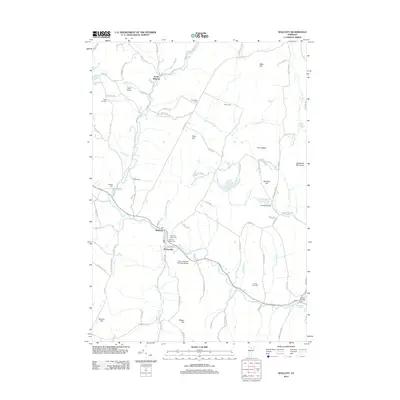 2012 Wolcott2012 Print · USGSThe Lamoille River valley in Northern Vermont is shown here in the early twenty-first century as a landscape of rural towns and rugged hills. Trace local family history through numerous landmarks like the Fisher Covered Railroad Bridge, Pottersville, and the Fairmont Upper Cem.
 - 2015 Map of Cabot, 2015 Print
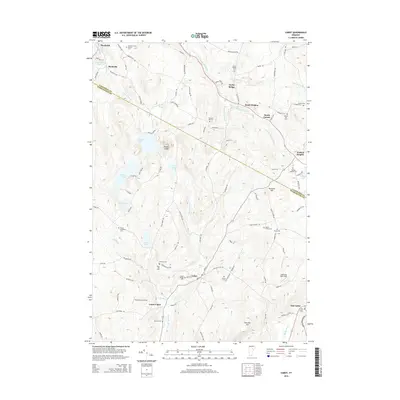 2015 Cabot2015 Print · USGSCabot and the surrounding mountain townships are shown here in the mid-2010s, capturing the enduring rural character of Washington and Caledonia counties. Genealogists can locate numerous burial sites such as Westhill Cem and South Walden Cem, or trace the highlands around Nichols Ledge.
 - 2015 Map of Woodbury, 2015 Print
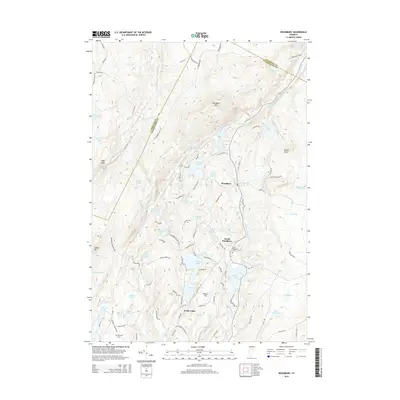 2015 Woodbury2015 Print · USGSVermont's highland pond country is detailed here in the mid-2010s, showing a landscape defined by small villages and an abundance of water. Genealogists and hikers can trace old family cemetery sites like South Woodbury Cem or explore the shores of Greenwood Lake and Mirror Lake.
 - 2015 Map of Wolcott, 2015 Print
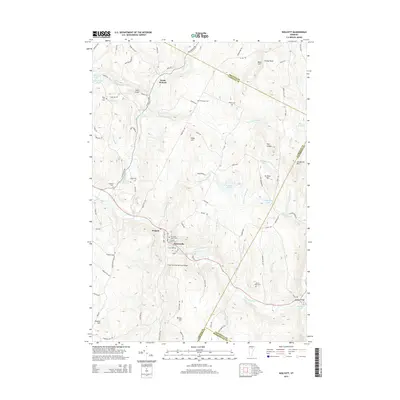 2015 Wolcott2015 Print · USGSLamoille County during the mid-2010s shows a landscape defined by the winding Lamoille River and its varied timbered hills. Genealogists and local historians can locate several family cemeteries including Fairmont Upper Cem and Hubbell Cem, or trace the path of the Fisher Covered Railroad Bridge.
 - 2018 Map of Wolcott, 2018 Print
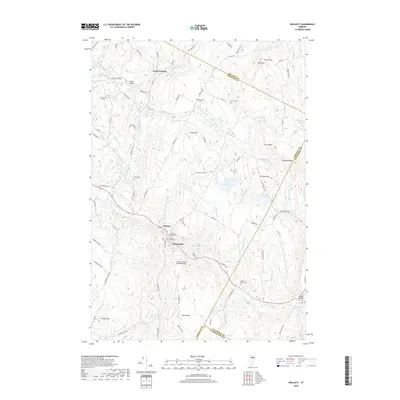 2018 Wolcott2018 Print · USGSVermont's Lamoille River valley comes alive in this 2018 record of rural village and mountain life. Genealogists and local historians can trace legacy sites like the Fisher Covered Railroad Bridge and several family burial grounds, including the Jacob Paine Cem and Taylor Cem.
 - 2018 Map of Woodbury, 2018 Print
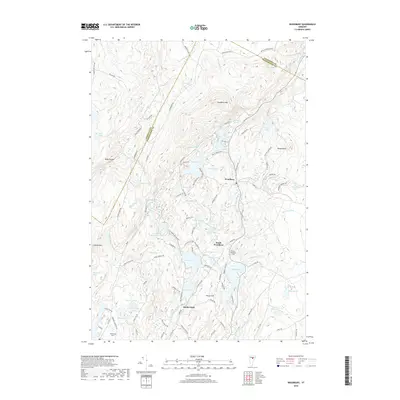 2018 Woodbury2018 Print · USGSThe Woodbury and Calais region appears here as a land of high mountain ridges and dozens of hidden basins. Researchers can trace local genealogy and industry through labels for the South Woodbury Cem, the granite-hauling Woodbury Quarry Rd, and the settlement at North Calais.
 - 2018 Map of Cabot, 2018 Print
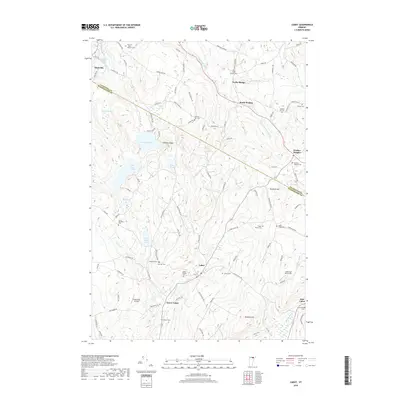 2018 Cabot2018 Print · USGSCaledonia and Washington Counties are shown here in 2018, centered on the valley where the Winooski River begins its course. Genealogists and local historians can locate several rural burial grounds, such as West Hill Cem and South Walden Cem, or trace the path of the historic Bayley Hazen Rd.
Showing maps 1-25 of 31
Top cities near Woodbury
- Montpelier historical maps
- Stowe historical maps
- Johnson historical maps
- Hyde Park historical maps
- Hardwick historical maps
- Berlin historical maps
See more
Top neighborhoods of Woodbury
Frequently asked questions
- What are the different types of historical maps available for Woodbury?
- What is the oldest map of Woodbury?
- Where can I purchase historical maps of Woodbury for my home or office?
- Where can I download high-res historical maps of Woodbury?
- Are there historical topographic maps available for Woodbury?
- Is there historical aerial imagery available for Woodbury?
- Where are historical maps of Woodbury sourced from?