1900s (20th Century) Maps of Botetourt County, Virginia
Explore 59 historic maps of Botetourt County from the 1900s (20th Century). These maps offer a rare glimpse into what life looked like during the 1900s — showing old roads, neighborhoods, homes, and landmarks that have changed or disappeared over time.
Whether you're researching your family's past, planning a metal detecting trip, or studying how Botetourt County's landscape evolved across the 1900s, these high-resolution maps are a powerful tool for exploring the history of this region.
- Focus on a specific era: All maps on this page are from the 1900s, giving you a focused view of this time period.
- See what’s changed: Compare century-old streets, trails, and buildings to today's modern landscape using overlays and satellite layers.
- Research with precision: Use these maps for genealogy, historical research, land use analysis, or educational projects.
- View, download, or print: Maps are fully viewable online in high resolution, and can be downloaded or printed for your own records.
Start exploring Botetourt County's history through authentic maps from the 1900s. This is your window into the past.
Botetourt County, VA maps
(59)- 1907 Map of Natural Bridge Special
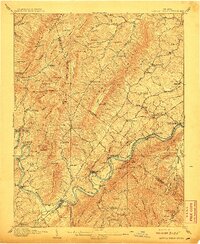 1907 Natural Bridge Special1907 Print · USGSThe James River corridor in Botetourt and Rockbridge counties is captured here just after the turn of the century. Genealogists can locate family landmarks like Rapps Mill, Dunkard Church, and the riverfront settlement of Buchanan along the Chesapeake and Ohio RR.4 unique versions available
 - 1913 Map of Eagle Rock
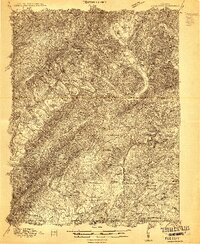 1913 Eagle Rock1913 Print · USGSBotetourt County at the dawn of the twentieth century shows a landscape tied to the James River and iron-era industry. Genealogists can trace family roots through numerous local landmarks like Salisbury Furnace, Fincastle, and the Fair Grounds.2 unique versions available
 - 1915 Map of Eagle Rock
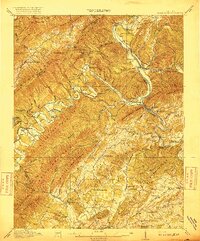 1915 Eagle Rock1915 Print · USGSBotetourt and Alleghany counties are captured here during a transitional era of mountain industry and rail expansion. Genealogists can locate family landmarks like Kyles Mills and Comptons Bridge, or trace vanished communities at Lignite and Oriskany.3 unique versions available
 - 1929 Map of Roanoke
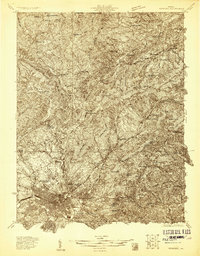 1929 Roanoke1929 Print · USGSThe Roanoke Valley is shown just before the Great Depression, documenting the area's transition from rural townships to a developing urban center. Genealogists can locate family landmarks such as Forest Chapel Sch, Coyner Springs, and the early neighborhoods of Riverdale.3 unique versions available
 - 1929 Map of Salem
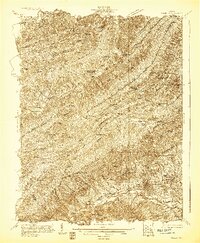 1929 Salem1929 Print · USGSThe Roanoke River valley and surrounding mountain ridges are captured here in the late 1920s as the railroad and highway networks expanded. Genealogists and researchers can trace local landmarks like Catawba Sanatorium, Webb Mill, and old schoolhouses including Rubles Sch.2 unique versions available
 - 1932 Map of Salem
 1932 Salem1932 Print · USGSThe Roanoke Valley and the high ridges of the Blue Ridge meet in this early 1930s survey of the Salem area. Genealogists can locate family landmarks like Webbs Mill, the Catawba Sanatorium, and numerous rural churches including New Hope Church.3 unique versions available
 - 1933 Map of Roanoke
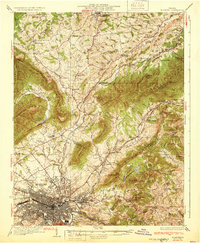 1933 Roanoke1933 Print · USGSThe Roanoke Valley in the early thirties shows a thriving rail-and-river hub surrounded by a landscape of small crossroads schools and churches. Genealogists can trace family names through landmarks like Hollins College, Gravel Hill Sch, and Trinity church.3 unique versions available
 - 1935 Map of Buena Vista
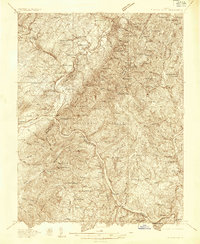 1935 Buena Vista1935 Print · USGSThe James River corridor in the mid-1930s reveals a landscape of hydroelectric power and deep-rooted mountain communities. Genealogists and historians can locate dozens of country schools and churches, from Ivory Hill Sch to Mt Zion Ch, alongside industrial sites like the LONE JACK QUARRY.
 - 1939 Map of Buena Vista
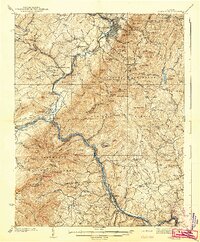 1939 Buena Vista1939 Print · USGSThe James River corridor near Buena Vista was a bustling intersection of rail and water transport in the years before World War II. Researchers can trace the early Appalachian Trail and find rural community hubs like Pedlar Mills, CCC Camp No 10, and Buffalo Forge.
 - 1940 Map of Buena Vista
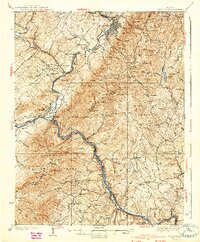 1940 Buena Vista1940 Print · USGSThe industrial and rail corridor of the James River is captured here as the region's mountain economy evolved in the 1930s. Researchers can trace the dual rail lines serving Glasgow, find CCC Camp No 10, and locate rural landmarks like Buffalo Forge and Ben Salam Sch.2 unique versions available
 - 1945 Map of Clifton Forge, 1963 Print
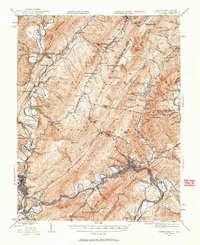 1945 Clifton Forge1963 Print · USGSThe rail and river corridors of Alleghany County are captured here at the end of the war, centered on the bustling junction of Clifton Forge. Genealogists and historians can trace old community landmarks like Union Chapel, the Rich Patch Mines, and the Deeds Sch among the ridgelines.2 unique versions available
 - 1945 Map of New Castle, 1964 Print
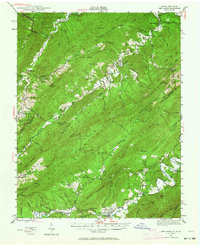 1945 New Castle1964 Print · USGSThe mountain gaps of Craig and Alleghany Counties are captured here at the end of the war, when mining and rail transport still defined the local economy. Researchers can trace the legacy of industry and faith at Jordan Mines, Lignite, and Shoafs Chapel.
 - 1946 Map of Millboro, 1957 Print
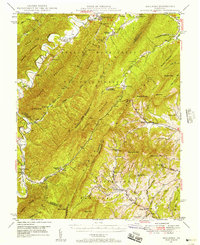 1946 Millboro1957 Print · USGSThe Alleghany and Rockbridge county lines are mapped here in the mid-1940s, highlighting a rugged corridor of industry and nature. Researchers can trace the Chesapeake and Ohio RR through the Lick Run Tunnel or locate Long Dale Furnace and Rockbridge Alum Springs.2 unique versions available
 - 1947 Map of New Castle
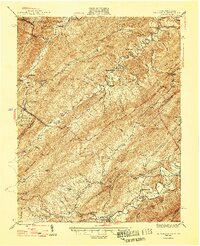 1947 New Castle1947 Print · USGSThe Virginia and West Virginia borderlands in the late 1940s reveal a landscape of mountain resorts and industrial remnants. You can trace the legacy of mineral spas at Sweet Springs and locate early community hubs like Jordan Mines and the Fenwick Mine.2 unique versions available
 - 1947 Map of Roanoke, 1948 Print
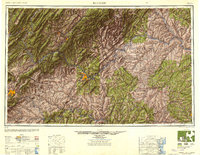 1947 Roanoke1948 Print · USGSCentral Virginia in the late 1940s reveals a region defined by its great mountain ridges and the powerful river-and-rail economy connecting Roanoke to Lynchburg. Researchers can trace the path of the Virginian RR and locate historic county seats like Charlotte Court House.2 unique versions available
 - 1949 Map of Clifton Forge
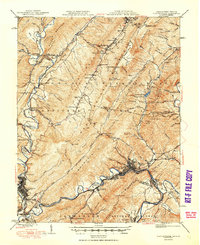 1949 Clifton Forge1949 Print · USGSThe industrial corridor of the Alleghany Highlands thrives in the late 1940s as rail and river networks converge. Researchers can trace historic family-named landmarks and mountain settlements like Carloover, Rich Patch Mines, and Union Chapel.3 unique versions available
 - 1949 Map of Millboro
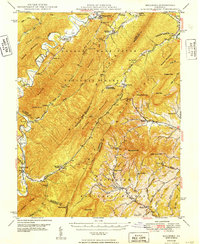 1949 Millboro1949 Print · USGSThe Virginia highlands between Bath and Rockbridge counties were still deeply defined by their iron-industry and railroad roots in the late 1940s. Genealogists and researchers can trace old family settlements at Nimrod Hall, visit historic sites like Long Dale Furnace, and locate rural landmarks such as Sharon Sch.2 unique versions available
 - 1950 Map of Peaks of Otter, 1952 Print
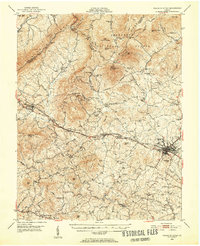 1950 Peaks of Otter1952 Print · USGSThe Blue Ridge highlands meet the Piedmont here in the mid-century, defined by the mountain peaks and the busy Norfolk and Western rail line. Genealogists can trace family landmarks like Walnut Grove Ch, Joppa Mill, and the small community of Thaxton.5 unique versions available
 - 1950 Map of Buena Vista, 1958 Print
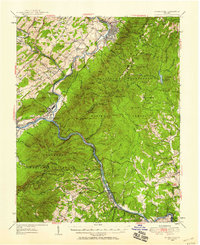 1950 Buena Vista1958 Print · USGSThe Blue Ridge high country is captured here at mid-century as the Blue Ridge Parkway and Appalachian Trail were becoming established. Genealogists and historians can trace family locations near Pedlar Mills, Buffalo Forge, and the riverside rail junction at Glasgow.2 unique versions available
 - 1952 Map of Buena Vista
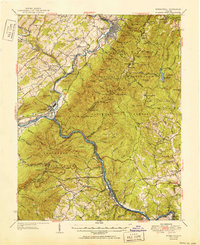 1952 Buena Vista1952 Print · USGSThe James River corridor and the Blue Ridge mountains meet here during the mid-twentieth century, showcasing a landscape of rail-fed industrial towns and remote forest settlements. Trace the heritage of Pedlar Mills and Buffalo Forge, or find local landmarks like Wesley Chapel and the Bluff Mtn Lookout Tower.2 unique versions available
 - 1955 Map of Bluefield
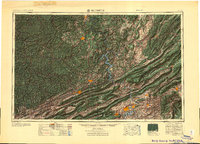 1955 Bluefield1955 Print · USGSThe Central Appalachian borderlands come alive in the mid-fifties, showing the coal and rail networks connecting Bluefield to Beckley. Researchers can trace the industrial landscape of the New River Ordnance Plant and the terrain of Burkes Garden.
 - 1957 Map of Bluefield, 1967 Print
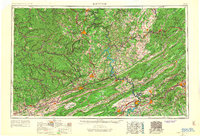 1957 Bluefield1967 Print · USGSThe heart of Central Appalachia in the mid-fifties is defined by the winding rail lines and river valleys of the coalfields. Researchers can trace the industrial footprints of towns like Welch and Princeton or locate landmarks such as the Bluestone Reservoir and Claytor Lake.2 unique versions available
 - 1959 Map of Roanoke
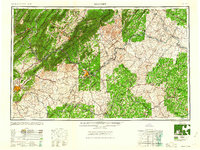 1959 Roanoke1959 Print · USGSCentral Virginia and the Blue Ridge appear in great detail during the late fifties, showcasing the transition from mountain industry to Piedmont farmland. Trace the path of the Norfolk and Western railroad or find old river towns like Appomattox and Amelia Court House.
 - 1961 Map of Bluefield
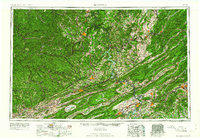 1961 Bluefield1961 Print · USGSThe coalfields and mountain ridges of southern West Virginia and southwest Virginia are captured in the early sixties. Genealogists can trace family ties through rail-linked towns like Princeton and Richlands or along the shores of Bluestone Reservoir.
 - 1961 Map of Buchanan, 1963 Print
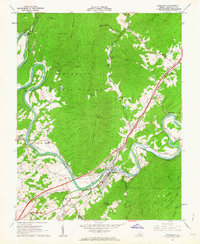 1961 Buchanan1963 Print · USGSBotetourt County in the early sixties showcases the industrial and transit corridor of the James River at Buchanan. Researchers can trace family history through several river-town settlements and country churches like Mt Joy Ch and Mt Zion Ch.3 unique versions available
Showing maps 1-25 of 59
Top cities of Botetourt County
- Cloverdale historical maps
- Daleville historical maps
- Buchanan historical maps
- Fincastle historical maps
- Troutville historical maps
- Eagle Rock historical maps
See more
Frequently asked questions
- What are the different types of historical maps available for Botetourt County?
- What is the oldest map of Botetourt County?
- Where can I purchase historical maps of Botetourt County for my home or office?
- Where can I download high-res historical maps of Botetourt County?
- Are there historical topographic maps available for Botetourt County?
- Is there historical aerial imagery available for Botetourt County?
- Where are historical maps of Botetourt County sourced from?