Old Maps of Charles City County, Virginia
Explore 103 old maps of Charles City County, spanning from 1894 to today. These high-resolution historic maps reveal how streets, neighborhoods, landmarks, and natural features evolved over time — perfect for genealogy, metal detecting, research, and local history exploration.
What you can do with these maps:
- See how Charles City County changed over time: Compare historical maps to modern-day views to trace roads, homesites, rail lines & more.
- View detailed metadata: Each map includes creators, publishers, year, scale, and archive source.
- Overlay maps with satellite & LiDAR: Visualize the past alongside modern tools to explore terrain & human change.
- Trusted historical sources: Maps sourced from the USGS, Library of Congress, and other archives.
- Access maps your way: View online, download high-res files, or order prints for personal or research use.
Start exploring old maps of Charles City County to uncover forgotten places, hidden landmarks, and the deep history beneath your feet.
Charles City County, VA maps
(103)- 1894 Map of Bermuda Hundred
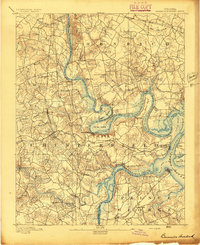 1894 Bermuda Hundred1894 Print · USGSBermuda Hundred and the James River winding toward the Chesapeake are captured here in the late nineteenth century. Researchers can trace the legacy of the Civil War through Drewry Bluff, Malvern Hill, and the engineering of the Dutch Gap Canal.5 unique versions available
 - 1917 Map of Toano, 1959 Print
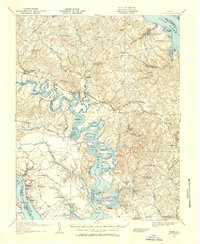 1917 Toano1959 Print · USGSCoastal Virginia during the early twentieth century shows a landscape where rail lines and steamboat routes intersect. Genealogists can trace family roots through numerous sites like Hickory Neck Church, One Eye School, and Barrets Ferry.
 - 1918 Map of Charles City
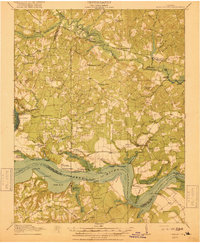 1918 Charles City1918 Print · USGSCoastal Virginia at the end of the Great War reveals a landscape of riverfront wharves and rural schoolhouses. Genealogists can trace family roots through sites like the Samaria Indian School, Parish Hill Church, and Harrisons Landing.4 unique versions available
 - 1918 Map of Toano
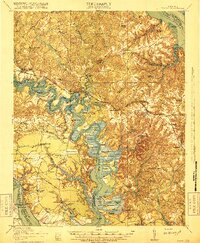 1918 Toano1918 Print · USGSThe Virginia Peninsula comes alive in the years following the Great War, showing a landscape of river landings and rail-side villages. Researchers can trace the path of the Chesapeake and Ohio through Toano or locate early rural schoolhouses like One Eye School and Brickbat School.3 unique versions available
 - 1919 Map of Surry
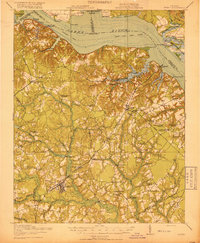 1919 Surry1919 Print · USGSSurry County and the James River tidewater are captured in the late teens, when timber and steamboats still drove the local economy. Researchers can locate vanished landmarks like Spratleys Mill, the Old Courthouse, and numerous schoolhouses including Rough School and Cypress School.3 unique versions available
 - 1938 Map of Dutch Gap
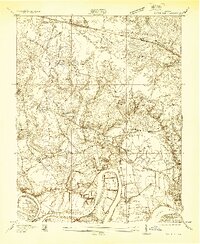 1938 Dutch Gap1938 Print · USGSHenrico County and the James River loops are seen here in the late thirties, when military breastworks still crisscrossed the rural landscape. Researchers can locate Richmond National Battlefield Park and ancestral sites like Montague Cem and the Union Grove Chapel.
 - 1943 Map of Dutch Gap
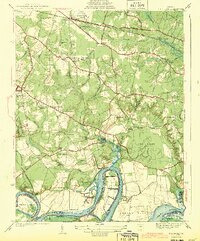 1943 Dutch Gap1943 Print · USGSHenrico County during the early years of the Second World War shows a landscape of historic river plantations and Civil War fortifications. Researchers can locate family landmarks like Aiken House and rural community hubs including Gravel Hill Sch and Fourmile Creek Ch.2 unique versions available
 - 1943 Map of Hopewell
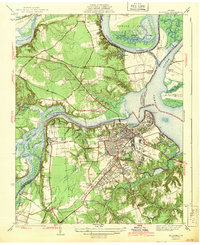 1943 Hopewell1943 Print · USGSMid-century Hopewell and the historic James River peninsula come to life in this wartime survey of the river-and-rail hub. Genealogists and historians can trace family locations near Bermuda Hundred, the military grounds at Camp Lee, and local landmarks like Enon Ch.3 unique versions available
 - 1943 Map of Richmond, 1972 Print
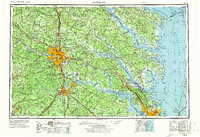 1943 Richmond1972 Print · USGSCoastal Virginia and the state capital are shown in detail during the mid-century era of infrastructure expansion. Genealogists and historians can trace the grounds of Richmond Nat Battlefield Park, locate the Yorktown Nat Cem, or follow the many rural routes through Amelia Court House and Tappahannock.
 - 1946 Map of Bermuda Hundred
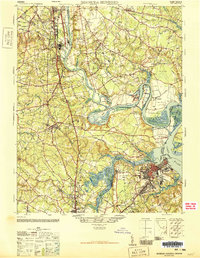 1946 Bermuda Hundred1946 Print · USGSThe James River corridor south of Richmond is shown here just after the war, where industrial hubs like Hopewell meet colonial-era landscapes. Genealogists and historians can trace the foundations of Bermuda Hundred, the grounds of Camp Lee, and landmarks like Shirley or Drewrys Bluff.2 unique versions available
 - 1949 Map of Richmond, 1951 Print
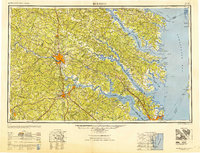 1949 Richmond1951 Print · USGSCoastal Virginia in the years following World War II remained a landscape of historic river towns and expanding military bases. Genealogists and historians can trace the rail lines of the Southern Ry and locate established landmarks from Camp Lee to the remote reaches of Dragon Swamp.
 - 1952 Map of Brandon, 1957 Print
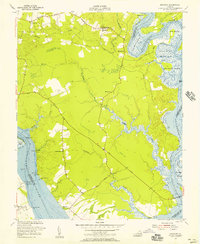 1952 Brandon1957 Print · USGSCharles City County and the James River shoreline are captured here in the early fifties, showing a landscape of riverfront landings and historic tidewater tracts. Researchers can locate Liberty Cem, the rural church at Mt Zion Ch, and old industrial sites like the Brick Kilns.
 - 1952 Map of Norge, 1958 Print
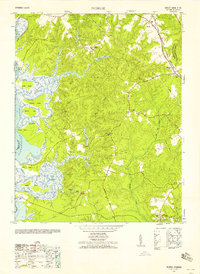 1952 Norge1958 Print · USGSThe Virginia Peninsula comes alive in the early fifties, documenting a world of river landings and small crossroads communities. Genealogists and historians can trace family-named sites like Warren Mill, find the Brickbat School, or locate the Barretta Ferry crossing.
 - 1952 Map of Hopewell, 1959 Print
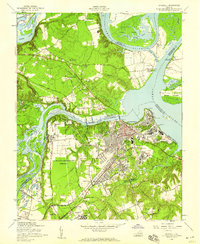 1952 Hopewell1959 Print · USGSThe industrial hub of Hopewell and the grounds of Fort Lee are captured here during the early fifties. Researchers can trace the heritage of the James River through landmarks like Bermuda Hundred, Walthall Mill, and the historic City Point waterfront.
 - 1952 Map of Dutch Gap, 1959 Print
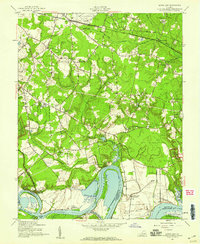 1952 Dutch Gap1959 Print · USGSHenrico County in the early fifties remains a landscape of river plantations and Civil War battlements along the James River. Genealogists and historians can trace family sites at Varina Plantation, find Second Bethel Ch, or locate markers within the National Cem and Richmond National Battlefield Park.
 - 1953 Map of Norge
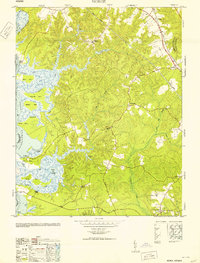 1953 Norge1953 Print · USGSJames City County is shown in the early fifties as the rural landscape surrounding Norge and Lightfoot began to modernize. Researchers can trace historic river access at Shipyard Landing and locate old community hubs like Warren Mill or Jerusalem Church.
 - 1953 Map of Providence Forge, 1957 Print
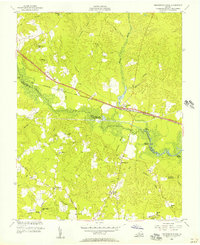 1953 Providence Forge1957 Print · USGSThe border of New Kent and Charles City counties is defined by the Chickahominy River in the early 1950s. Genealogists and local historians can trace the exact locations of many rural institutions, including Emmaus Ch, Binns Store, and the Alpine Sch.
 - 1953 Map of Walkers, 1957 Print
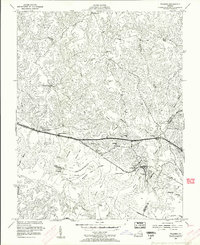 1953 Walkers1957 Print · USGSCoastal Virginia life in the early fifties unfolds along the banks of the Chickahominy River and the local rail corridor. Genealogists and historians can trace riverside settlements and country churches, from the Lanexa schoolhouse to Tsena Commoko and Windsor Shades.
 - 1953 Map of Westover, 1957 Print
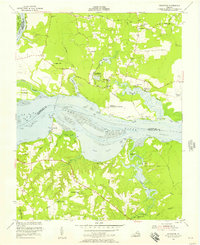 1953 Westover1957 Print · USGSThe James River shoreline in the early fifties shows a landscape defined by historic estates and riverfront commerce. Researchers can locate Berkeley, the Evelynton Plantation, and rural churches like Merchant Hope Ch.
 - 1953 Map of Charles City, 1957 Print
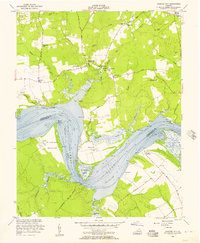 1953 Charles City1957 Print · USGSThe James River bends through this mid-century Tidewater landscape, documenting a region of historic estates and riverfront landings. Genealogists and historians can trace the grounds of Flowerdew Hundred, Upper Brandon, and the Sherwood Forest Home of Pres Tyler.
 - 1953 Map of Roxbury, 1957 Print
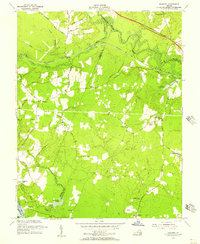 1953 Roxbury1957 Print · USGSCharles City and Henrico counties appear here in the early fifties, documenting a landscape of riverfront plantations and inland crossroads. Researchers can trace rural landmarks like the Samaria Indian Sch, the National Cem, and family sites like Hughes Store.
 - 1953 Map of Charles City, 1960 Print
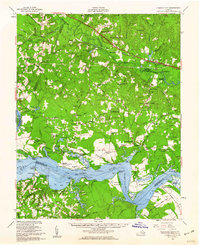 1953 Charles City1960 Print · USGSCoastal Virginia during the mid-fifties reveals a landscape defined by historic James River plantations and rural crossroads. Genealogists and historians can trace family-named sites from Berkeley and Westover to local landmarks like Ednas Mill and Merchant Hope Ch.2 unique versions available
 - 1954 Map of Claremont, 1957 Print
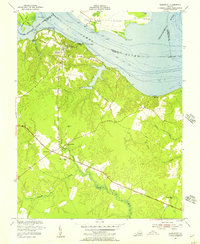 1954 Claremont1957 Print · USGSSurry County river life and crossroads farming define this mid-fifties landscape along the James River. Genealogists and local historians can trace the foundations of Claremont, locate the Spring Grove Sch, and find family sites like Debricks Cem.
 - 1959 Map of Richmond
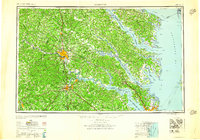 1959 Richmond1959 Print · USGSMid-century Virginia is captured here at its most vital rail and river junctions, from the capital city to the Chesapeake Bay. Genealogists and historians can trace the development of colonial settlements like Williamsburg and military landmarks including Fort Monroe and Camp Lee.
 - 1964 Map of Richmond
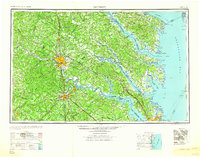 1964 Richmond1964 Print · USGSCoastal and central Virginia are mapped during the mid-twentieth century, showing the critical intersection of rail, river, and military life. Genealogists can trace family roots through rural county seats like Amelia or find vanished coastal neighborhoods near Phoebus and Hilton Village.
Showing maps 1-25 of 103
Top cities of Charles City County
Frequently asked questions
- What are the different types of historical maps available for Charles City County?
- What is the oldest map of Charles City County?
- Where can I purchase historical maps of Charles City County for my home or office?
- Where can I download high-res historical maps of Charles City County?
- Are there historical topographic maps available for Charles City County?
- Is there historical aerial imagery available for Charles City County?
- Where are historical maps of Charles City County sourced from?