1900s (20th Century) Maps of Marshall, Virginia
Explore 15 historic maps of Marshall from the 1900s (20th Century). These maps offer a rare glimpse into what life looked like during the 1900s — showing old roads, neighborhoods, homes, and landmarks that have changed or disappeared over time.
Whether you're researching your family's past, planning a metal detecting trip, or studying how Marshall's landscape evolved across the 1900s, these high-resolution maps are a powerful tool for exploring the history of this region.
- Focus on a specific era: All maps on this page are from the 1900s, giving you a focused view of this time period.
- See what’s changed: Compare century-old streets, trails, and buildings to today's modern landscape using overlays and satellite layers.
- Research with precision: Use these maps for genealogy, historical research, land use analysis, or educational projects.
- View, download, or print: Maps are fully viewable online in high resolution, and can be downloaded or printed for your own records.
Start exploring Marshall's history through authentic maps from the 1900s. This is your window into the past.
Marshall, VA maps
(15)- 1943 Map of Orlean, 1961 Print
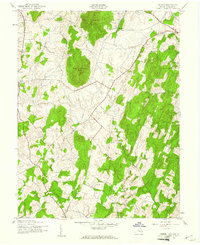 1943 Orlean1961 Print · USGSFauquier County at the height of the second World War reveals a quiet landscape of mountain peaks and crossroads communities. Genealogists and local historians can locate rural landmarks like Wilsons Store, Orlean Ch, and the Morgantown Sch among the slopes of Big Cobbler Mtn.
 - 1943 Map of Marshall, 1961 Print
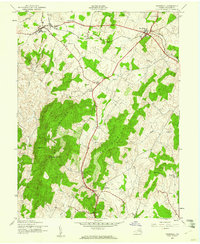 1943 Marshall1961 Print · USGSUpper Fauquier County is captured during the early 1940s, showing the agricultural heartland between the Water Mountains and Pignut Mountain. Genealogists and historians can trace the foundations of Marshall and The Plains, locating local landmarks like School No 18 and the Fairgrounds.
 - 1943 Map of Rectortown, 1961 Print
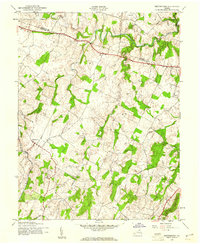 1943 Rectortown1961 Print · USGSNorthern Virginia's Piedmont landscape is captured here during the early years of the Second World War. Researchers can trace the Southern railroad line through Rectortown or locate family history near Ivy Hill Cem and Atoka.
 - 1944 Map of Marshall
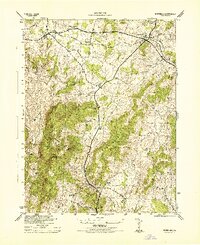 1944 Marshall1944 Print · USGSFauquier County at the height of the Second World War remains a landscape of rail-connected villages and mountain ridges. Genealogists and local historians can trace rural school locations like Public School No 18 and Bethel School or landmarks like the Fair Grounds.
 - 1944 Map of Rectortown
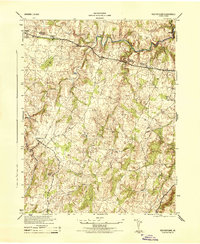 1944 Rectortown1944 Print · USGSFauquier and Loudoun counties are captured in the mid-1940s during a period of transition for northern Virginia's rural landscape. Researchers can trace the Southern rail corridor through Rectortown or locate family history at Ivy Hill Cemetery and the Milan Gristmill.
 - 1944 Map of Orlean
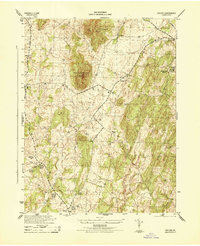 1944 Orlean1944 Print · USGSMid-century Fauquier County reveals a landscape of Piedmont ridges and rural crossroads communities connected by winding country roads. Trace local heritage through landmarks like Morgantown School, the Mt Nebo Church, and numerous river fords near Orlean.
 - 1948 Map of Washington
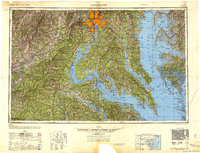 1948 Washington1948 Print · USGSThe Potomac and Chesapeake regions in the late 1940s reveal a landscape of expanding military reach and deep-rooted Tidewater settlements. Trace old rail corridors like the Richmond Fredericksburg & Potomac RR or locate landmarks like the Wakefield Washington Monument and St. Marys College.2 unique versions available
 - 1957 Map of Washington, 1966 Print
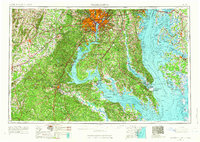 1957 Washington1966 Print · USGSThe mid-Atlantic region during the mid-fifties and early sixties reveals a landscape of growing suburbs and vital military outposts. Researchers can trace historic river towns and shorelines from Alexandria to the Hooper Islands and St Clements Island.5 unique versions available
 - 1961 Map of Washington
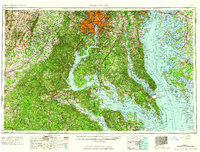 1961 Washington1961 Print · USGSThe mid-Atlantic region in the late fifties is presented in remarkable detail, from the Blue Ridge foothills to the Chesapeake Eastern Shore. Researchers can trace historic river landings and military sites like Mount Vernon, Fort Belvoir, and Point Lookout.2 unique versions available
 - 1970 Map of Orlean, 1971 Print
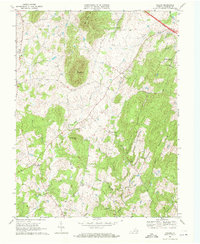 1970 Orlean1971 Print · USGSFauquier County's rural landscape is captured here in the early seventies, showing a network of historic crossroads and mountain ridges. You can trace family homesteads near Orlean, identify local landmarks like Big Cobbler Mtn, and locate old meeting houses such as Thumb Run Ch.4 unique versions available
 - 1970 Map of Rectortown, 1972 Print
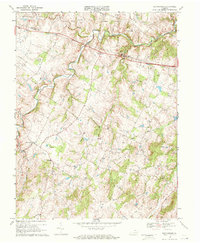 1970 Rectortown1972 Print · USGSFauquier and Loudoun counties appear in the early 1970s as a landscape of established horse farms and historic hamlets. Researchers can trace the Southern rail line through Rectortown, find local landmarks like Ivy Hill Cem, and locate the Middleburg Training Track.3 unique versions available
 - 1970 Map of Marshall, 1972 Print
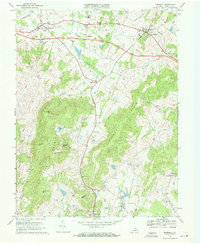 1970 Marshall1972 Print · USGSFauquier County’s horse country and Piedmont ridges are captured here in the early seventies as new infrastructure began to reshape the landscape. Local historians can trace family-named peaks like England Mtn and rural crossroads such as Brookes Corner and Meadowville.2 unique versions available
 - 1982 Map of Washington West, 1983 Print
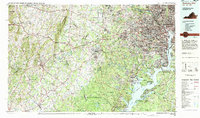 1982 Washington West1983 Print · USGSThe Virginia and Maryland suburbs were undergoing intense development in the early eighties as the capital region expanded outward. Researchers can trace the footprint of Cold War-era defense sites like Fort Belvoir and Vint Hill Farms Station alongside growing academic centers like George Mason University.
 - 1986 Map of Washington West
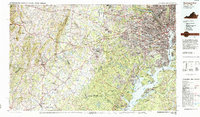 1986 Washington West1986 Print · USGSNorthern Virginia and the D.C. metro area are captured here in the mid-eighties as suburban growth began to meet rural Fauquier County. Trace the development of the corridor from Alexandria out to Dulles and the preserved lands of Prince William Forest Park.2 unique versions available
 - 1989 Map of Washington
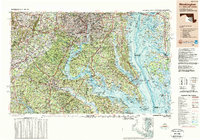 1989 Washington1989 Print · USGSThe Potomac River valley and Chesapeake Bay are shown in comprehensive detail during the late 1980s. Genealogists and historians can trace the transition from urban Alexandria to the rural Northern Neck, locating landmarks like Mount Vernon and Stratford Hall.
End of results
Showing maps 1-15 of 15
Top cities near Marshall
- Gainesville historical maps
- Warrenton historical maps
- Shenandoah Farms historical maps
- Haymarket historical maps
- Bull Run Mountain Estates historical maps
- Middleburg historical maps
See more
Top neighborhoods of Marshall
Frequently asked questions
- What are the different types of historical maps available for Marshall?
- What is the oldest map of Marshall?
- Where can I purchase historical maps of Marshall for my home or office?
- Where can I download high-res historical maps of Marshall?
- Are there historical topographic maps available for Marshall?
- Is there historical aerial imagery available for Marshall?
- Where are historical maps of Marshall sourced from?