1960s Maps of Mecklenburg County, Virginia
Explore 21 historic maps of Mecklenburg County from the 1960s. These maps offer a rare glimpse into what life looked like during the 1960s — showing old roads, neighborhoods, homes, and landmarks that have changed or disappeared over time.
Whether you're researching your family's past, planning a metal detecting trip, or studying how Mecklenburg County's landscape evolved across the 1960s, these high-resolution maps are a powerful tool for exploring the history of this region.
- Focus on a specific era: All maps on this page are from the 1960s, giving you a focused view of this time period.
- See what’s changed: Compare century-old streets, trails, and buildings to today's modern landscape using overlays and satellite layers.
- Research with precision: Use these maps for genealogy, historical research, land use analysis, or educational projects.
- View, download, or print: Maps are fully viewable online in high resolution, and can be downloaded or printed for your own records.
Start exploring Mecklenburg County's history through authentic maps from the 1960s. This is your window into the past.
Mecklenburg County, VA maps
(21)- 1962 Map of Greensboro
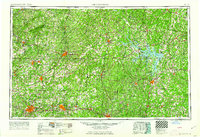 1962 Greensboro1962 Print · USGSThe Piedmont region along the Virginia and North Carolina border comes alive in the early 1960s, showing a landscape defined by industry and new reservoirs. Trace the path of the Virginian RR or explore the early development of Greensboro and Durham.
 - 1966 Map of Greensboro
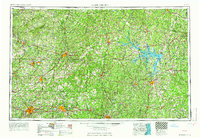 1966 Greensboro1966 Print · USGSThe North Carolina and Virginia Piedmont thrives during the mid-sixties, showcasing a landscape of textile hubs and expanding river reservoirs. Researchers can trace the rail corridors of the Southern Railway, find local landmarks like Elon College, or locate the extensive Camp Butner Military Reservation.
 - 1966 Map of Wightman, 1967 Print
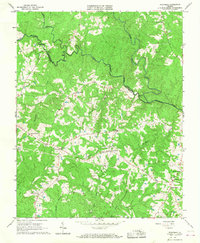 1966 Wightman1967 Print · USGSMecklenburg and Lunenburg counties are shown in the mid-1960s, where the three branches of the Meherrin River meet. Genealogists and local historians can trace family-named crossroads like Cox Corner and Russell Corner or find rural landmarks like Reekes Mill and William Grove Ch.2 unique versions available
 - 1966 Map of North View, 1967 Print
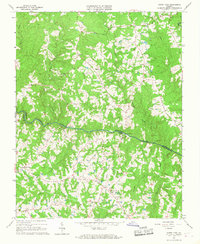 1966 North View1967 Print · USGSCrossing the Meherrin River in the 1960s, this area of Southside Virginia reveals a landscape of small communities and family-named landmarks. Genealogists and local historians can trace legacy sites like Whittles Mill, Bagleys Mills, and St Johns Cem.4 unique versions available
 - 1966 Map of Forksville, 1968 Print
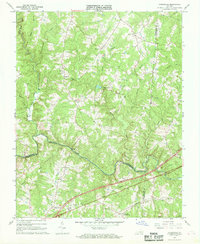 1966 Forksville1968 Print · USGSThe rural borderlands of Lunenburg, Mecklenburg, and Brunswick Counties are captured here in the mid-sixties. Local researchers can trace family landmarks like Stones Mill, the community at Forksville, and the Seaboard Coast Line railroad.2 unique versions available
 - 1966 Map of Chase City, 1968 Print
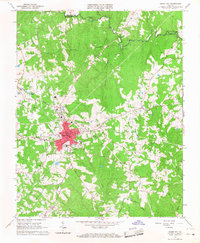 1966 Chase City1968 Print · USGSMecklenburg County is shown in the mid-sixties as a center of rural industry and community life centered around the Chase City rail corridor. Researchers can trace family roots through landmarks like Lee Sch, Bethlehem Cem, and Scotts Crossroads.2 unique versions available
 - 1966 Map of Fort Mitchell, 1968 Print
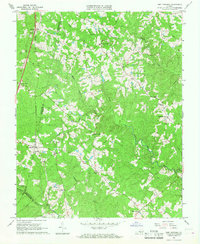 1966 Fort Mitchell1968 Print · USGSLunenburg County rural life in the mid-1960s was centered around remote crossroads, country churches, and the steel of the Southern railroad. Researchers can trace old family landmarks and community hubs like Wallaces Store, Salem Ch, and Plantersville.2 unique versions available
 - 1968 Map of Clarksville North, 1972 Print
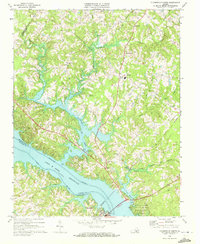 1968 Clarksville North1972 Print · USGSMecklenburg County, Virginia, transformed in the late 1960s as the Roanoke River reservoir reshaped the rural landscape. Genealogists and historians can trace family-named landmarks and community hubs like Orgainsville, St Matthews Ch, and Jones Store.4 unique versions available
 - 1968 Map of South Hill SE, 1972 Print
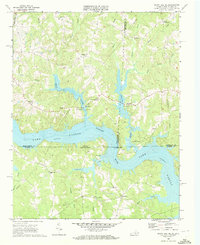 1968 South Hill SE1972 Print · USGSThe Roanoke River valley is shown transformed by the waters of Lake Gaston in the late sixties as the border region adapted to its new shoreline. Genealogists can trace numerous rural congregations and crossroads, including Barker Crossroads, Five Forks, and Holly Grove Ch.3 unique versions available
 - 1968 Map of Buffalo Springs, 1972 Print
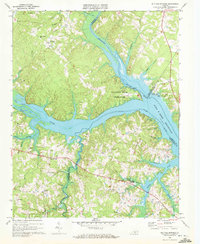 1968 Buffalo Springs1972 Print · USGSThe river forks of southern Virginia were being transformed into the massive John H Kerr Reservoir when this survey was updated in the late sixties. Researchers can trace the rural communities of Dryburg and Buffalo Springs or locate Fork Ch and several family-named creek branches.3 unique versions available
 - 1968 Map of Bracey, 1972 Print
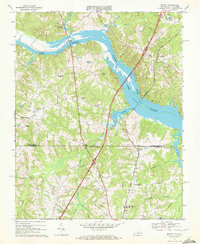 1968 Bracey1972 Print · USGSThe Virginia-North Carolina border country is shown here in the late sixties as the reservoir of Lake Gaston reshaped the local geography. Genealogists and historians can locate rural landmarks like Roanoke Zion Ch, Southside Sch, and the Seaboard Coast Line rail corridor.4 unique versions available
 - 1968 Map of Tungsten, 1972 Print
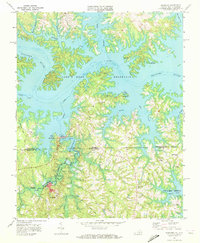 1968 Tungsten1972 Print · USGSThe Virginia-North Carolina border at the height of the Vietnam era shows a landscape shaped by mining and massive reservoirs. Researchers can find mining footprints at Tungsten and trace family roots at Antioch Ch or Island Hill Ch.2 unique versions available
 - 1968 Map of John H Kerr Dam, 1972 Print
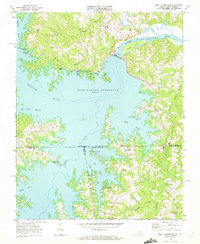 1968 John H Kerr Dam1972 Print · USGSThe Roanoke River valley is seen here just after the mid-century creation of major reservoirs along the Virginia and North Carolina border. Genealogists and local historians can trace the foundations of communities like Castle Heights and rural landmarks such as Lands Chapel and Jerusalem Ch.4 unique versions available
 - 1968 Map of Clarksville South, 1972 Print
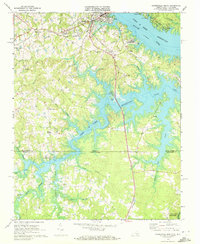 1968 Clarksville South1972 Print · USGSMecklenburg County at the end of the sixties reveals a landscape transformed by the waters of the John H Kerr Reservoir along the state line. Genealogists and local historians can trace rural communities like Buffalo Junction and Soudan, or locate old landmarks including Mt Ararat Ch and Hillcrest Sch.3 unique versions available
 - 1968 Map of Wylliesburg, 1972 Print
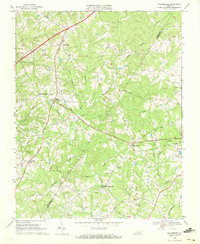 1968 Wylliesburg1972 Print · USGSSouthside Virginia's rural landscape is captured here in the late sixties, showing the crossroads culture of Charlotte and Mecklenburg counties. Researchers can trace family roots through numerous small landmarks like Hebron Ch, Red Oak, and Philbeck Crossroads.
 - 1968 Map of La Crosse, 1972 Print
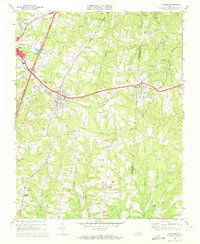 1968 La Crosse1972 Print · USGSMecklenburg County was a bustling rail corridor in the late sixties, centered on the strategic crossing at La Crosse. Genealogists can trace family landmarks like Booker-Boyd Sch and rural congregations at Miles Chapel or Mt Sinai Ch.3 unique versions available
 - 1968 Map of Boydton, 1972 Print
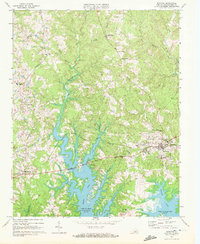 1968 Boydton1972 Print · USGSMecklenburg County enters a new era in the late sixties as the rising waters of the John H Kerr Reservoir redefine the southern landscape. Genealogists and local historians can trace family locations near Boydton, Skipwith, and Finchley, or locate rural landmarks like Jerusalem Temple and Bluestone High Sch.3 unique versions available
 - 1968 Map of Baskerville, 1972 Print
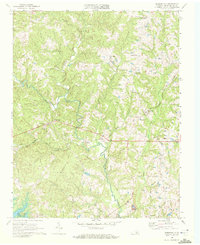 1968 Baskerville1972 Print · USGSMecklenburg County in the late sixties reveals a network of railroad crossroads and country churches before many rural schools and camps were consolidated. Genealogists can locate family landmarks such as Easter Sch, Ebenezer Ch, and the communities of Stony Cross and Baskerville.4 unique versions available
 - 1968 Map of Nelson, 1972 Print
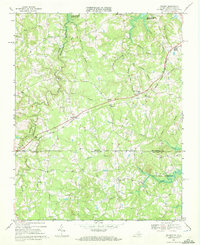 1968 Nelson1972 Print · USGSThe Virginia and North Carolina borderlands come alive in the late sixties as the rising John H Kerr Reservoir reshapes the landscape. Genealogists can trace family footprints across Nelson, Hitesburg, and the many Cem sites near Wharton Memorial Ch.3 unique versions available
 - 1968 Map of Drakes Branch, 1972 Print
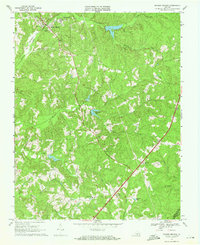 1968 Drakes Branch1972 Print · USGSCharlotte County in the late sixties centers on the town of Drakes Branch and its connection to the SOUTHERN railroad. Genealogists and historians can locate rural landmarks like Organ Hill Ch, the Bacon District Sch, and the Lookout Tower at Crafton Gate.3 unique versions available
 - 1968 Map of South Hill, 1977 Print
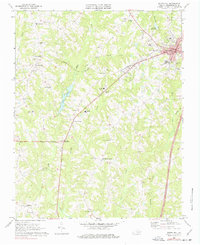 1968 South Hill1977 Print · USGSMecklenburg County in the late sixties reveals a landscape of growing towns and well-established rural crossroads. Genealogists can trace family landmarks like Oakwood Cem, rural parishes such as Lamberts Chapel, and historic school sites including Buckhorn Sch.2 unique versions available
End of results
Showing maps 1-21 of 21
Top cities of Mecklenburg County
- South Hill historical maps
- Chase City historical maps
- Bracey historical maps
- Clarksville historical maps
- La Crosse historical maps
- Boydton historical maps
See more
Frequently asked questions
- What are the different types of historical maps available for Mecklenburg County?
- What is the oldest map of Mecklenburg County?
- Where can I purchase historical maps of Mecklenburg County for my home or office?
- Where can I download high-res historical maps of Mecklenburg County?
- Are there historical topographic maps available for Mecklenburg County?
- Is there historical aerial imagery available for Mecklenburg County?
- Where are historical maps of Mecklenburg County sourced from?