Old Maps of Pheasant Run, Blacksburg
Explore 24 old maps of Pheasant Run, spanning from 1890 to today. These high-resolution historic maps reveal how streets, neighborhoods, landmarks, and natural features evolved over time — perfect for genealogy, metal detecting, research, and local history exploration.
What you can do with these maps:
- See how Pheasant Run changed over time: Compare historical maps to modern-day views to trace roads, homesites, rail lines & more.
- View detailed metadata: Each map includes creators, publishers, year, scale, and archive source.
- Overlay maps with satellite & LiDAR: Visualize the past alongside modern tools to explore terrain & human change.
- Trusted historical sources: Maps sourced from the USGS, Library of Congress, and other archives.
- Access maps your way: View online, download high-res files, or order prints for personal or research use.
Start exploring old maps of Pheasant Run to uncover forgotten places, hidden landmarks, and the deep history beneath your feet.
Pheasant Run, Blacksburg maps
(24)- 1890 Map of Christiansburg
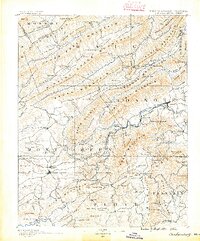 1890 Christiansburg1890 Print · USGSSouthwestern Virginia in the late nineteenth century centers on the emerging rail and resort economy. Trace the Norfolk and Western Railroad through Christiansburg and find historic resorts like Alleghany Springs.10 unique versions available
 - 1923 Map of Waiteville
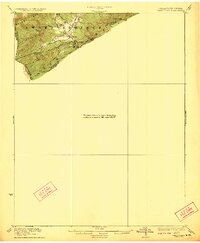 1923 Waiteville1923 Print · USGSThe mountain border between West Virginia and Virginia comes to life in the early 1920s, centered on the settlement of Waiteville. Local historians can trace the Norfolk and Western Ry line as it snakes along Potts Cr beneath Peters Mountain.2 unique versions available
 - 1931 Map of Waiteville
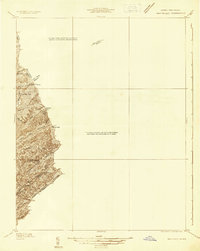 1931 Waiteville1931 Print · USGSThe Virginia and West Virginia borderlands in the early 1930s reveal a landscape of high ridges and isolated valley settlements. Genealogists can trace family footprints around Newport, Clover Hollow Ch, and the waters of Striking Creek.
 - 1932 Map of Blacksburg
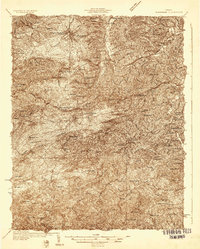 1932 Blacksburg1932 Print · USGSMontgomery and Floyd Counties are documented here in the early thirties as the regional rail and coal economy thrived. Genealogists can trace family homesteads near landmarks like the Virginia Polytechnic Institute, Merrimac Mines, and Christiansburg Industrial Sch.2 unique versions available
 - 1937 Map of Blacksburg
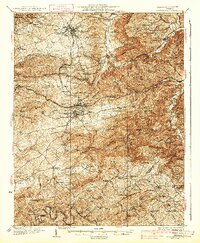 1937 Blacksburg1937 Print · USGSMontgomery County was a hub of higher education, coal mining, and rail transport in the 1930s. Researchers can trace the early grounds of the Virginia Polytechnic Institute and locate numerous rural landmarks like Merrimac Mines, Kanodee Mill, and Yellow Sulphur Springs.3 unique versions available
 - 1944 Map of Waiteville
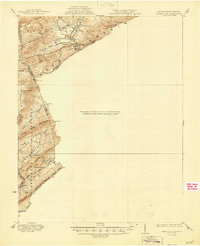 1944 Waiteville1944 Print · USGSThe borderlands of Giles and Craig counties are captured here in the early twentieth century, showing a transition from rail-dependent industry to rural isolation. Genealogists and historians can trace family locations near Mt Olivet Ch, the settlement at Waiteville, and the now-silent tracks of the Norfolk and Western Ry.
 - 1951 Map of Waiteville, 1953 Print
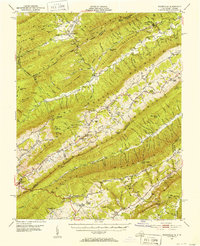 1951 Waiteville1953 Print · USGSThe Virginia and West Virginia borderlands are captured here in the early fifties, showing a landscape of high ridges and narrow valley settlements. Researchers can find old community hubs like Blue Healing Springs, Simmonsville, and Slussers Chapel among the mountain hollows.3 unique versions available
 - 1955 Map of Bluefield
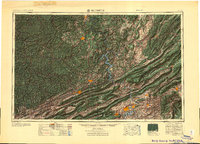 1955 Bluefield1955 Print · USGSThe Central Appalachian borderlands come alive in the mid-fifties, showing the coal and rail networks connecting Bluefield to Beckley. Researchers can trace the industrial landscape of the New River Ordnance Plant and the terrain of Burkes Garden.
 - 1957 Map of Bluefield, 1967 Print
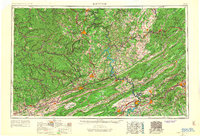 1957 Bluefield1967 Print · USGSThe heart of Central Appalachia in the mid-fifties is defined by the winding rail lines and river valleys of the coalfields. Researchers can trace the industrial footprints of towns like Welch and Princeton or locate landmarks such as the Bluestone Reservoir and Claytor Lake.2 unique versions available
 - 1961 Map of Bluefield
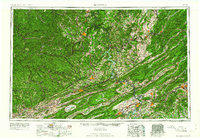 1961 Bluefield1961 Print · USGSThe coalfields and mountain ridges of southern West Virginia and southwest Virginia are captured in the early sixties. Genealogists can trace family ties through rail-linked towns like Princeton and Richlands or along the shores of Bluestone Reservoir.
 - 1965 Map of Blacksburg, 1966 Print
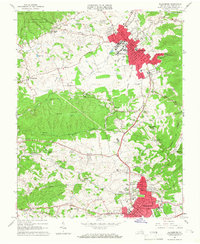 1965 Blacksburg1966 Print · USGSBlacksburg and Christiansburg are captured here in the mid-sixties during a period of significant collegiate and civic expansion. Researchers can trace the early footprint of the Virginia Polytechnic Institute campus or locate historic sites like Kanodes Mill, Yellow Sulphur Springs, and Belmont Ch.5 unique versions available
 - 1965 Map of Newport, 1966 Print
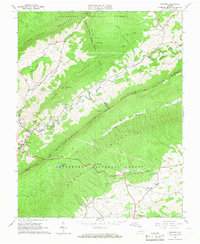 1965 Newport1966 Print · USGSThe Montgomery and Craig County lines meet among the high ridges and hollows of southwest Virginia in the mid-sixties. Researchers can locate family landmarks like Clover Hollow Cem, the Covered Bridge at Newport, and trace the Appalachian Trail along the mountain crests.3 unique versions available
 - 1982 Map of Radford, 1983 Print
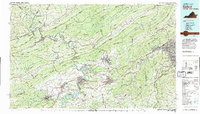 1982 Radford1983 Print · USGSThe New River Valley and surrounding highlands are shown during a period of significant regional growth in the early eighties. Genealogists and historians can trace the development of VPI, locate historic sites like Yellow Sulphur Springs, and follow the Norfolk and Western rail lines through the gaps.2 unique versions available
 - 1998 Map of Newport, 2000 Print
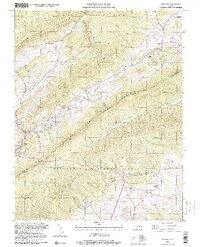 1998 Newport2000 Print · USGSThe Appalachian highlands of Montgomery and Giles counties are shown in the late 1990s as the mountains remained a stronghold of rural tradition and national forest land. Genealogists and local historians can locate the historic Covered Bridge, numerous family burial sites like Williams Cemetery, and old country churches including Clover Hollow Church.
 - 2011 Map of Newport, 2011 Print
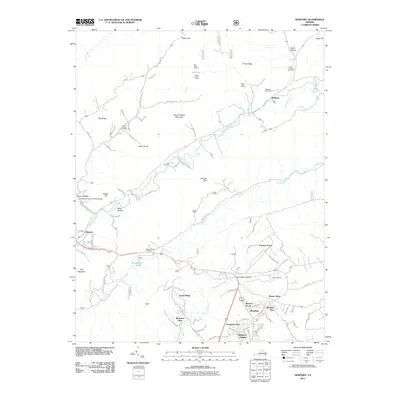 2011 Newport2011 Print · USGSThe rural communities north of Blacksburg are captured here during a period of modern residential growth amidst traditional Appalachian gaps. Researchers can locate several family burial grounds like Hale Cemetery and Clover Hollow Cemetery, as well as the landmark Clover Hollow Sinking Creek Covered Bridge.
 - 2011 Map of Blacksburg, 2011 Print
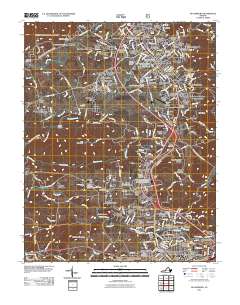 2011 Blacksburg2011 Print · USGSBlacksburg and the surrounding Montgomery County highlands are shown here during a period of significant university expansion. Genealogists and local historians can trace family plots at Kipps Cemetery or locate landmarks like Kanodes Mill and Price Mountain.
 - 2013 Map of Blacksburg, 2013 Print
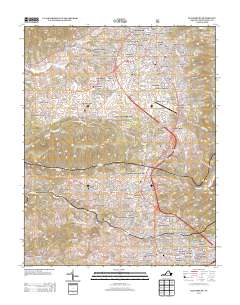 2013 Blacksburg2013 Print · USGSBlacksburg and the Virginia Tech campus are captured during a period of significant suburban and academic expansion in the early 2010s. Researchers can trace the development of numerous residential neighborhoods and locate local landmarks like Kanodes Mill, Yellow Sulphur Springs, and McBryde Village.
 - 2013 Map of Newport, 2013 Print
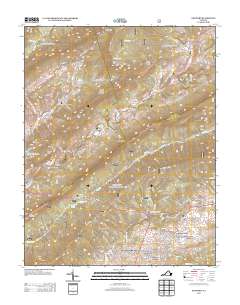 2013 Newport2013 Print · USGSVirginia's mountain ridges and valley settlements are captured here in the early twenty-first century as the landscape shifts from rural to residential. Genealogists and hikers can trace old family locales and landmarks from the Sinking Creek Covered Bridge and Huffman to the quiet waters of Pandapas Pond.
 - 2016 Map of Newport, 2016 Print
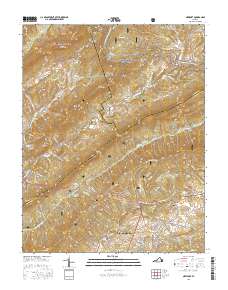 2016 Newport2016 Print · USGSThe ridges and hollows north of Blacksburg are captured here in 2016, showing the intersection of mountain wilderness and rural settlement. Researchers can trace historic family burial sites like Level Green Cem or locate the Sinking Creek Covered Bridge.
 - 2016 Map of Blacksburg, 2016 Print
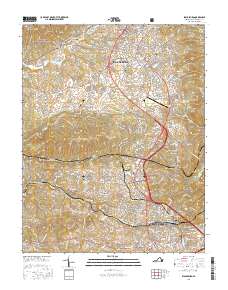 2016 Blacksburg2016 Print · USGSMontgomery County in the mid-2010s shows the continued growth of Blacksburg and the Virginia Tech campus. Genealogists can trace legacy landmarks through Kipps Cem, Yellow Sulphur Springs, and the old site of Kanodes Mill.
 - 2019 Map of Blacksburg, 2019 Print
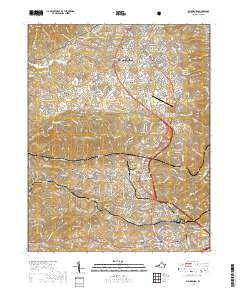 2019 Blacksburg2019 Print · USGSMontgomery County comes into focus in this recent survey, showing the busy corridor between two major regional centers. Genealogists and researchers can locate family sites at Kipps Cem, Kanodes Mill, and the historic Yellow Sulphur Springs.
 - 2019 Map of Newport, 2019 Print
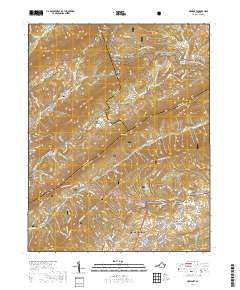 2019 Newport2019 Print · USGSBlacksburg and the Jefferson National Forest are captured in this modern survey of the Montgomery County highlands. Genealogists and hikers can trace family-named sites like Hale Cem and Leffel Cem, or follow the Appalachian National Scenic Trail past Huffman.
 - 2022 Map of Blacksburg, 2022 Print
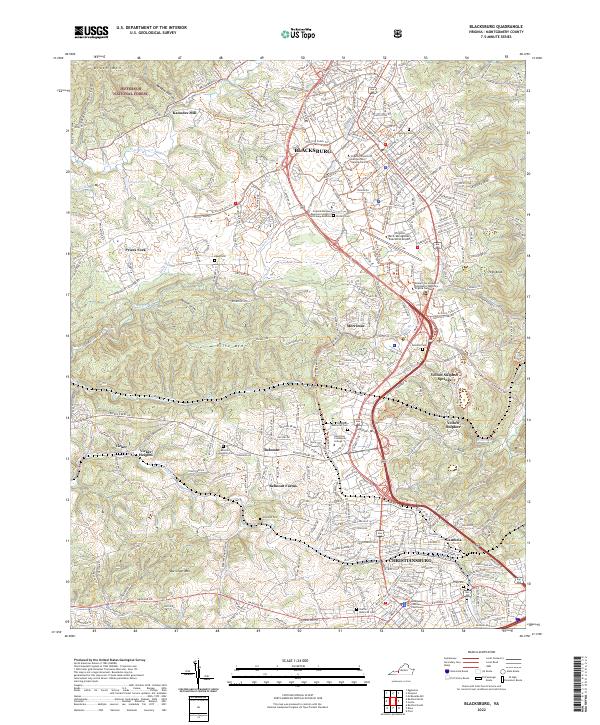 2022 Blacksburg2022 Print · USGSBlacksburg and Christiansburg are captured here in the early 2020s, showcasing the expansion of the Virginia Polytechnic Institute and State University campus. Researchers can trace local genealogy and land use across sites like Yellow Sulphur Springs, Kanodes Mill, and Roselawn Memorial Cem.
 - 2022 Map of Newport, 2022 Print
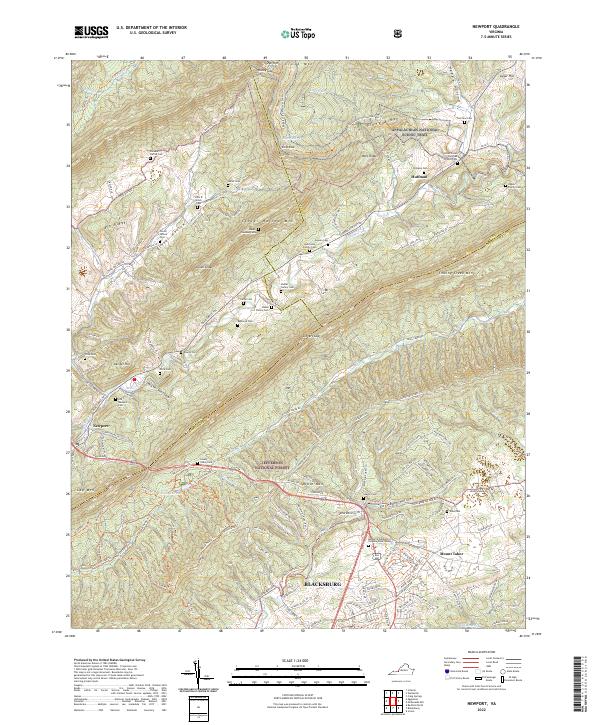 2022 Newport2022 Print · USGSThe northern reaches of the Blacksburg area appear here in the early twenty-first century, spanning the ridgelines of the Jefferson National Forest. Researchers can trace dozens of family burial sites like Shrader Family Cem and the small settlements of Newport and Huffman.
End of results
Showing maps 1-24 of 24
Frequently asked questions
- What are the different types of historical maps available for Pheasant Run?
- What is the oldest map of Pheasant Run?
- Where can I purchase historical maps of Pheasant Run for my home or office?
- Where can I download high-res historical maps of Pheasant Run?
- Are there historical topographic maps available for Pheasant Run?
- Is there historical aerial imagery available for Pheasant Run?
- Where are historical maps of Pheasant Run sourced from?