1900s (20th Century) Maps of Malott, Washington
Explore 6 historic maps of Malott from the 1900s (20th Century). These maps offer a rare glimpse into what life looked like during the 1900s — showing old roads, neighborhoods, homes, and landmarks that have changed or disappeared over time.
Whether you're researching your family's past, planning a metal detecting trip, or studying how Malott's landscape evolved across the 1900s, these high-resolution maps are a powerful tool for exploring the history of this region.
- Focus on a specific era: All maps on this page are from the 1900s, giving you a focused view of this time period.
- See what’s changed: Compare century-old streets, trails, and buildings to today's modern landscape using overlays and satellite layers.
- Research with precision: Use these maps for genealogy, historical research, land use analysis, or educational projects.
- View, download, or print: Maps are fully viewable online in high resolution, and can be downloaded or printed for your own records.
Start exploring Malott's history through authentic maps from the 1900s. This is your window into the past.
Malott, WA maps
(6)- 1905 Map of Okanogan
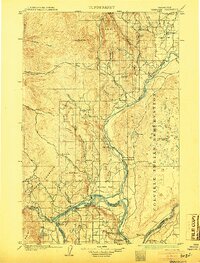 1905 Okanogan1905 Print · USGSThe Okanogan and Columbia rivers converge in this early 1900s survey, showing the region when river ferries were the primary links between frontier settlements. Researchers can trace the original locations of Bruster, Alma, and Olema, or locate historical river crossings like Central Ferry and Andrews Ferry.3 unique versions available
 - 1954 Map of Okanogan, 1964 Print
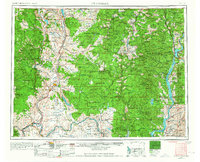 1954 Okanogan1964 Print · USGSNorth Central Washington’s interior comes into focus during the mid-fifties, showing the rise of the Columbia River reservoir system. Genealogists and historians can trace the Great Northern rail line and locate historical mining operations at the Mountain Lion Mine or Gold Hill Mine.2 unique versions available
 - 1957 Map of Okanogan
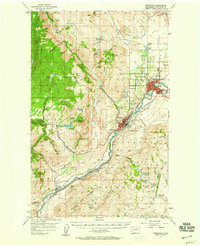 1957 Okanogan1957 Print · USGSThe Okanogan River valley comes alive in this late-fifties survey, capturing the region's growth along the Great Northern rail line. Trace the development of Okanogan and Omak, or locate family sites at Malott, the Ruby mining site, and Okanogan Cemetery.2 unique versions available
 - 1958 Map of Okanogan
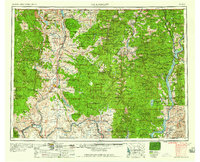 1958 Okanogan1958 Print · USGSThe Okanogan River valley and the Colville Indian Reservation are shown here in the late fifties, during a period of established river and rail commerce. Researchers can trace the Great Northern line through Oroville or locate landmarks like the Knowlton School and Orient Ranger Station.
 - 1981 Map of Malott
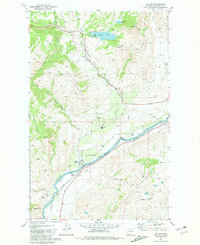 1981 Malott1981 Print · USGSThe Okanogan River valley in the early 1980s reveals a landscape where rail-side commerce and high-desert water management meet. Researchers can trace family ties at Chiliwist Cem or locate the historic siding at Malott along the Burlington Northern line.2 unique versions available
 - 1983 Map of Omak
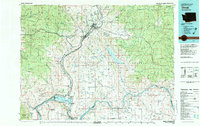 1983 Omak1983 Print · USGSIn the early 1980s, the Okanogan and Columbia river valleys served as a vital agricultural and timber hub. Researchers can trace family-named landmarks like Pearl Hill and Jackass Butte, alongside vanished mining history at the Red Shirt Mine.2 unique versions available
End of results
Showing maps 1-6 of 6
Top cities near Malott
- Omak historical maps
- Okanogan historical maps
- Brewster historical maps
- Pateros historical maps
- Riverside historical maps
Frequently asked questions
- What are the different types of historical maps available for Malott?
- What is the oldest map of Malott?
- Where can I purchase historical maps of Malott for my home or office?
- Where can I download high-res historical maps of Malott?
- Are there historical topographic maps available for Malott?
- Is there historical aerial imagery available for Malott?
- Where are historical maps of Malott sourced from?