Old Maps of Wahkiakum County, Washington
Explore 93 old maps of Wahkiakum County, spanning from 1919 to today. These high-resolution historic maps reveal how streets, neighborhoods, landmarks, and natural features evolved over time — perfect for genealogy, metal detecting, research, and local history exploration.
What you can do with these maps:
- See how Wahkiakum County changed over time: Compare historical maps to modern-day views to trace roads, homesites, rail lines & more.
- View detailed metadata: Each map includes creators, publishers, year, scale, and archive source.
- Overlay maps with satellite & LiDAR: Visualize the past alongside modern tools to explore terrain & human change.
- Trusted historical sources: Maps sourced from the USGS, Library of Congress, and other archives.
- Access maps your way: View online, download high-res files, or order prints for personal or research use.
Start exploring old maps of Wahkiakum County to uncover forgotten places, hidden landmarks, and the deep history beneath your feet.
Wahkiakum County, WA maps
(93)- 1919 Map of Mayger
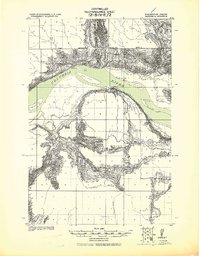 1919 Mayger1919 Print · USGSThe Columbia River shoreline in the years following the Great War reveals a landscape of tidal sloughs and nascent settlements. Researchers can trace the early rail corridor of the S. P. & S. R. R. and locate riverfront sites like Mayger, Cleavelands Ldg., and Inglis.
 - 1940 Map of Brookfield
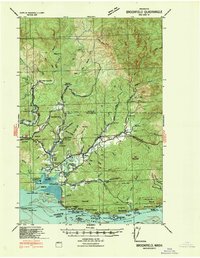 1940 Brookfield1940 Print · USGSPacific and Wahkiakum Counties are shown in detail during the early 1940s, highlighting the heavy industrial presence along the Columbia River shoreline. Researchers can locate salmon canneries, logging camps, and family holdings such as the Pillar Rock Cannery, Old Camp Brix Logging Co, and Maki Ranch.
 - 1941 Map of Skamokawa
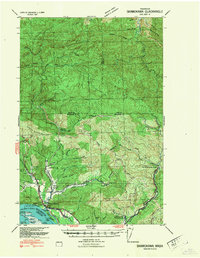 1941 Skamokawa1941 Print · USGSWahkiakum County's timber and river culture is captured here during the early 1940s, showing the intersection of logging camps and Columbia River fisheries. Researchers can locate family landmarks like the Oatfield Ranch, trace the Crown Willamette Headquarters Camp, or find the Fern Hill Cemetery.
 - 1941 Map of Clatskanie
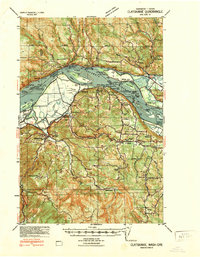 1941 Clatskanie1941 Print · USGSThe Columbia River shoreline and the timberlands of Columbia County are captured here just as the nation entered the war. Genealogists and researchers can trace rural life through landmarks like Crossing Cem, Erickson School, and the lookout at Benson L O.
 - 1941 Map of Cathlamet
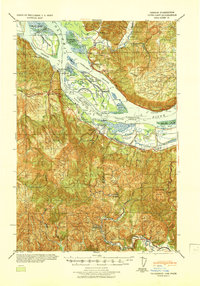 1941 Cathlamet1941 Print · USGSThe Lower Columbia River reaches its widest breadth here during the early 1940s, connecting riverside timber and milling hubs. Researchers can trace the family names of early settlers on Puget Island or find riverfront landmarks like Ankeny Landing and Clifton.
 - 1949 Map of Upper Naselle River, 1954 Print
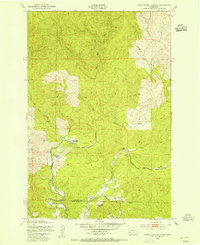 1949 Upper Naselle River1954 Print · USGSPacific and Wahkiakum counties at the end of the 1940s show a landscape shaped by the timber industry and river systems. You can trace the path of the Logging Railroad and locate work sites like the Logging Camp and Upper Naselle Ranger Sta.
 - 1949 Map of Rosburg, 1955 Print
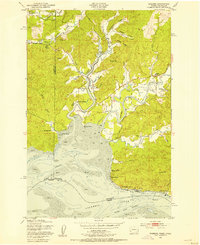 1949 Rosburg1955 Print · USGSCoastal Wahkiakum County is depicted here in the late 1940s as a landscape of tidewater sloughs and river landings. Genealogists and historians can trace riverside settlements at Rosburg, Altoona, and Oneida, or locate landmarks like Old Camp Brix and the Rosburg Sch.3 unique versions available
 - 1952 Map of Clatskanie, 1954 Print
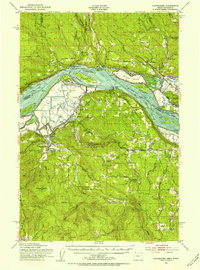 1952 Clatskanie1954 Print · USGSThe lower Columbia River basin comes to life in the early fifties, showing the intricate dikes and rail lines of the Oregon and Washington border. Genealogists can locate family sites at Bryant Cemetery or trace the vanished streets of Swedetown.3 unique versions available
 - 1953 Map of Hoquiam
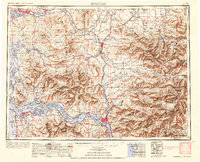 1953 Hoquiam1953 Print · USGSSouthwest Washington in the early fifties shows a landscape shaped by timber, rail, and river commerce from the coast to the Cascades. Genealogists and historians can trace the development of timber towns like Ryderwood and the industrial hubs of Hoquiam and Kelso.2 unique versions available
 - 1953 Map of Ryderwood, 1955 Print
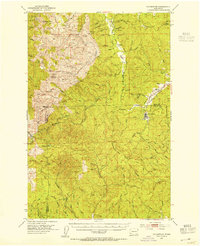 1953 Ryderwood1955 Print · USGSThe logging country of Lewis and Cowlitz counties is documented here in the early fifties as industrial rail gave way to trucking. Trace the transition of the company town Ryderwood, find the Snow Cem burial site, or locate the Dismantled Railroad corridors.3 unique versions available
 - 1953 Map of Skamokawa, 1955 Print
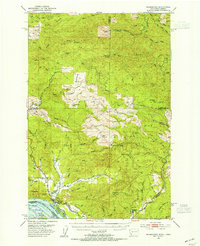 1953 Skamokawa1955 Print · USGSThe riverfront culture of Wahkiakum County is on full display here in the early 1950s, showing the intersection of the Columbia River and the logging woods. Researchers can locate the Fern Hill Cem, the Blaney Lookout, and vanished infrastructure like the Dismantled RR.3 unique versions available
 - 1953 Map of Cathlamet, 1955 Print
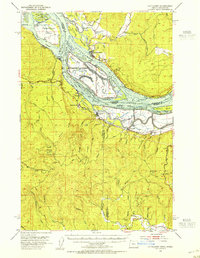 1953 Cathlamet1955 Print · USGSThe Lower Columbia River reaches a peak of commercial and timber activity during the early fifties. Genealogists and local historians can trace family roots through riverside settlements like Cathlamet and Westport, or find Greenwood Cem and Fishhawk Cem.4 unique versions available
 - 1955 Map of Grays River, 1957 Print
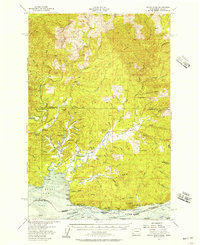 1955 Grays River1957 Print · USGSCoastal Washington and the northern bank of the Columbia River are shown here in the mid-fifties, when timber and fishing drove the local economy. Researchers can locate the Grays River Cemetery, the Pillar Rock Cannery, and rural landmarks like the Dahlia Sch.3 unique versions available
 - 1957 Map of Hoquiam
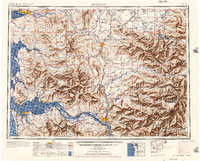 1957 Hoquiam1957 Print · USGSCoastal timber ports and inland rail hubs define Southwest Washington during the late fifties. Genealogists can trace early twentieth-century settlements like Bordeaux, Tono, and Cosmopolis alongside the expanding tracks of the Northern Pacific.
 - 1958 Map of Hoquiam, 1969 Print
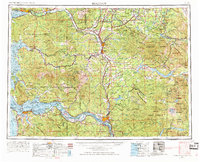 1958 Hoquiam1969 Print · USGSSouthwest Washington and the Columbia River estuary appear here in the mid-century, before major landscape shifts. Researchers can trace the rail lines of the Northern Pacific, locate the Fort Henness Site, or explore the Naselle Air Force Station.2 unique versions available
 - 1962 Map of Hoquiam
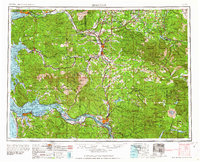 1962 Hoquiam1962 Print · USGSSouthwest Washington in the late fifties is defined by the bustling timber ports of Hoquiam and the rail-linked commerce of the interior valleys. Genealogists and historians can trace the early footprints of settlements like Raymond and Pe Ell, or locate family sites at Grand Mound Cem and Odd Fellows Cem.
 - 1981 Map of Astoria, 1982 Print
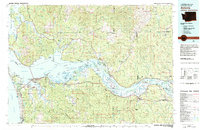 1981 Astoria1982 Print · USGSThe Oregon and Washington borderlands meet at the Columbia River estuary in the early eighties, a time of active timber transport and maritime trade. Researchers can trace the river's many islands, the grounds of Fort Stevens, and riverside towns like Cathlamet and Westport.3 unique versions available
 - 1985 Map of Nassa Point
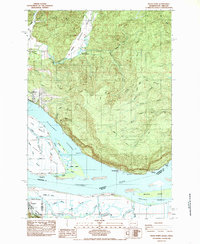 1985 Nassa Point1985 Print · USGSThe Columbia River shoreline near the Washington and Oregon border comes alive in this mid-eighties survey. Researchers can trace the waterfront geography of Cathlamet and Westport, or explore the complex sloughs around Puget Island and Wallace Island.
 - 1985 Map of Oak Point
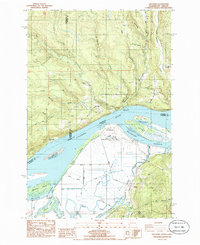 1985 Oak Point1985 Print · USGSThe lower Columbia River shoreline in the mid-1980s reveals a complex landscape of industrial sites and pioneer cemeteries. Genealogists can locate family landmarks like Oak Point Cem and Grasseth Cem alongside river infrastructure like the Beaver Generating Plant.
 - 1985 Map of Shamokawa
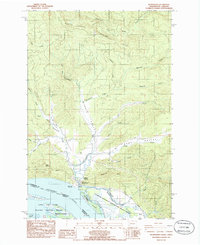 1985 Shamokawa1985 Print · USGSSkamokawa and the surrounding river valleys are captured here in the mid-1980s as the Columbia River shoreline transitioned toward conservation and recreation. Researchers can trace the legacy of the area through Fern Hill Hill Cem, the riverfront at Skamokawa Vista Park, and the quiet corners of Sleepy Hollow.
 - 1985 Map of Skamokawa Pass
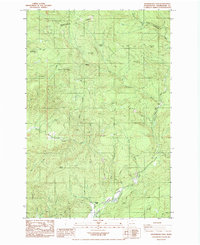 1985 Skamokawa Pass1985 Print · USGSWahkiakum County in the mid-1980s reveals a landscape of industrial forestry and high timber ridges. Researchers can trace the remote settlement at McDonald and the geographic prominence of Huckleberry Ridge as they stood before modern development.
 - 1985 Map of Grays River, 1986 Print
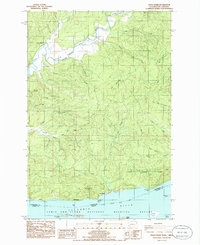 1985 Grays River1986 Print · USGSThe northern banks of the Columbia River are captured in the mid-1980s, showcasing the transition from tidal flats to timbered ridges. Genealogists and historians can locate the Grays River Cem, the historical Covered Bridge, and the small river settlements of Brookfield and Dahlia.
 - 1985 Map of Cathlamet, 1986 Print
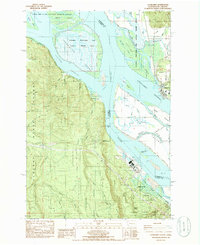 1985 Cathlamet1986 Print · USGSThe Lower Columbia River islands and Washington-Oregon borderlands are mapped here in the mid-eighties, showing a mix of industrial river sites and wildlife conservation. Genealogists and researchers can trace the roads of Puget Island and find landmarks like Greenwood Cemetery and the Gnat Creek Fish Hatchery.
 - 1986 Map of Elochoman Lake
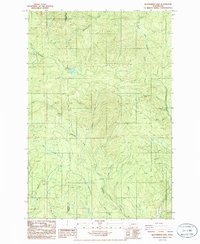 1986 Elochoman Lake1986 Print · USGSThe timberlands and watersheds of southwest Washington are captured here in the mid-1980s as the regional road network was being established. Researchers can trace the drainage patterns of Germany Creek and Elochoman River or locate several local Borrow Pits.
 - 1986 Map of Elochoman Pass
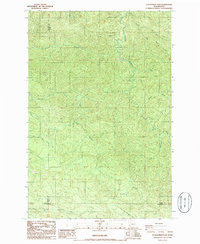 1986 Elochoman Pass1986 Print · USGSThe high timberlands of the Washington interior are captured here in the mid-1980s at the meeting of three counties. Researchers can trace the headwaters of the Chehalis River and find localized landmarks like Elochoman Pass and the Borrow Pit.
Showing maps 1-25 of 93
Top cities of Wahkiakum County
Frequently asked questions
- What are the different types of historical maps available for Wahkiakum County?
- What is the oldest map of Wahkiakum County?
- Where can I purchase historical maps of Wahkiakum County for my home or office?
- Where can I download high-res historical maps of Wahkiakum County?
- Are there historical topographic maps available for Wahkiakum County?
- Is there historical aerial imagery available for Wahkiakum County?
- Where are historical maps of Wahkiakum County sourced from?