1940s Maps of Falling Waters, West Virginia
Explore 6 historic maps of Falling Waters from the 1940s. These maps offer a rare glimpse into what life looked like during the 1940s — showing old roads, neighborhoods, homes, and landmarks that have changed or disappeared over time.
Whether you're researching your family's past, planning a metal detecting trip, or studying how Falling Waters's landscape evolved across the 1940s, these high-resolution maps are a powerful tool for exploring the history of this region.
- Focus on a specific era: All maps on this page are from the 1940s, giving you a focused view of this time period.
- See what’s changed: Compare century-old streets, trails, and buildings to today's modern landscape using overlays and satellite layers.
- Research with precision: Use these maps for genealogy, historical research, land use analysis, or educational projects.
- View, download, or print: Maps are fully viewable online in high resolution, and can be downloaded or printed for your own records.
Start exploring Falling Waters's history through authentic maps from the 1940s. This is your window into the past.
Falling Waters, WV maps
(6)- 1942 Map of Hagerstown
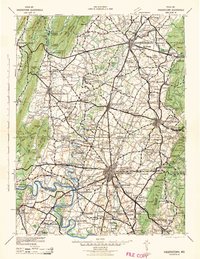 1942 Hagerstown1942 Print · USGSThe Cumberland Valley and Potomac corridor are captured here at the height of the Second World War rail-and-river era. Genealogists and historians can trace the industrial landscape of Richmond Furnace, the route of the Chesapeake and Ohio Canal, and the grounds of Camp Ritchie.
 - 1943 Map of Hagerstown
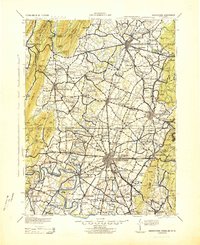 1943 Hagerstown1943 Print · USGSThe Cumberland Valley was a critical wartime logistics hub in the 1940s, teeming with rail traffic and new military installations. Genealogists and historians can trace the Chesapeake and Ohio Canal or locate local landmarks like Richmond Furnace and Camp Ritchie.
 - 1944 Map of Hedgesville
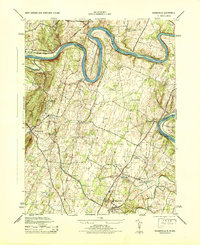 1944 Hedgesville1944 Print · USGSBerkeley County and the Maryland borderlands are captured here during the mid-forties, showing a landscape defined by the Potomac River and the Chesapeake and Ohio Canal. Genealogists can trace family roots through markers like Oak Grove School or the rural settlements of Hedgesville and Bedington.
 - 1944 Map of Williamsport, 1959 Print
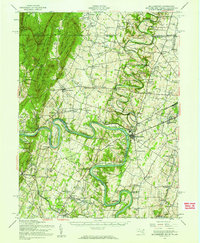 1944 Williamsport1959 Print · USGSMaryland and West Virginia meet along the winding Potomac in the mid-1940s, a landscape defined by river trade and mountain ridges. Genealogists and historians can trace the Chesapeake and Ohio Canal past McCoys Ferry, Cushwa Mill, and the Stonewall Jackson Monument.2 unique versions available
 - 1948 Map of Baltimore
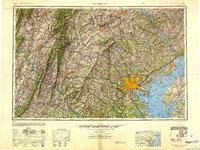 1948 Baltimore1948 Print · USGSMaryland and Pennsylvania crossroads are captured in the late 1940s, showing a landscape defined by historic rail lines and major military installations. Genealogists can trace family connections in Gettysburg, Westminster, and near the U.S. Naval Academy in Annapolis.2 unique versions available
 - 1949 Map of Hedgesville
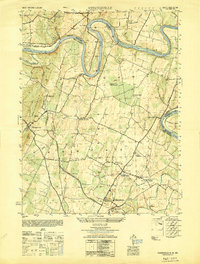 1949 Hedgesville1949 Print · USGSThe Potomac River valley in the late 1940s was a hub of canal history and industrial transition. Researchers can trace the path of the Chesapeake and Ohio Canal, locate the Stonewall Jackson Monument, and find vanished infrastructure like Mc Coys Ferry or the Old Mill.
End of results
Showing maps 1-6 of 6
Top cities near Falling Waters
- Hagerstown historical maps
- Martinsburg historical maps
- Halfway historical maps
- Robinwood historical maps
- Fountainhad-Orchard Hills historical maps
- Ranson historical maps
See more
Frequently asked questions
- What are the different types of historical maps available for Falling Waters?
- What is the oldest map of Falling Waters?
- Where can I purchase historical maps of Falling Waters for my home or office?
- Where can I download high-res historical maps of Falling Waters?
- Are there historical topographic maps available for Falling Waters?
- Is there historical aerial imagery available for Falling Waters?
- Where are historical maps of Falling Waters sourced from?