Old Maps of Fort Spring, West Virginia for Metal Detecting
Plan your next treasure hunt with 14 historic maps of Fort Spring. Find old homesites, ghost towns, trails, and gathering spots that may be lost to time — perfect for identifying promising metal detecting locations.
- Locate forgotten sites: Uncover places like long-lost settlements, abandoned rail lines, or gathering spots.
- Plan better hunts: Use map overlays combined with LiDAR or satellite views to narrow in on historically rich areas.
- Made for detectorists: Thousands of hobbyists use these maps to discover relics, coins, and hidden history.
Use these historic maps to boost your research and find new opportunities beneath the surface of Fort Spring.
Fort Spring, WV maps
(14)- 1887 Map of Hinton
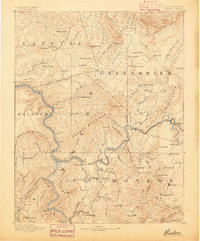 1887 Hinton1887 Print · USGSSouthern West Virginia’s rugged river corridors and mineral spring resorts come alive in this late nineteenth-century survey. Trace the rail-and-river economy through the Big Bend Tunnel, the Greenbrier Stock Yards, and the historic springs at Red Sulphur Springs.
 - 1892 Map of Hinton
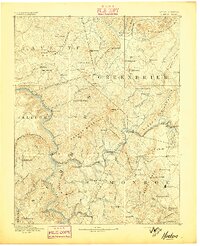 1892 Hinton1892 Print · USGSSouthern West Virginia in the late nineteenth century centers on the river-and-rail hub of Hinton and the high ridges of the Alleghenies. Researchers can trace early railroad engineering at the Big Bend Tunnel or locate historic mineral spring resorts like Salt Sulphur Springs and Blue Sulphur Springs.5 unique versions available
 - 1921 Map of Alderson
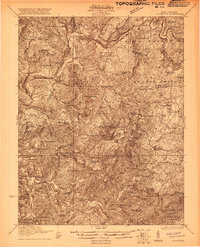 1921 Alderson1921 Print · USGSThe Greenbrier River valley and the West Virginia highlands come alive in the early 1920s, showing the region's rail-dependent economy and rural school networks. Researchers can trace family roots at Nickels Mill, Spider Den School, and the settlement of Sinks Grove.3 unique versions available
 - 1923 Map of Alderson
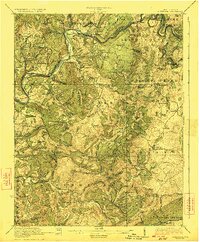 1923 Alderson1923 Print · USGSMonroe and Greenbrier Counties are shown here in the early 1920s, a landscape defined by mineral springs and a dense network of rural schoolhouses. Researchers can locate dozens of local sites like Hokes Mill, Sinks Grove P O, and the Spider Den School.3 unique versions available
 - 1955 Map of Bluefield
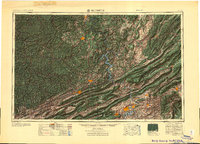 1955 Bluefield1955 Print · USGSThe Central Appalachian borderlands come alive in the mid-fifties, showing the coal and rail networks connecting Bluefield to Beckley. Researchers can trace the industrial landscape of the New River Ordnance Plant and the terrain of Burkes Garden.
 - 1957 Map of Bluefield, 1967 Print
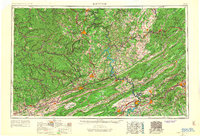 1957 Bluefield1967 Print · USGSThe heart of Central Appalachia in the mid-fifties is defined by the winding rail lines and river valleys of the coalfields. Researchers can trace the industrial footprints of towns like Welch and Princeton or locate landmarks such as the Bluestone Reservoir and Claytor Lake.2 unique versions available
 - 1961 Map of Bluefield
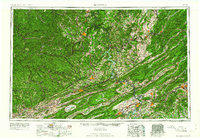 1961 Bluefield1961 Print · USGSThe coalfields and mountain ridges of southern West Virginia and southwest Virginia are captured in the early sixties. Genealogists can trace family ties through rail-linked towns like Princeton and Richlands or along the shores of Bluestone Reservoir.
 - 1971 Map of Fort Spring, 1975 Print
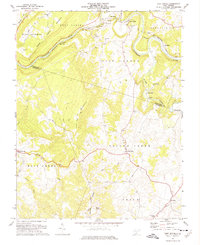 1971 Fort Spring1975 Print · USGSMonroe County in the early seventies shows a landscape defined by the winding Greenbrier River and heavy rail industry. Local historians can trace industrial sites like Snowflake and old water-powered landmarks including Nickells Mill and the Covered Bridge.2 unique versions available
 - 1984 Map of Lewisburg, 1985 Print
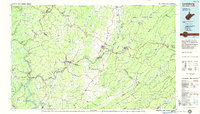 1984 Lewisburg1985 Print · USGSThe Greenbrier Valley in the mid-eighties shows a landscape of river-town commerce, mountain agriculture, and major institutional landmarks. Researchers can trace the rail corridors of the Chesapeake and Ohio and locate sites like the Federal Reformatory for Women and the Sam Black Church.2 unique versions available
 - 2011 Map of Fort Spring, 2011 Print
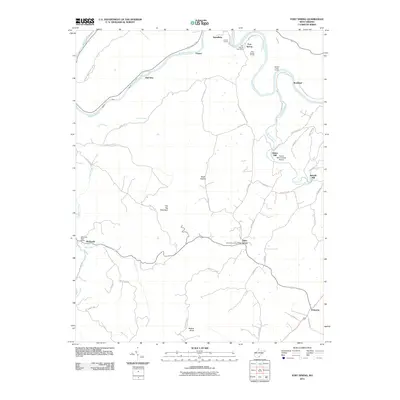 2011 Fort Spring2011 Print · USGSGreenbrier County, West Virginia, is shown here in the early twenty-first century, centered on the river-and-rail hub of Fort Spring. Local historians can trace the paths of industry and mail service through landmarks like the Hokes Mill Covered Bridge, Nickells Mill, and several rural post offices.
 - 2014 Map of Fort Spring, 2014 Print
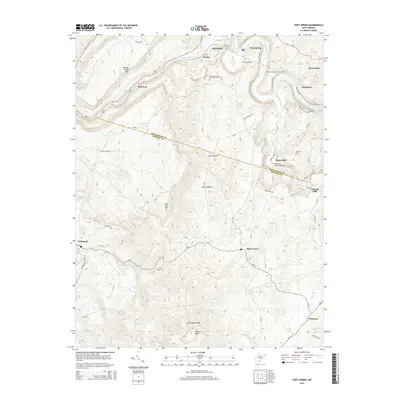 2014 Fort Spring2014 Print · USGSWest Virginia's Greenbrier Valley in the twenty-tens shows a landscape shaped by the river and the rail lines that follow its banks. Researchers can trace the path of historic infrastructure through the Fort Spring Tunnel and locate landmarks like the Hokes Mill Covered Bridge and Lincoln Cem.
 - 2016 Map of Fort Spring, 2016 Print
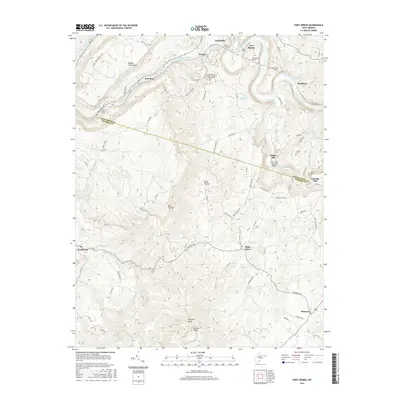 2016 Fort Spring2016 Print · USGSThe West Virginia borderlands between Greenbrier and Monroe counties are defined by the winding Greenbrier River and the high ridges of Muddy Creek Mtn. Researchers can trace the legacy of local industry and transport through Hokes Mill Covered Bridge and the Fort Spring Tunnel.
 - 2019 Map of Fort Spring, 2019 Print
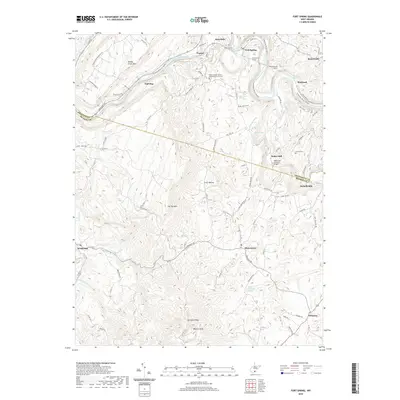 2019 Fort Spring2019 Print · USGSSoutheastern West Virginia comes into focus at the end of the 2010s, where the Greenbrier River carves through the limestone ridges of Monroe and Greenbrier Counties. Local historians can trace rail infrastructure like Manns Tunnel or find family landmarks such as Nickells Mill and the Hokes Mill Covered Bridge.
 - 2023 Map of Fort Spring, 2023 Print
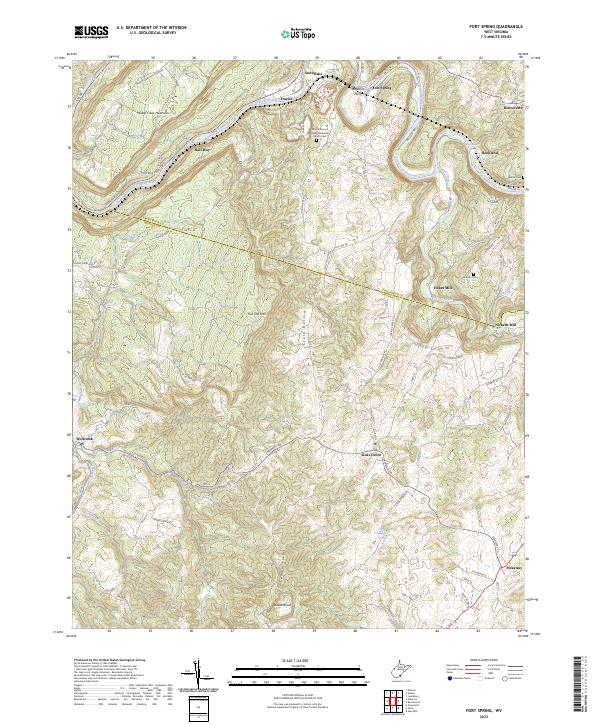 2023 Fort Spring2023 Print · USGSThe Greenbrier River valley and Monroe County uplands are documented here in recent years, showing a landscape of traditional farming and river crossings. Researchers can locate the Stephens Ferry site, Nickells Mill, and the historic Lincoln Cem.
End of results
Showing maps 1-14 of 14
Top cities near Fort Spring
- Lewisburg historical maps
- White Sulphur Springs historical maps
- Fairlea historical maps
- Ronceverte historical maps
- Rainelle historical maps
- Rupert historical maps
See more
Frequently asked questions
- What are the different types of historical maps available for Fort Spring?
- What is the oldest map of Fort Spring?
- Where can I purchase historical maps of Fort Spring for my home or office?
- Where can I download high-res historical maps of Fort Spring?
- Are there historical topographic maps available for Fort Spring?
- Is there historical aerial imagery available for Fort Spring?
- Where are historical maps of Fort Spring sourced from?