Old Maps of Mathias, West Virginia for Academic Research
Study the evolution of Mathias with 16 high-resolution historic maps. Whether you're teaching, researching, or modeling changes in land use, these maps provide essential visual documentation of urban, environmental, and geographic change.
- Analyze long-term change: Track patterns in development, transportation, and natural features.
- Ideal for environmental or urban studies: Support academic projects with primary historical map data.
- Use in the classroom or lab: Educators and researchers rely on these maps to bring historical context to life.
These maps are a powerful tool for teaching, research, and visualizing how Mathias has changed over the decades.
Mathias, WV maps
(16)- 1892 Map of Woodstock, 1898 Print
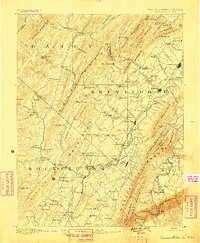 1892 Woodstock1898 Print · USGSThe Shenandoah Valley in the 1890s is captured here as a landscape of river-driven towns and mountain iron furnaces. Researchers can trace family roots in Woodstock or Edinburg and locate historic industrial sites like Liberty Furnace and Columbia Furnace.5 unique versions available
 - 1921 Map of Orkney Springs
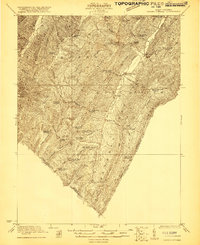 1921 Orkney Springs1921 Print · USGSHardy County life in the early 1920s was centered in the valley between the high ridges of Shenandoah and South Fork mountains. Genealogists can trace family footprints through a dense network of rural schools and churches, including Jenkins Chapel, Mathias, and the Lumber RR.2 unique versions available
 - 1923 Map of Orkney Springs
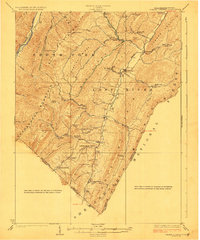 1923 Orkney Springs1923 Print · USGSHardy County, West Virginia, is shown in the early twenties as a landscape of rural schoolhouses and mountain churches tucked between high ridges. Genealogists can locate specific family-named landmarks like Halterman School, Jenkins Chapel, and the Lumber RR line.2 unique versions available
 - 1940 Map of Orkney Springs
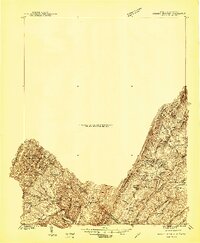 1940 Orkney Springs1940 Print · USGSThe West Virginia and Virginia borderlands appear in the early 1940s, showing a landscape of mountain resorts and valley farms. Genealogists can trace family landmarks like Halterman Cem and schools such as Mt Hermon Sch.2 unique versions available
 - 1943 Map of Orkney Springs
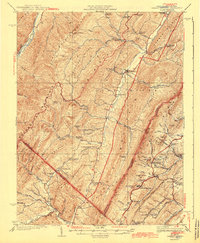 1943 Orkney Springs1943 Print · USGSThe mountain valleys of the West Virginia-Virginia border come alive in the 1940s, showing a landscape defined by ridges and rural hamlets. Family researchers can trace ancestry through numerous schools and churches like Jenkins Chapel, Halterman School, and Tusing Cem.2 unique versions available
 - 1944 Map of Orkney Springs
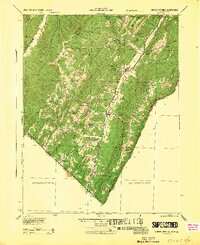 1944 Orkney Springs1944 Print · USGSDeep in the mountains of Hardy County during the 1940s, this area was defined by its tight-knit valley settlements and small mountain schools. Genealogists can locate family landmarks like Fravel Run Sch, Jenkins Chapel, and the community of Lost City.
 - 1949 Map of Charlottesville
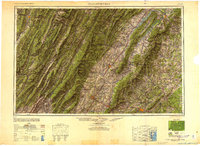 1949 Charlottesville1949 Print · USGSThe Shenandoah Valley and Blue Ridge appear in the late 1940s as a thriving corridor of rail and river commerce. Researchers can trace the mid-century footprints of Harrisonburg, Staunton, and Culpeper alongside the historic routes of the Southern Railway.2 unique versions available
 - 1956 Map of Charlottesville, 1966 Print
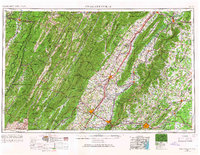 1956 Charlottesville1966 Print · USGSThe Shenandoah Valley and Blue Ridge are captured in detail during the mid-1960s as the modern interstate system began to emerge. Genealogists and historians can trace rail-connected hubs like Waynesboro or follow the river paths of the Rapidan River and Rivanna River.4 unique versions available
 - 1966 Map of Lost City, 1968 Print
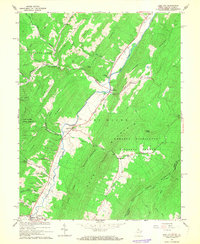 1966 Lost City1968 Print · USGSThe valleys of Hardy County are shown here in the mid-sixties as the rural communities of Lost City and Mathias remained centered on the river forks. Researchers can trace ancestral locations through several small cemeteries and country churches like Holly Hill Church and New Dale Ch.2 unique versions available
 - 1986 Map of Front Royal
 1986 Front Royal1986 Print · USGSThe northern Shenandoah Valley and the Blue Ridge crest are captured here in the mid-eighties as modern highways began to bypass historic valley towns. Researchers can trace ancestral connections near Peola Mills, navigate the gaps like Manassas Gap, or study the river bends around Luray.3 unique versions available
 - 1994 Map of Lost City, 1997 Print
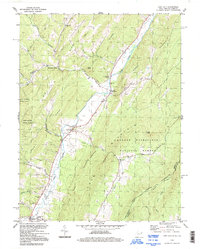 1994 Lost City1997 Print · USGSHardy County life in the 1990s is centered here along the banks of the Lost River as it passes through the valley. Researchers can trace rural lineages through numerous community landmarks, including New Dale Cem, Holly Hill Church, and the settlement of Mathias.
 - 2011 Map of Lost City, 2011 Print
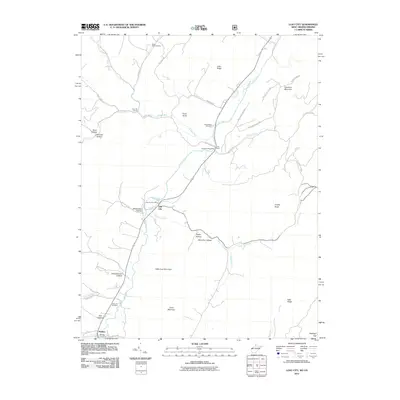 2011 Lost City2011 Print · USGSHardy County at the start of the 2010s remains a landscape of river valleys and ridgelines. Genealogists and local historians can trace the foundations of Lost City and Mathias, locating landmarks like the Holly Hill Church and Greenwood Cemetery.
 - 2014 Map of Lost City, 2014 Print
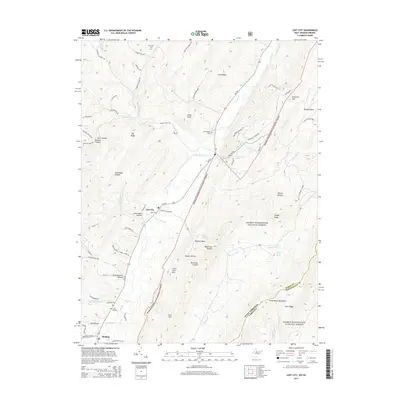 2014 Lost City2014 Print · USGSHardy County's central valley is documented here in the early 2010s as it follows the path of the Lost River. Researchers can trace local lineage through sites like New Dale Cem, the settlement at Lost City, and various family landmarks in Shoemaker Hollow.
 - 2016 Map of Lost City, 2016 Print
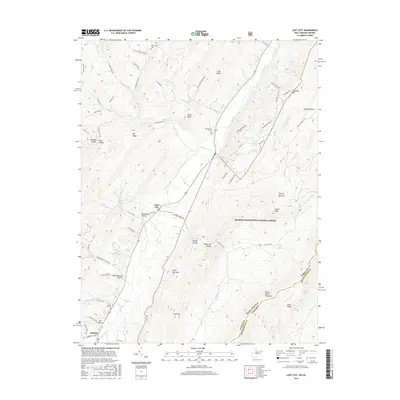 2016 Lost City2016 Print · USGSThe West Virginia-Virginia borderlands are captured here in the mid-2010s, focused on the highland settlements along the Lost River. Genealogists and hikers can trace the geography of the George Washington National Forest and local landmarks like Cedar Hill Cem and Fouts Knob.
 - 2019 Map of Lost City, 2019 Print
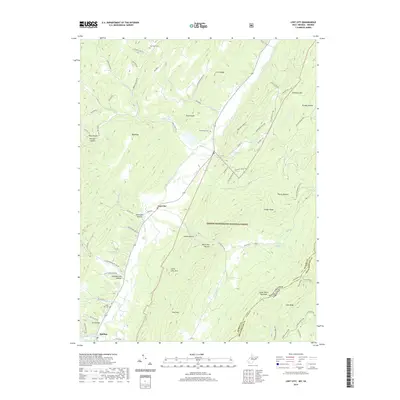 2019 Lost City2019 Print · USGSHardy County, West Virginia, is shown here as a landscape of steep forested ridges and valley settlements in the late 2010s. Researchers can locate remote cemeteries and family landmarks like Greenwood Cem, Lost City, and Cedar Hill Cem along the Lost River.
 - 2023 Map of Lost City, 2023 Print
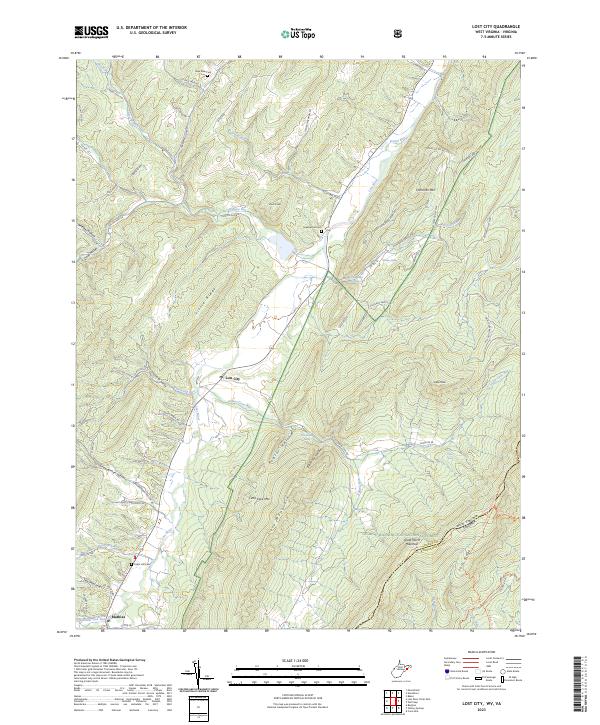 2023 Lost City2023 Print · USGSHardy County, West Virginia, is defined by its dramatic ridges and valley settlements in this recent survey. Local historians can trace the geography of the Lost River valley, pinpointing Lost City, Mathias, and rural landmarks like Greenwood Cem.
End of results
Showing maps 1-16 of 16
Top cities near Mathias
- Moorefield historical maps
- New Market historical maps
- Mount Jackson historical maps
- Basye historical maps
- Mount Clifton historical maps
Frequently asked questions
- What are the different types of historical maps available for Mathias?
- What is the oldest map of Mathias?
- Where can I purchase historical maps of Mathias for my home or office?
- Where can I download high-res historical maps of Mathias?
- Are there historical topographic maps available for Mathias?
- Is there historical aerial imagery available for Mathias?
- Where are historical maps of Mathias sourced from?