1900s (20th Century) Maps of Union Mills, West Virginia
Explore 11 historic maps of Union Mills from the 1900s (20th Century). These maps offer a rare glimpse into what life looked like during the 1900s — showing old roads, neighborhoods, homes, and landmarks that have changed or disappeared over time.
Whether you're researching your family's past, planning a metal detecting trip, or studying how Union Mills's landscape evolved across the 1900s, these high-resolution maps are a powerful tool for exploring the history of this region.
- Focus on a specific era: All maps on this page are from the 1900s, giving you a focused view of this time period.
- See what’s changed: Compare century-old streets, trails, and buildings to today's modern landscape using overlays and satellite layers.
- Research with precision: Use these maps for genealogy, historical research, land use analysis, or educational projects.
- View, download, or print: Maps are fully viewable online in high resolution, and can be downloaded or printed for your own records.
Start exploring Union Mills's history through authentic maps from the 1900s. This is your window into the past.
Union Mills, WV maps
(11)- 1906 Map of Saint Marys
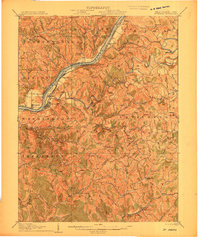 1906 Saint Marys1906 Print · USGSThe riverfront around St Marys and the Ohio River islands is captured here in the early 1900s. Genealogists and researchers can trace early rural life through landmarks like Ninemile Schoolhouse, Union Mills, and the Baltimore and Ohio RR corridor.3 unique versions available
 - 1924 Map of St Marys, 1956 Print
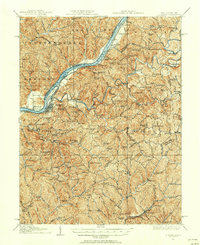 1924 St Marys1956 Print · USGSPleasants County and the Ohio River valley are shown here in the mid-twenties, just as the local rail and river networks reached their peak. Genealogists can trace hundreds of family sites near St Marys, including Bibbys Chapel, Ellenboro, and the Willow Island School.
 - 1927 Map of Saint Marys
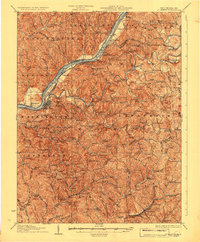 1927 Saint Marys1927 Print · USGSPleasants and Ritchie counties come into focus during the mid-twenties as the Baltimore and Ohio railroad skirts the Ohio River. Researchers can trace ancestral locations through dozens of rural landmarks, from the Northwestern Turnpike to the Willow Island School and Mt Carmel Church.3 unique versions available
 - 1949 Map of Clarksburg
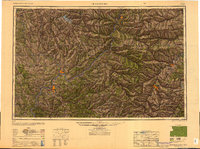 1949 Clarksburg1949 Print · USGSThe upper Ohio River valley and the industrial heart of West Virginia come into focus during this post-war period. Genealogists and researchers can trace the rail corridors of the Baltimore and Ohio and locate centers like Fairmont, Grafton, and Waynesburg.
 - 1956 Map of Clarksburg, 1966 Print
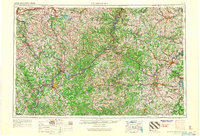 1956 Clarksburg1966 Print · USGSThe Ohio River valley and the industrial heart of West Virginia are seen here in the mid-1950s as rail and river commerce thrived. Researchers can trace historic transport lines like the Baltimore and Ohio RR and locate ancestral homes in Clarksburg, Moundsville, or Parkersburg.2 unique versions available
 - 1961 Map of Clarksburg
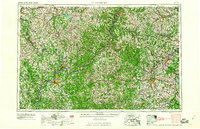 1961 Clarksburg1961 Print · USGSThe mid-century industrial and river landscapes of West Virginia and Ohio are detailed here, centered on the Ohio River. Researchers can trace the Baltimore and Ohio rail lines connecting towns like Parkersburg, Clarksburg, and Monongah.
 - 1961 Map of Raven Rock, 1962 Print
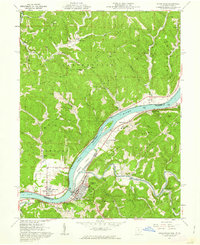 1961 Raven Rock1962 Print · USGSThe Ohio River valley at the start of the sixties reveals a landscape of industrial river towns and quiet upland ridges. Genealogists and historians can trace family sites at Deucher, Union Mills, and St Marys, or locate the Covered Bridge and several old ridge-top chapels.4 unique versions available
 - 1975 Map of Raven Rock, 1979 Print
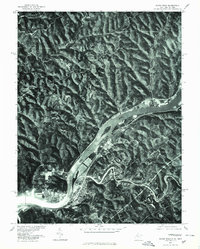 1975 Raven Rock1979 Print · USGSThe Ohio River valley in the mid-1970s is documented here through high-resolution aerial imagery of the West Virginia and Ohio border. Researchers can trace the riverfront development of St Marys and Newport or locate the rural hamlet of Raven Rock.
 - 1981 Map of Parkersburg, 1984 Print
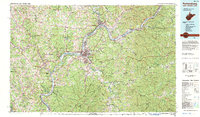 1981 Parkersburg1984 Print · USGSThe Ohio River valley at the start of the 1980s reveals a landscape shaped by river commerce and the rail networks of the Baltimore and Ohio RR. Genealogists and historians can trace the development of riverfront communities like Parkersburg, Marietta, and Williamstown, alongside rural landmarks like Blennerhassett Island and Elizabeth.
 - 1988 Map of Clarksburg, 1989 Print
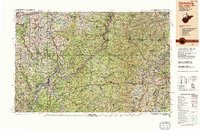 1988 Clarksburg1989 Print · USGSThe central Appalachians are documented in detail during the late eighties, showing the industrial and river-based economies of West Virginia, Ohio, and Pennsylvania. Researchers can trace historic rail routes like the B & O RR and locate river towns from St Marys to Parkersburg.
 - 1994 Map of Raven Rock, 1998 Print
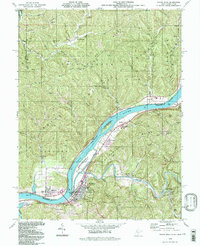 1994 Raven Rock1998 Print · USGSThe Ohio River valley was still a busy corridor of rail and river industry in the 1990s, anchored by the riverfront communities of St Marys and Newport. Researchers can trace the heritage of local families and industry through landmarks like Union Mills, Vaucluse, and the B & O RR line.
End of results
Showing maps 1-11 of 11
Top cities near Union Mills
- Newport historical maps
- Harrisville historical maps
- Grandview historical maps
- Sistersville historical maps
- Pennsboro historical maps
- Belmont historical maps
See more
Frequently asked questions
- What are the different types of historical maps available for Union Mills?
- What is the oldest map of Union Mills?
- Where can I purchase historical maps of Union Mills for my home or office?
- Where can I download high-res historical maps of Union Mills?
- Are there historical topographic maps available for Union Mills?
- Is there historical aerial imagery available for Union Mills?
- Where are historical maps of Union Mills sourced from?