1960s Maps of Wyoming County, West Virginia
Explore 20 historic maps of Wyoming County from the 1960s. These maps offer a rare glimpse into what life looked like during the 1960s — showing old roads, neighborhoods, homes, and landmarks that have changed or disappeared over time.
Whether you're researching your family's past, planning a metal detecting trip, or studying how Wyoming County's landscape evolved across the 1960s, these high-resolution maps are a powerful tool for exploring the history of this region.
- Focus on a specific era: All maps on this page are from the 1960s, giving you a focused view of this time period.
- See what’s changed: Compare century-old streets, trails, and buildings to today's modern landscape using overlays and satellite layers.
- Research with precision: Use these maps for genealogy, historical research, land use analysis, or educational projects.
- View, download, or print: Maps are fully viewable online in high resolution, and can be downloaded or printed for your own records.
Start exploring Wyoming County's history through authentic maps from the 1960s. This is your window into the past.
Wyoming County, WV maps
(20)- 1961 Map of Bluefield
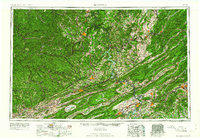 1961 Bluefield1961 Print · USGSThe coalfields and mountain ridges of southern West Virginia and southwest Virginia are captured in the early sixties. Genealogists can trace family ties through rail-linked towns like Princeton and Richlands or along the shores of Bluestone Reservoir.
 - 1963 Map of Gilbert, 1964 Print
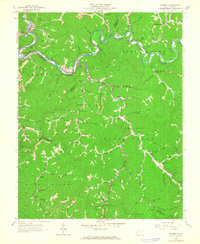 1963 Gilbert1964 Print · USGSMingo and Wyoming Counties are captured here in the early 1960s, showing the coal-and-rail economy along the winding Guyandotte River. Genealogists can trace family names and local landmarks from Sprattsville and Ikes Fork to the Stafford Ch and Longpole Sch.3 unique versions available
 - 1963 Map of Amherstdale, 1964 Print
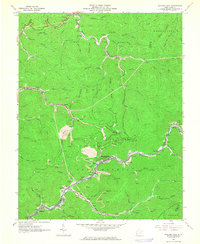 1963 Amherstdale1964 Print · USGSLogan County coal country is shown here in the early 1960s, documenting the dense network of mining towns along Buffalo Creek. Researchers can locate family sites and industrial history at Amherstdale, Accoville, and the Riley Cemetery near Becco.4 unique versions available
 - 1963 Map of Mallory, 1965 Print
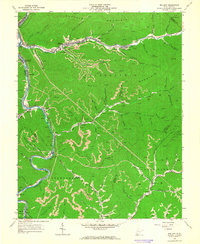 1963 Mallory1965 Print · USGSLogan and Wyoming counties come alive in this mid-century survey of the West Virginia coalfields and the winding Guyandotte River. Genealogists and historians can trace the foundations of local life through labels for the Drive-in Theater, Slabtown, and McDonald Cem.2 unique versions available
 - 1964 Map of Arnett, 1966 Print
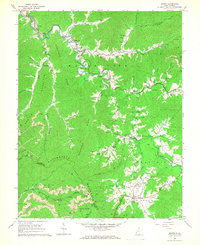 1964 Arnett1966 Print · USGSThe valleys of the Coal River's tributaries are shown here in the mid-sixties, capturing a landscape defined by deep hollows and ridge-top mining. Genealogists can locate family-named sites like Richmond Cem and Honaker Cem alongside vanished schoolhouses and local churches like Star Ch.4 unique versions available
 - 1967 Map of Lester, 1970 Print
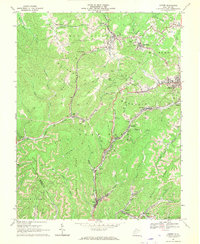 1967 Lester1970 Print · USGSRaleigh County coal country is captured here in the late sixties, showing the peak rail-and-mine network of the Slab Fork District. Researchers can trace the industrial footprint of Stotesbury, Tams, and Helen along the Winding Gulf rail lines.2 unique versions available
 - 1967 Map of Mc Graws, 1970 Print
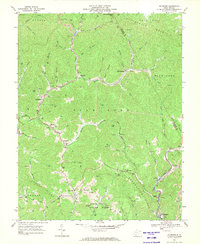 1967 Mc Graws1970 Print · USGSWyoming County's coal and gas country is captured here in the late sixties as industrial sites operated alongside new parklands. Researchers can trace the Norfolk and Western rail lines and locate local hubs like Glen Rogers High Sch and Maben.2 unique versions available
 - 1967 Map of Rhodell, 1970 Print
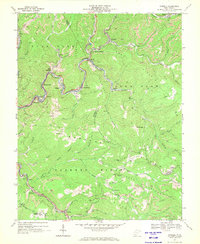 1967 Rhodell1970 Print · USGSThe West Virginia coalfields are in full operation during the late 1960s, with railroads and mining camps lining the river valleys. Genealogists and historians can trace rail-side communities like Rhodell, Amigo, and Stonecoal Junction or locate landmarks such as the Drive-in Theater and Mt Pisgah Ch.2 unique versions available
 - 1967 Map of Crumpler, 1970 Print
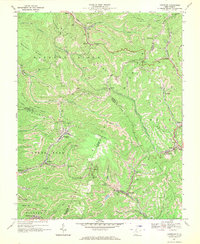 1967 Crumpler1970 Print · USGSSouthern West Virginia's coal country is shown in detail during the late sixties, where rail lines and mining towns sit in the shadow of Flat Top Mountain. Genealogists and historians can trace the foundations of McComas, Crumpler, and Ashland, or locate the Prosperity Sch and Bailey Cem.2 unique versions available
 - 1967 Map of Keystone, 1971 Print
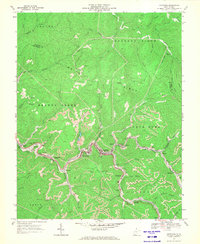 1967 Keystone1971 Print · USGSThe McDowell County coalfields are at their peak in the late sixties, showing a dense industrial corridor along Elkhorn Creek. Genealogists and historians can trace the precise footprints of Keystone, Vivian, and Northfork alongside numerous mines and family sites like Rotenberry Cem.2 unique versions available
 - 1967 Map of Matheny, 1971 Print
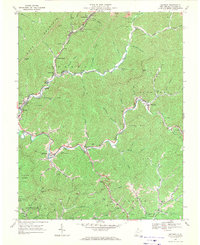 1967 Matheny1971 Print · USGSWyoming County's coal-and-rail landscape is captured here during the late sixties, as settlements followed the narrow valleys of the Clear Fork and Laurel Fork. Genealogists and historians can trace local landmarks like Hillcrest Memorial Gardens, the Keyrock Ch, and the old Drive-in Theater near Oceana.2 unique versions available
 - 1967 Map of Pineville, 1971 Print
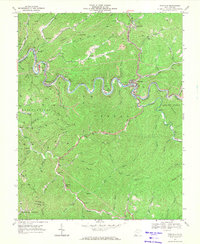 1967 Pineville1971 Print · USGSWyoming County in the late sixties is defined by its deep river valleys and the coal-driven rail lines of the Norfolk and Western. Trace the winding hollows to find local landmarks like Turkey Creek Ch, the Marianna tipple, and the Lookout Tower on the high ridges.2 unique versions available
 - 1967 Map of Mullens, 1971 Print
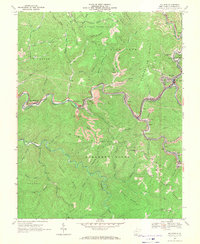 1967 Mullens1971 Print · USGSThe West Virginia coalfields are in full operation during the late sixties as the Norfolk and Western railway snakes through the Guyandotte River valley. Trace family roots and local industry in Mullens, Itmann, and Tralee, or locate rural landmarks like Slab Fork Sch and Bower Cem.2 unique versions available
 - 1968 Map of Lorado, 1971 Print
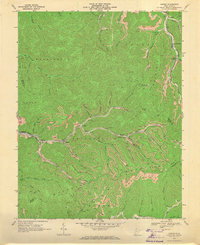 1968 Lorado1971 Print · USGSCoal towns and industrial rail lines dominate the West Virginia mountains in the late sixties. Genealogists and historians can trace families and operations in Lorado, Lundale, and Pardee along the winding Buffalo Creek.3 unique versions available
 - 1968 Map of Baileysville, 1971 Print
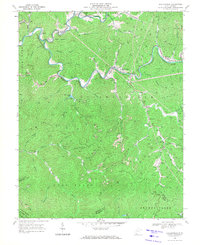 1968 Baileysville1971 Print · USGSSouthern West Virginia in the late sixties shows a landscape of narrow hollows and industrial growth. Genealogists and historians can trace coal-era infrastructure near Stoneville or find local landmarks like Shands Memorial Ch and Horse Creek Lake.2 unique versions available
 - 1968 Map of Davy, 1971 Print
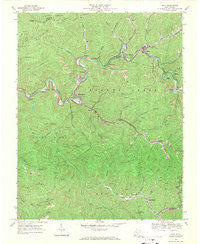 1968 Davy1971 Print · USGSMcDowell County's coal country is documented here during the late sixties, showing the vital rail-and-river network that sustained local industry. Genealogists and historians can trace family-named hollows and sites like Marytown Ch, Coalwood, and the Langer Memorial Cem.2 unique versions available
 - 1968 Map of Welch, 1971 Print
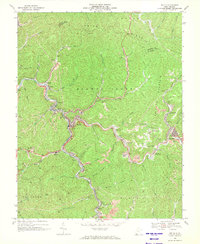 1968 Welch1971 Print · USGSMcDowell County's coal country comes into sharp focus in the late sixties, where the Norfolk and Western railroad winds through the deep valleys of the Tug Fork. Genealogists and local historians can locate many family landmarks, from the New Belcher Mtn Community Cem to the homes of Welch, Kimball, and Wilcoe.2 unique versions available
 - 1968 Map of Oceana, 1971 Print
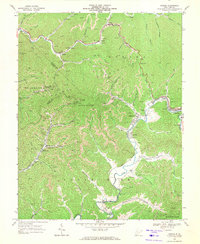 1968 Oceana1971 Print · USGSSouthern West Virginia’s coal and gas country is captured here in the late sixties, showing the tight-knit valley communities and mountain industry. You can trace early school sites like Road Branch School or locate family-named features along Huff Creek and the Norfolk and Western line.4 unique versions available
 - 1968 Map of Pilot Knob, 1971 Print
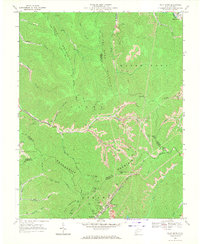 1968 Pilot Knob1971 Print · USGSThe West Virginia coalfields are in full operation during the late sixties, showing a landscape defined by ridgeline mining and deep hollow settlements. Genealogists and historians can trace rail infrastructure and local landmarks like Kopperston, Ringwood Ch, and Pettry Bottom.3 unique versions available
 - 1968 Map of Odd, 1972 Print
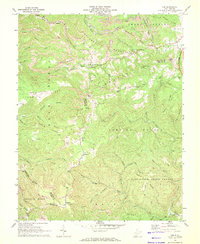 1968 Odd1972 Print · USGSSouthern Raleigh County in the late sixties shows the deep imprint of coal mining across the Guyandotte and Flat Top peaks. Genealogists and local historians can trace family-named landmarks and rural settlements like Odd, Egeria, and Mountain Valley Ch.2 unique versions available
End of results
Showing maps 1-20 of 20
Top cities of Wyoming County
- Mullens historical maps
- Oceana historical maps
- Pineville historical maps
- Kopperston historical maps
- Glen Fork historical maps
- Matheny historical maps
See more
Frequently asked questions
- What are the different types of historical maps available for Wyoming County?
- What is the oldest map of Wyoming County?
- Where can I purchase historical maps of Wyoming County for my home or office?
- Where can I download high-res historical maps of Wyoming County?
- Are there historical topographic maps available for Wyoming County?
- Is there historical aerial imagery available for Wyoming County?
- Where are historical maps of Wyoming County sourced from?