1900s (20th Century) Maps of Watterstown, Wisconsin
Explore 11 historic maps of Watterstown from the 1900s (20th Century). These maps offer a rare glimpse into what life looked like during the 1900s — showing old roads, neighborhoods, homes, and landmarks that have changed or disappeared over time.
Whether you're researching your family's past, planning a metal detecting trip, or studying how Watterstown's landscape evolved across the 1900s, these high-resolution maps are a powerful tool for exploring the history of this region.
- Focus on a specific era: All maps on this page are from the 1900s, giving you a focused view of this time period.
- See what’s changed: Compare century-old streets, trails, and buildings to today's modern landscape using overlays and satellite layers.
- Research with precision: Use these maps for genealogy, historical research, land use analysis, or educational projects.
- View, download, or print: Maps are fully viewable online in high resolution, and can be downloaded or printed for your own records.
Start exploring Watterstown's history through authentic maps from the 1900s. This is your window into the past.
Watterstown, WI maps
(11)- 1933 Map of Boscobel
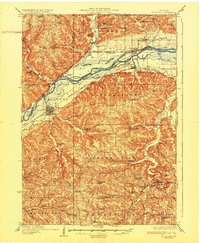 1933 Boscobel1933 Print · USGSThe Driftless Area of Southwest Wisconsin is captured here in the early 1930s, showing the intricate ridge-and-valley landscape of Grant and Richland counties. Researchers can locate dozens of country schools and churches, including Rock Elm School, Steele Cem, and the riverfront village of Port Andrew.2 unique versions available
 - 1958 Map of La Crosse, 1979 Print
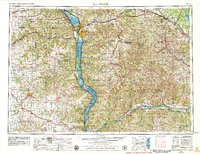 1958 La Crosse1979 Print · USGSThe Driftless Area of Wisconsin and Iowa is captured here during the late seventies, showing the intricate river valleys and ridge-top settlements. Genealogists and historians can trace the rail corridors of the Soo Line or locate landmarks like Grandad Bluff and Effigy Mounds National Monument.2 unique versions available
 - 1961 Map of La Crosse
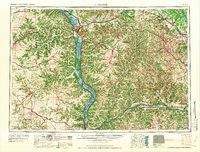 1961 La Crosse1961 Print · USGSThe Driftless Area at the start of the 1960s reveals a complex network of river towns and rail lines along the Mississippi River. Genealogists and historians can trace old settlements like New Amsterdam and Wyattville or locate major landmarks like Camp McCoy Military Reservation and Effigy Mounds National Monument.
 - 1965 Map of La Crosse
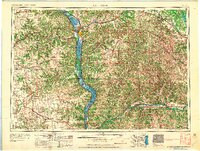 1965 La Crosse1965 Print · USGSThe Driftless Area and the Upper Mississippi valley are captured here during a period of steady mid-century growth. Researchers can trace the rail lines of the Chicago and North Western or locate riverfront sites like Effigy Mounds National Monument and the Camp McCoy Military Reservation.
 - 1967 Map of Boscobel, 1970 Print
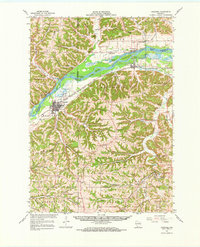 1967 Boscobel1970 Print · USGSWisconsin's Driftless Area in the late sixties shows a landscape of deep hollows and river islands along the Wisconsin River. Genealogists and local historians can trace family locations near rural landmarks like St Patrick Cem, the Wayside Chapel, and the riverside settlement of Blue River.
 - 1976 Map of La Crosse
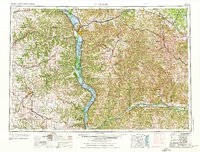 1976 La Crosse1976 Print · USGSThe Driftless Area and Mississippi River valley are captured here in the mid-seventies, showing a landscape of deep coulees and river commerce. Genealogists can trace family footprints from La Crosse to smaller hamlets like Newburg Corners and Witoka.
 - 1983 Map of Long Hollow
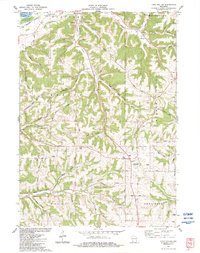 1983 Long Hollow1983 Print · USGSGrant County’s driftless landscape comes to life in the early 1980s, centered on the diverse terrain south of the Wisconsin River. Researchers can trace rural lineages through family-named landmarks and local burial sites like Marion Ch, Brechler Cem, and Switzer Cem.
 - 1983 Map of Castle Rock
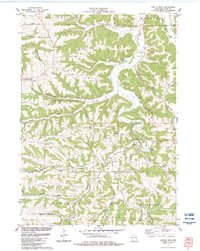 1983 Castle Rock1983 Print · USGSThe Driftless Area of Grant County is captured here in the early 1980s, showing a landscape of tight ridges and winding stream valleys. Genealogists and local historians can trace family locations near Hickory Grove, Castle Rock Ch, and the German Cem.
 - 1983 Map of Blue River
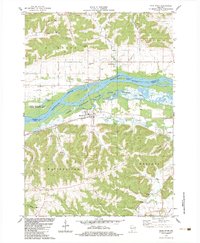 1983 Blue River1983 Print · USGSThe Wisconsin River valley and the settlements of Blue River and Port Andrew are captured here in the early 1980s. Genealogists can trace family plots at Greenwood Cem or Beulah Cem, while the Wisconsin Western rail line marks the valley floor.
 - 1983 Map of Boscobel
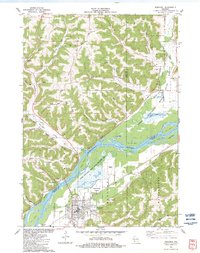 1983 Boscobel1983 Print · USGSBoscobel and the surrounding river bottoms are captured here in the early 1980s as a vital corridor of rail transport and conservation. Researchers can trace old family landmarks and rural life through Plugtown, the St Patrick Cem, and the Maple Ridge Bible Ch.
 - 1985 Map of Richland Center, 1991 Print
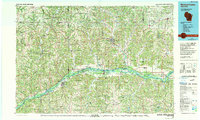 1985 Richland Center1991 Print · USGSSouthwest Wisconsin’s driftless landscape in the mid-1980s is defined by its deep river valleys and tight agricultural settlements. Researchers can trace family-named landmarks like Mickelson Ridge or find remote churches and schools near Richland Center and Dodgeville.
End of results
Showing maps 1-11 of 11
Top cities near Watterstown
- Richland Center historical maps
- Boscobel historical maps
- Fennimore historical maps
- Muscoda historical maps
- Highland historical maps
- Rockbridge historical maps
See more
Frequently asked questions
- What are the different types of historical maps available for Watterstown?
- What is the oldest map of Watterstown?
- Where can I purchase historical maps of Watterstown for my home or office?
- Where can I download high-res historical maps of Watterstown?
- Are there historical topographic maps available for Watterstown?
- Is there historical aerial imagery available for Watterstown?
- Where are historical maps of Watterstown sourced from?